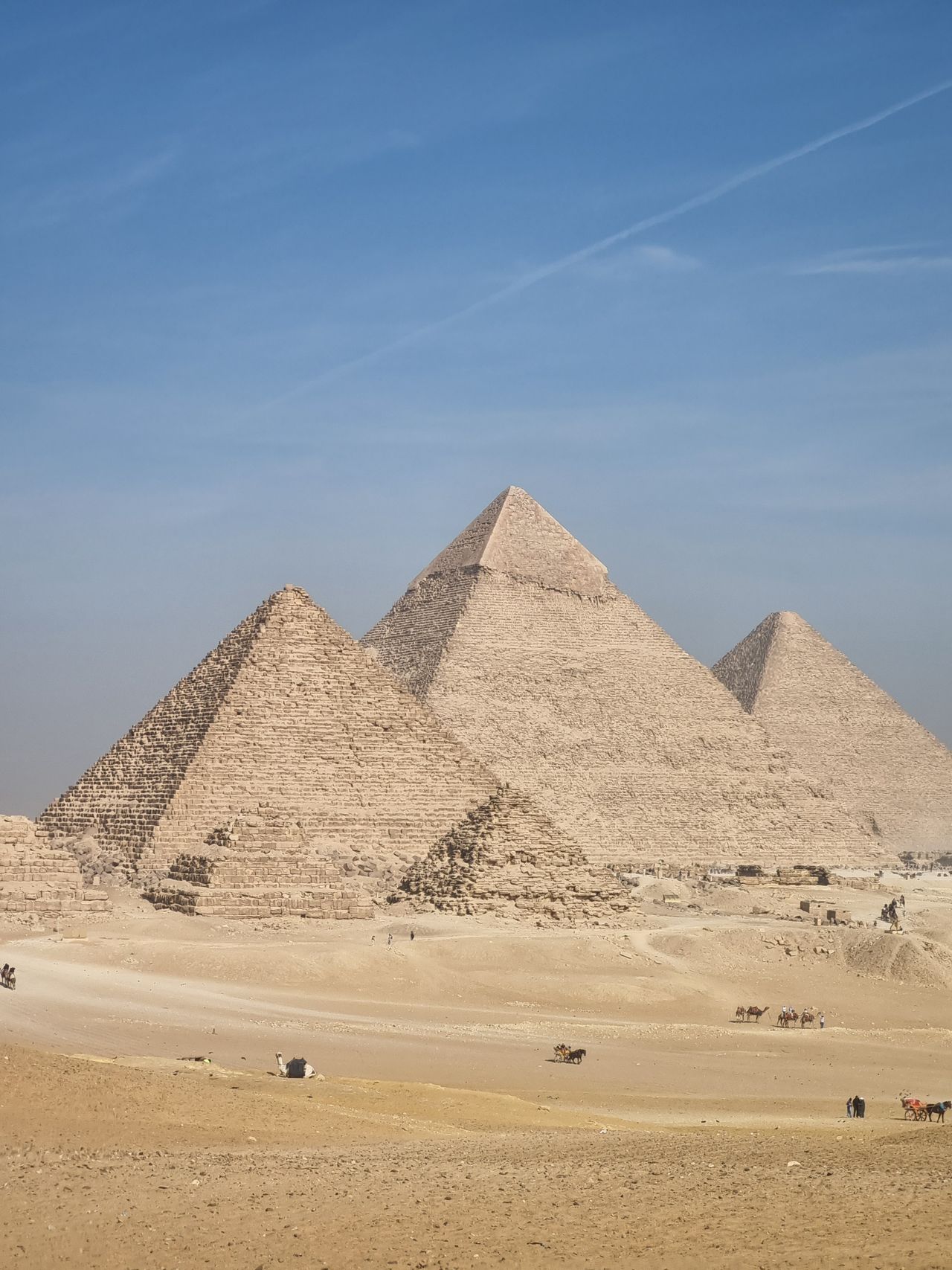
Egypt rewards a plan. The country stretches roughly 1,000 km from the Mediterranean to the Sudanese border, and the headline sights sit in clusters: the pyramids around Cairo, the temples along the Nile between Luxor and Abu Simbel, the oases of the Western Desert, and the reefs of the Red Sea and Sinai. This list of 17 places to visit in Egypt is grouped by region, with the reason each one earns a spot and the guide to open next. Use it as a bucket list, then match it to your dates with our best time to visit Egypt guide.
Egypt bucket list at a glance
| # | Place | Region | Best for | Time to allow |
|---|---|---|---|---|
| 1 | Pyramids of Giza | Greater Cairo | Iconic ancient monuments | Half day |
| 2 | Grand Egyptian Museum | Greater Cairo | Tutankhamun, the largest collection | 4-5 hours |
| 3 | Saqqara and Dahshur | Greater Cairo | Early pyramids, fewer crowds | Full day |
| 4 | Islamic Cairo | Cairo | Mosques, bazaars, medieval streets | Half day |
| 5 | Coptic Cairo | Cairo | Churches, early Christian history | 2 hours |
| 6 | Karnak and Luxor Temple | Luxor | The biggest temple complex | Full day |
| 7 | Valley of the Kings and West Bank | Luxor | Royal tombs, Hatshepsut | Full day |
| 8 | Aswan and Philae | Aswan | Nile scenery, Nubian culture | 1-2 days |
| 9 | Abu Simbel | Far south | Ramesses II’s rock temples | Half day |
| 10 | A Nile cruise | Luxor to Aswan | Temples without packing and unpacking | 3-4 nights |
| 11 | Alexandria | Mediterranean | Catacombs, corniche, seafood | 1-2 days |
| 12 | Siwa Oasis | Western Desert | Springs, salt lakes, Berber culture | 2-3 days |
| 13 | White Desert | Western Desert | Chalk formations, camping | 1-2 nights |
| 14 | Fayoum | Near Cairo | Lakes, waterfalls, an easy day trip | 1 day |
| 15 | Mount Sinai and St Catherine’s | Sinai | Sunrise hike, ancient monastery | 1 night |
| 16 | Dahab | Sinai | Diving, freediving, relaxed vibe | 3-5 days |
| 17 | Marsa Alam | Red Sea | Reefs, dugongs, turtles | 3-5 days |
Cairo and Giza
1. The Pyramids of Giza
Nothing else on this list is as famous, and it lives up to it. The three main pyramids and the Sphinx sit on the Giza plateau on the edge of Cairo, and you can walk around the base of each, enter one of the smaller pyramids’ chambers for an extra ticket, and ride a camel or horse across the sand for views of all three together. Arrive when the gates open to beat both the heat and the tour buses. Our Pyramids of Giza guide covers tickets, entry points and how to avoid the touts, and you can pre-book a guided Giza tour with hotel pickup if you would rather not negotiate on the day.
2. The Grand Egyptian Museum
The GEM stands within sight of the plateau and houses the full Tutankhamun collection together for the first time, plus the colossal statue of Ramesses II and the Grand Staircase of royal statues. Allow most of a morning and book timed tickets ahead. Read the Grand Egyptian Museum visitor guide before you go, and pair it with the pyramids on the same day if you are short on time. The older Egyptian Museum in Tahrir remains worth a visit for its own collection.
3. Saqqara and Dahshur
If the Giza crowds put you off, drive south to the necropolis of Saqqara, home of Djoser’s Step Pyramid, the oldest large stone building in the world. A little further on, Dahshur has the Bent Pyramid and the Red Pyramid, where you can often walk a long way without seeing another group. Both are covered in our Saqqara Step Pyramid guide and our Dahshur and Memphis guide, and easily combined in one day by private car.
4. Islamic Cairo
Medieval Cairo is a different Egypt from the pharaonic one: minarets, madrasas, the Khan el-Khalili bazaar and streets that have traded for centuries. Come in the late afternoon when the light softens and the heat drops. We map the main mosques and the best walking route in our Islamic Cairo guide, and the wider city is introduced on the Cairo hub.
5. Coptic Cairo
Old Cairo’s Coptic quarter packs the Hanging Church, the Church of St Sergius and the Ben Ezra Synagogue into a few lanes beside Roman-era walls. It is a quiet counterweight to the bazaars and pairs naturally with a morning in Islamic Cairo. See the Coptic Cairo guide for opening details and context.
Luxor, Aswan and the Nile
6. Karnak and Luxor Temple
Karnak is less a temple than a city of temples, built and extended over about 2,000 years, with the Hypostyle Hall’s 134 columns as its centrepiece. Luxor Temple, on the Nile corniche, is smaller but is beautifully lit after dark. Start at Karnak early, then return to Luxor Temple for sunset. Our Karnak Temple guide and Luxor Temple guide cover both, and the Luxor city hub ties the rest of the town together. Browse Luxor tours if you want a guide for the heavy-history sections.
7. Valley of the Kings and the West Bank
Across the river, the Valley of the Kings holds the rock-cut tombs of New Kingdom pharaohs, including Tutankhamun’s. The ticket covers three tombs, with premium tombs sold separately, so decide which to prioritise in advance. Nearby, Hatshepsut’s terraced temple at Deir el-Bahari is one of the most striking buildings in the country, and Medinet Habu and Deir el-Medina round out a full west-bank day. See the Valley of the Kings guide, Hatshepsut Temple guide and our Luxor West Bank tours. A dawn hot air balloon over Luxor is the classic way to see the west bank from above.
8. Aswan and Philae
Aswan is slower and greener than Luxor, with granite islands, Nubian villages and a famous Nile light at dusk. Take a felucca around Elephantine Island and a boat to Philae, the temple of Isis relocated to its own island after the Aswan dams flooded its original site. Start with our Aswan city hub, the Philae Temple guide and the felucca ride at Aswan, and see Aswan tours for organised options.
9. Abu Simbel
Ramesses II carved two rock temples into a cliff above Lake Nasser, with four seated colossi at the entrance of the larger one. The complex was cut up and moved in the 1960s to save it from rising water. Most people visit on a very early day trip from Aswan, which is a long morning but straightforward. The Abu Simbel temples guide and the Abu Simbel hub explain the logistics, including the convoy and overnight options.
10. A Nile cruise between Luxor and Aswan
A Nile cruise turns the temples of Edfu and Kom Ombo into a floating journey rather than a series of transfers. Choose between a conventional cruise ship and a smaller dahabiya, and note that the length of your stay and the season change prices a lot. Compare them in our dahabiya vs Nile cruise guide, check realistic costs in the Nile cruise prices guide, and see the Edfu and Kom Ombo guide for the stops along the way. Our Egypt Nile cruise itinerary lays out the days.
The Mediterranean and the Western Desert
11. Alexandria
Alexandria feels more Mediterranean than Egyptian: a long corniche, a rebuilt library, Qaitbay Citadel and a seafood scene that rivals anything in Cairo. History fans should add the Kom el-Shoqafa catacombs, covered in the Alexandria catacombs guide. Use the Alexandria hub to plan, and see Cairo vs Alexandria if you are deciding where to base yourself. It is also a feasible day trip by train, see our Egypt trains guide.
12. Siwa Oasis
Siwa sits near the Libyan border, about 550 km west of Cairo, in a world of palm groves, salt lakes and the Great Sand Sea. Float in a salt lake, visit the ruins of the Oracle Temple associated with Alexander the Great, and watch the sun set from the old Shali fortress. Allow at least two nights because the journey in is long. Everything is laid out on the Siwa hub, with Siwa tours for desert drives.
13. The White Desert
North of Farafra, wind-sculpted chalk formations rise from the sand in shapes that look like mushrooms and ice sculptures. The standard trip is an overnight camp with a 4x4 convoy from Bahariya, where you sleep on the sand under an unusually clear sky. Read our White Desert and Bahariya Oasis guide for the route and how to choose an operator, and the broader desert safari guide for comparison.
14. Fayoum
Fayoum is the easiest oasis to reach, about two hours from Cairo, with Lake Qarun, the Wadi El Rayan waterfalls and the Tunis village pottery community. It is the best option if you only have one spare day and want something quiet after the capital. Our Fayoum and Wadi El Rayan day trip guide covers it, and Wadi Hitan is a longer extension for fossil whales.
Sinai and the Red Sea
15. Mount Sinai and St Catherine’s Monastery
Travellers climb Mount Sinai in the dark to watch the sun rise over the granite peaks, then descend to St Catherine’s Monastery, a sixth-century Greek Orthodox monastery at the foot of the mountain. Bring warm layers, because the summit is cold even in spring. The Mount Sinai hike guide covers the paths, the camel option and the timings, and the Sinai Peninsula guide places it in the wider region.
16. Dahab
Dahab is Egypt’s backpacker and freediving capital: a promenade of cafes beside the Gulf of Aqaba, the Blue Hole dive site a short drive north, and the Sinai mountains behind you. It suits long stays and slow days as much as diving. Start on the Dahab hub, then see the Blue Hole diving guide and learn to dive in Dahab. If you are weighing it against the resort next door, read Dahab vs Sharm el-Sheikh, and browse Dahab tours.
17. Marsa Alam
Marsa Alam is the quiet end of the Red Sea: fewer big resorts, healthier reefs close to shore and a good chance of swimming with turtles and, with luck, dugongs. It is also the gateway to the southern dive sites and the Egyptian deep south. See the Marsa Alam hub, the Marsa Alam tours guide and our Hurghada vs Marsa Alam comparison. If you want a lively resort scene instead, the Hurghada and Sharm el-Sheikh hubs are the better fit, and our best beaches in Egypt guide compares the sand.
How to combine these places
Most visitors do not try to visit all 17. Three combinations work well:
- First visit, 7 days: Giza, the Grand Egyptian Museum and Islamic Cairo, then Luxor and Aswan, with Abu Simbel as a day trip. Our 1 week in Egypt itinerary lays it out.
- Ten days to two weeks: Add a Nile cruise or Alexandria, then finish with Dahab or Marsa Alam for a few days at the sea. See the 10 days in Egypt and 2 weeks in Egypt plans.
- Return trip: Siwa, the White Desert, Fayoum and Sinai suit people who have already seen the headline sights.
Domestic flights and the overnight sleeper train link Cairo, Luxor and Aswan efficiently, as set out in the getting around Egypt guide and the internal flights guide. For general planning, our first-time visitors guide and the Egypt visa guide cover the paperwork. Official visitor information is published by the Egyptian Ministry of Tourism and Antiquities, and UNESCO’s World Heritage listings document the protected sites. If you would rather have the logistics handled, browse Egypt tours and the best tours in Egypt roundup.