Egypt is a large country, and the distance between Cairo and Aswan is roughly the same as London to Istanbul. The good news is that the transport options between the main tourist destinations are genuinely solid, and the pricing is reasonable by most visitors’ standards.
Here are the main ways to cover Egypt’s distances, as of 2026.
| Mode | Example route | Time | Notes |
|---|---|---|---|
| Domestic flight | Cairo to Luxor or Aswan | About 1 to 1.5 hours | Book 2-4 weeks ahead for the best fares |
| Sleeper train | Cairo to Luxor / Aswan | About 10 / 14 hours | Roughly $110-125 shared, $150-170 sole occupancy |
| Go Bus | Cairo to Hurghada | 5-6 hours | Cairo to Alexandria 2.5 hours, Cairo to Sharm el-Sheikh 7-8 hours |
| Cairo Metro | Three lines | Varies | EGP 7-15 per journey, women-only carriages |
| Nile cruise | Luxor to Aswan | 3-4 nights | Stops at Edfu and Kom Ombo |
Domestic Flights
Egypt has several functioning domestic airports: Cairo (CAI), Luxor (LXR), Aswan (ASW), Hurghada (HRG), Sharm el-Sheikh (SSH), Abu Simbel (ABS), Alexandria (HBE), and Marsa Alam (RMF). EgyptAir operates most domestic routes. Budget carriers including Air Arabia Egypt and Nile Air serve some routes with competitive pricing.
Fares vary considerably depending on timing. Booking 2–4 weeks in advance typically returns the best prices. The Cairo–Luxor and Cairo–Aswan routes are the most frequently used by independent travellers, and Abu Simbel flights from Aswan are a practical way to visit the temples without the long road journey.
Overnight Sleeper Trains
The Watania sleeper service between Cairo and Luxor (approximately 10 hours) and Cairo and Aswan (approximately 14 hours) is one of the best-value travel experiences in Egypt. Private two-person cabins include dinner and breakfast. The trains depart in the evening and arrive in the morning, effectively saving a hotel night.
Booking is done at wataniatransport.com or in person at Cairo Railway Station. Advance booking is strongly recommended - popular departures sell out. As of 2026 expect roughly $110 to $125 per person for a shared cabin and $150 to $170 for sole occupancy; verify current rates when booking.
Standard Trains
Air-conditioned first and second class trains run between Cairo, Alexandria, Luxor, and Aswan. These are considerably cheaper than the sleeper service. Foreigners pay a separate USD tariff and cannot buy at that price on the ENR app or website, so tickets are bought at a station foreigner window or through an agent. See our full Egypt trains guide for fares, routes and booking steps.
Intercity Buses
Go Bus (bookable via app or website) runs modern air-conditioned coaches between major cities. Approximate journey times: Cairo to Alexandria 2.5 hours, Cairo to Hurghada 5–6 hours, Cairo to Sharm el-Sheikh 7–8 hours. Fares are low and the service is reliable. Book ahead for weekend departures and holiday periods. You can also compare bus and train schedules on Omio to see all options for a given route in one place.
Nile Cruises
The classic Luxor–Aswan cruise (or Aswan–Luxor in reverse) typically runs 3–4 nights on a dahabeya or traditional cruise ship. The route includes stops at the temples of Edfu and Kom Ombo, which are difficult to visit independently. Cruises are generally all-inclusive and bookable through operators in Egypt or in advance online. Standards range from budget to very comfortable - read current reviews rather than relying on star ratings alone.
Cairo Transport
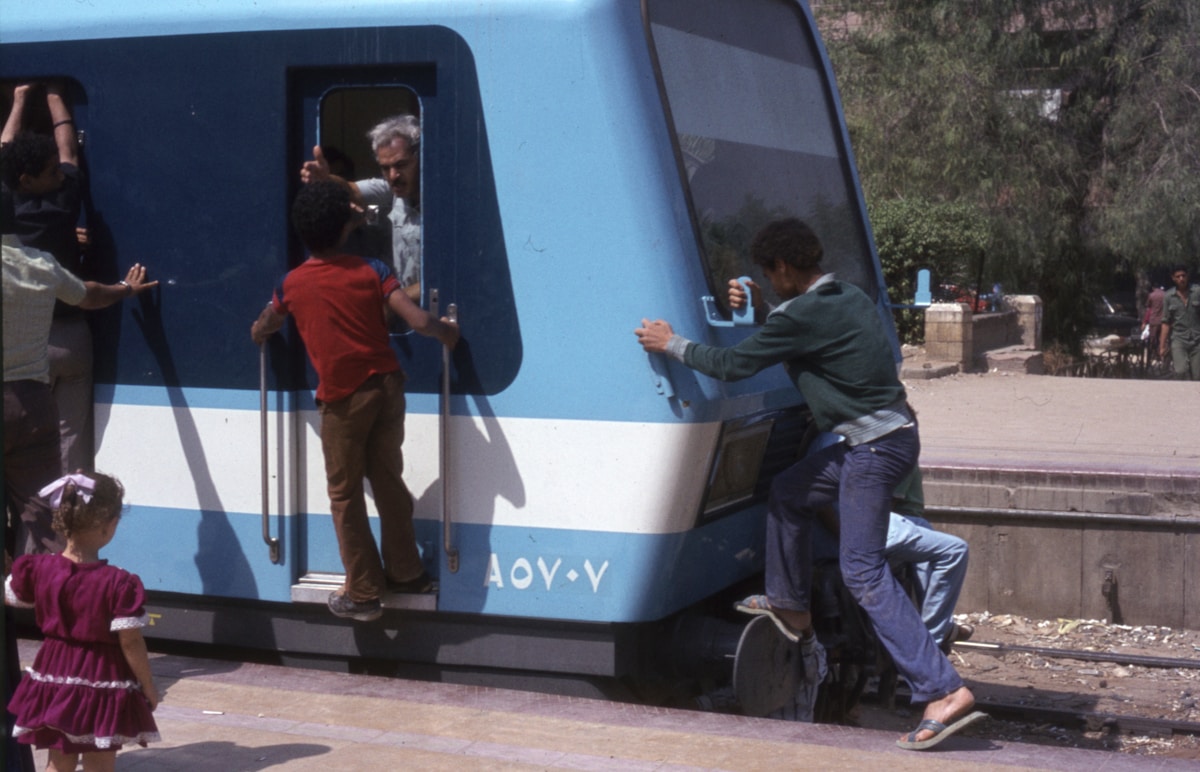
The Cairo Metro covers three lines and is cheap, clean, and fast relative to road traffic. Fares are EGP 7–15 per journey. Women-only carriages operate on all trains - marked clearly on the platform. The metro is the most reliable way to move across the city during daylight hours.
For journeys the metro does not cover, Uber and Careem both operate in Cairo and are strongly recommended over street taxis. Fares are low, shown upfront, and require no negotiation. Our Uber and Careem guide covers coverage by city, payment and SIM setup. This removes the most common frustration for new arrivals: fare disputes with unmetered taxi drivers.
If you want something arranged before you land, Welcome Pickups offers private Cairo airport transfers with English-speaking drivers, real-time flight tracking, and a fixed price - particularly useful for first-time arrivals or late-night flights.
Sinai
The East Delta Bus Company serves the main Sinai routes - Sharm el-Sheikh, Dahab, Nuweiba, and Taba. Shared service taxis (microbuses) also connect these towns and are cheaper but less comfortable. Options are more limited than on the mainland; allow extra time and check current schedules locally. Note that a full Egyptian e-visa is required to travel between Sinai and the mainland - the Sinai-only stamp does not permit this.
Related Guides
- Cairo to Luxor Sleeper Train
- Egypt Visa Guide - including the Sinai-only stamp rules for travellers to Sharm and Dahab
- Cairo Travel Guide - getting around the capital
- Luxor Travel Guide - getting to and around Luxor from Cairo or Aswan
- Aswan Travel Guide - transport options into southern Egypt
- Egypt Travel Budget - current transport cost breakdown
- Egypt vs Morocco: Which to Visit?
- Book transfers and airport pickups in Egypt - pre-booked airport transfers avoid the taxi negotiation on arrival
- Hire a car or private driver in Egypt - compare self-drive options and daily driver rates across Cairo, Luxor, and Aswan
Ready to Plan Your Trip?
Here are our most popular Egypt itineraries to help you make the most of your visit:
- 1-Week Egypt Itinerary
- 5 Days in Egypt
- 10-Day Egypt Itinerary
- 2 Weeks in Egypt
- Egypt Budget Itinerary
If you prefer to drive yourself, read renting a car in Egypt for costs, licence rules and road conditions.
Plan Your Trip
✈️ Book your flights to Egypt 🛡️ Get travel insurance 📱 Stay connected with an eSIM 🚗 Rent a car