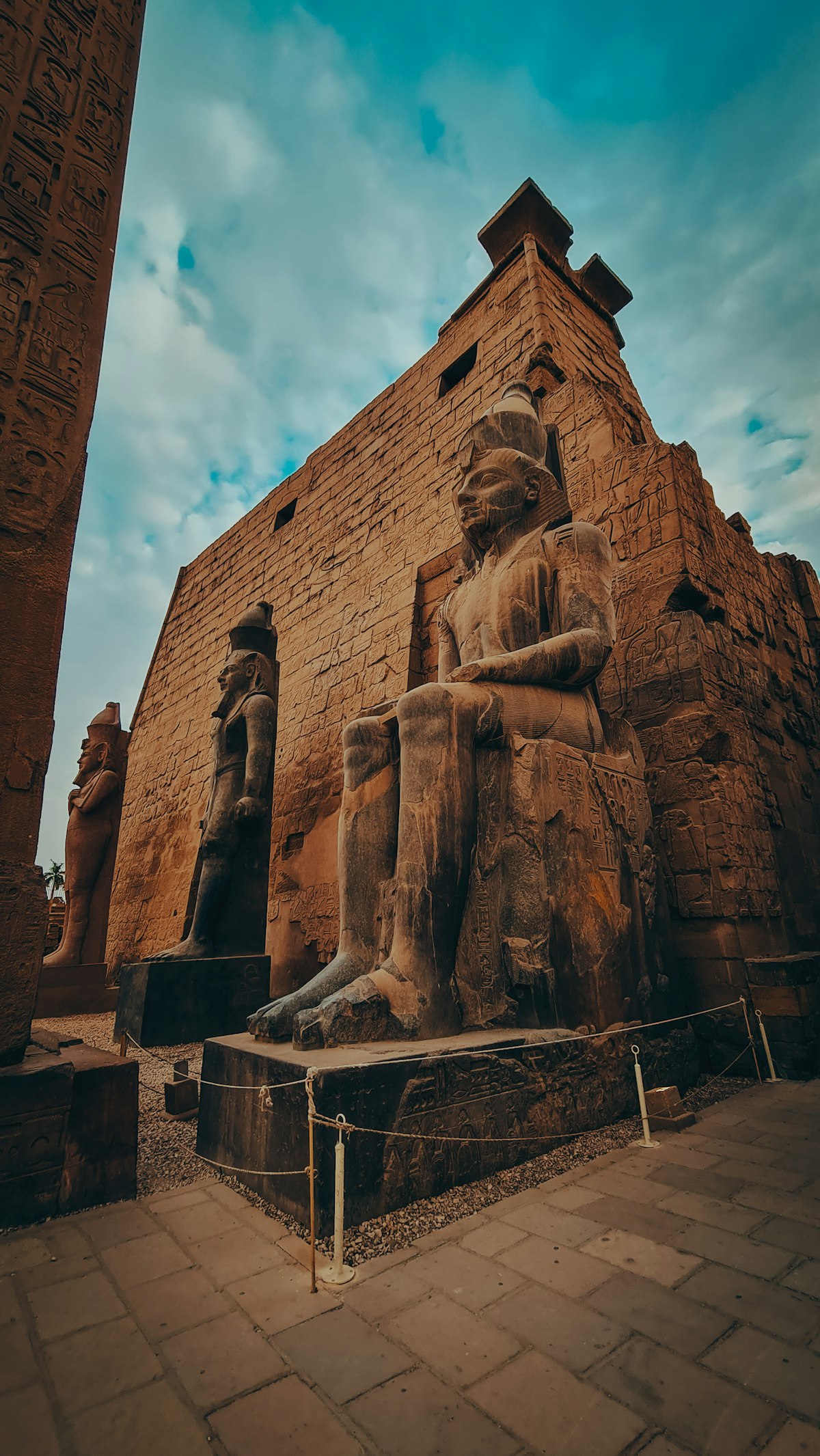
The Mortuary Temple of Hatshepsut at Deir el-Bahari is one of the most architecturally ambitious buildings ancient Egypt ever produced - and one of the most unfairly overlooked by visitors who rush straight from the Valley of the Kings back to the Nile. Cut into the pale limestone cliffs of the West Bank and rising in three colonnaded terraces, it was designed to make an impression from a distance and it still does, more than three thousand years after construction. This guide covers the history, architecture, and practical details you need for a visit.
Who Was Hatshepsut?
Hatshepsut ruled Egypt as pharaoh for approximately 21 years, from around 1479 to 1458 BC, during the Eighteenth Dynasty of the New Kingdom. She was not the first woman to exercise pharaonic power in Egypt - but she was the most successful, and her reign was among the most prosperous in Egyptian history.
She came to the throne as regent for her stepson Thutmose III, who was still a child. Within a few years she took the full titles and regalia of pharaoh herself, including the false beard. Her rule was characterised by ambitious building programmes and a celebrated trading expedition to the land of Punt (modern-day Eritrea or Somalia), depicted in vivid painted reliefs along the temple walls.
After her death, a deliberate effort was made - probably by Thutmose III, possibly later by his son Amenhotep II - to erase her memory. Her images were chiselled from temple walls, her statues smashed and buried, and her name removed from official records. For thousands of years she was barely known. The systematic rediscovery of her identity by Egyptologists in the 19th and 20th centuries is one of the more remarkable stories in the history of archaeology.
Architecture: Reading the Temple
The temple at Deir el-Bahari was designed by Hatshepsut’s chief steward and architect Senenmut. Its three-terrace design, ascending into the cliff face, was influenced by the earlier Middle Kingdom temple of Mentuhotep II that stands to its immediate south - but surpasses it in scale and refinement.
Lower terrace: A broad ramp leads from the entrance up to the first colonnade. The forecourt here once held a formal garden, with T-shaped pools and myrrh trees brought back from Punt. The roots of one of those original trees have been found by archaeologists.
Middle terrace: The most richly decorated level. Two colonnades line the terrace - the left (north) colonnade depicts the divine birth of Hatshepsut, with the god Amun visiting her mother Ahmose; the right (south) colonnade records the Punt expedition in great narrative detail, including images of the overweight Queen of Punt, now one of the most famous images in Egyptian art. Flanking the central ramp at this level are two Osirid statues of Hatshepsut - originally among a series of 24, most now destroyed or in museums.
Upper terrace: The innermost sanctuary, cut directly into the cliff. An open peristyle court leads to chapels dedicated to Hatshepsut, her father Thutmose I, Anubis, and Hathor. The Sanctuary of Amun is at the rear, carved into the rock itself. This section contains some of the best-preserved original painted decoration in the temple.
Osirid statues: Restoration work by the Polish Centre of Mediterranean Archaeology (PCMA), which has been working at the site since 1961, has returned several Osirid statues to their original positions along the upper terrace. They give a sense of the intended grandeur that partially compensated for the ancient vandalism.
Entry Fees and Opening Hours
Entry fee: Hatshepsut Temple is included in the general Luxor West Bank ticket. As of 2026, expect to pay approximately EGP 360 per person for a combined West Bank ticket covering the Valley of the Kings (three tombs), Hatshepsut Temple, and the Colossi of Memnon. Individual site tickets are sometimes available for approximately EGP 180–240 each - verify at the ticket office as pricing structures are updated by the Ministry of Tourism periodically.
Opening hours: Daily, approximately 6:00 am to 5:00 pm (summer: extended to 6:00 pm). The site opens early, which is important - see the timing section below.
Ticket purchase: Tickets for the West Bank are sold at the main West Bank ticket office near the ferry landing on the west side of the Nile, not at individual sites. Buy your combination ticket there before heading to any temple.
Best Time to Visit
Early morning is strongly recommended - ideally arriving at Hatshepsut Temple by 7:00–8:00 am. The reasons are both practical and aesthetic:
- Temperature: by 10:00 am in summer, heat on the open terrace becomes significant. The white limestone reflects sunlight intensely.
- Crowds: tour buses from Luxor and Hurghada typically arrive from 9:00 am onward. The half-hour before that the site is nearly empty.
- Light: the morning sun angles across the painted reliefs in a way that brings out their depth and colour. By midday, flat overhead light flattens the carved detail.
Avoid visiting in the middle of the day between May and September. Temperatures in the West Bank area regularly exceed 40°C (104°F) in July and August, and there is almost no shade on the lower and middle terraces.
Getting There
The temple is on the west bank of the Nile, approximately 4 km from the river crossing point.
From Luxor town/hotels: Take the local ferry from Luxor Corniche to the west bank (approximately EGP 5–10 per person as of 2026), then hire a taxi or a tuk-tuk on the far side. A tuk-tuk to the temple costs approximately EGP 50–80; a taxi for the morning covering multiple West Bank sites costs approximately EGP 300–500 for the vehicle.
Search hotels in Luxor on Booking.com
Alternatively: A tourist boat crosses near the temple more directly but is slightly more expensive. Several bicycle hire shops on the west bank rent bikes for approximately EGP 50–80 per day if you want to combine sites under your own steam.
Tour from Luxor: Most Luxor West Bank tours include Hatshepsut Temple as a stop alongside the Valley of the Kings and Colossi of Memnon. Group tours from Luxor hotels start from approximately EGP 400–600 per person including transport and guide.
What to Wear and Bring
- Shoulders and arms must be covered inside the temple complex (for all genders)
- Sturdy shoes - the ramp and terrace floors are stone
- Sunhat, sunscreen, and 1.5–2 litres of water minimum
- Small local cash for tips to site guards, who sometimes unlock additional chambers
Photography: Permitted throughout the complex with no additional fee. The painted interior chambers are dimly lit - bring a good phone camera or use a wide aperture lens.
Combining with Other West Bank Sites
A full West Bank day logically combines:
- Valley of the Kings (open from 6:00 am) - visit first to beat the heat and crowd in the narrow tomb corridors
- Hatshepsut Temple - 8:00–9:30 am
- Colossi of Memnon - a brief stop of 20–30 minutes; free entry
- Medinet Habu (Mortuary Temple of Ramesses III) - if time and energy permit; approximately EGP 180 entry as of 2026
- Deir el-Medina (village and tombs of the royal tomb-builders) - superb painted tombs, sometimes missed in favour of the big names
Attempting all five in a day is feasible if you start at 6:00 am and pace yourself. In summer, most visitors wisely retreat to the east bank for a midday rest and return for Medinet Habu in the late afternoon.
Key Facts
| Official name | Djeser-Djeseru (“Holy of Holies”) |
| Built | c. 1479–1458 BC |
| Dynasty | Eighteenth Dynasty, New Kingdom |
| Designer | Senenmut |
| UNESCO status | Part of the Theban Necropolis World Heritage Site |
| Location | West Bank, Luxor, 26°21′N 31°50′E |
See Also
- Luxor West Bank tours - practical guide to visiting the Valley of the Kings, Medinet Habu, and Deir el-Medina in the same day as Hatshepsut Temple
- Valley of the Kings - the royal tombs on the same West Bank morning circuit
- Medinet Habu: Temple of Ramesses III - the best-preserved West Bank mortuary temple
- Deir el-Medina: The Workers’ Village - the painted tombs of the craftsmen who built this temple
- Karnak Temple - Hatshepsut’s building campaign at Karnak provides essential context
- Hot Air Balloon Luxor - morning balloon flights give an aerial view of Deir el-Bahari
- Luxor Itinerary - a multi-day plan covering East and West Bank
- Luxor city guide - accommodation, restaurants, and how to organise your East and West Bank days
- Luxor West Bank guided tours - browse Hatshepsut Temple and Valley of the Kings guided day tours