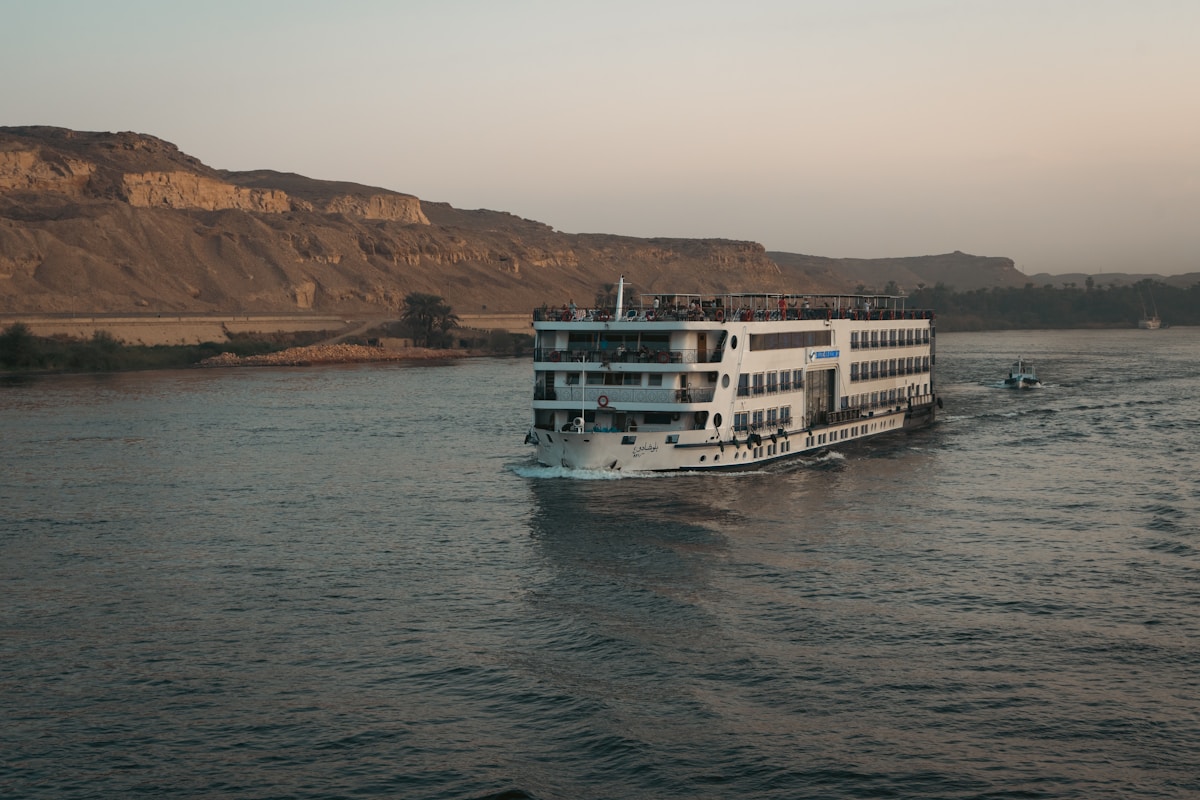
A Nile cruise is the centrepiece of any Egyptian holiday. This 7-day itinerary wraps Cairo bookends around a 4-night cruise from Aswan to Luxor, with an Abu Simbel excursion and temple stops at Kom Ombo, Edfu and Esna. Every major ancient site along the Nile Valley is included.
Day 1: Arrive in Cairo
Arrive at Cairo International Airport and transfer to your hotel. If your flight lands before 2:00 PM, you have time for an afternoon orientation walk through Downtown Cairo - Tahrir Square, the Nile Corniche, and the backstreets of Garden City.
Dinner: Abou Tarek on Champollion Street for koshari, Cairo’s signature dish. A large bowl costs approximately EGP 60–80 (USD 1–2 as of 2026).
For a more upscale first night, The Blue Restaurant at the Nile Ritz-Carlton offers Mediterranean-Egyptian cuisine with river views. Expect approximately EGP 1,200–2,000 (USD 24–40) per person.
For guided Pyramids and GEM day tours in Cairo, browse Cairo tours and activities.
Cairo Hotels
- Budget: Australian Hostel Cairo - from approximately EGP 800 (USD 16) per night
- Mid-range: Steigenberger Hotel El Tahrir - from approximately EGP 3,500 (USD 70) per night
- Upscale: Nile Ritz-Carlton - from approximately EGP 12,000 (USD 240) per night
Search hotels in Egypt on Booking.com
Day 2: Cairo - Giza Pyramids and Grand Egyptian Museum
Morning - Giza Pyramids
Start at the Giza Plateau (opens 8:00 AM). General admission approximately EGP 540 (USD 11 as of 2026). Great Pyramid interior entry is an additional EGP 1,000 (USD 20), limited to 300 visitors per day. Walk the full plateau: the Great Pyramid of Khufu, the Pyramid of Khafre, the Pyramid of Menkaure, the Great Sphinx, and the Valley Temple.
Lunch: 9 Pyramids Lounge - terrace dining with direct pyramid views, approximately EGP 600–900 (USD 12–18) per person.
Afternoon - Grand Egyptian Museum
The Grand Egyptian Museum (GEM) is a short drive from the pyramids. General admission approximately EGP 1,000 (USD 20), with a Tutankhamun supplementary ticket at EGP 500 (USD 10). The museum opens at 9:00 AM and holds over 100,000 artefacts. Allow at least 3 hours - the Tutankhamun galleries alone contain 5,000 objects including the gold death mask.
Dinner: Naguib Mahfouz Café at Khan el-Khalili - traditional Egyptian dishes in an Ottoman-era setting, mains EGP 300–500 (USD 6–10).
Day 3: Fly to Aswan - Abu Simbel Day Trip
Morning Flight
Take an early flight from Cairo to Aswan (approximately 1.5 hours, EGP 2,500–5,000 / USD 50–100 one way with EgyptAir or Air Cairo). Search and book Egypt flights - booking 2–4 weeks ahead secures the best fares.
Abu Simbel
Many travellers visit Abu Simbel on Day 4, but we recommend going on arrival day while your energy is high. The 280-kilometre drive from Aswan takes approximately 3 hours each way. Options:
- Minibus convoy: approximately EGP 1,200–1,800 (USD 24–36) per person. Departs 4:00 AM, but since you are arriving mid-morning, arrange a private departure.
- Private car: approximately EGP 4,000–5,000 (USD 80–100) for the vehicle, more flexible timing
- Flight: EgyptAir operates a 45-minute flight, approximately EGP 5,000–8,000 (USD 100–160) return
Abu Simbel admission costs approximately EGP 550 (USD 11 as of 2026). The Great Temple of Ramesses II features four 20-metre colossal statues carved into the rock face. The smaller Temple of Nefertari next door is equally impressive in its detail. The entire complex was cut into blocks and relocated 65 metres uphill in the 1960s to save it from Lake Nasser - an undertaking involving 50 countries and UNESCO.
Return to Aswan late afternoon. Evening felucca ride around Elephantine Island (approximately EGP 300–500 / USD 6–10 for 1–2 hours) as the sun sets behind the West Bank tombs.
Dinner: Panorama Restaurant overlooking the Nile - grilled Nile fish and mezze, approximately EGP 250–400 (USD 5–8) per person.
Aswan Hotel (1 night before boarding cruise)
- Budget: Keylany Hotel - from approximately EGP 800 (USD 16) per night
- Mid-range: Basma Hotel - from approximately EGP 3,000 (USD 60) per night
- Upscale: Sofitel Legend Old Cataract - from approximately EGP 15,000 (USD 300) per night
For guided Philae Temple and Abu Simbel excursions, browse Aswan tours and activities.
Day 4: Board Cruise - Philae Temple and Aswan
Morning - Philae Temple
Before boarding your cruise ship, visit Philae Temple on Agilkia Island. A motorboat from the ticket office costs approximately EGP 150–250 (USD 3–5) return for a group. Admission is approximately EGP 450 (USD 9 as of 2026). Open 7:00 AM – 5:00 PM.
Philae is dedicated to the goddess Isis and was the last temple where Egyptian hieroglyphics were carved - the final inscription dates to 394 AD. The temple was dismantled and rebuilt on Agilkia Island after the construction of the Aswan High Dam threatened to submerge it permanently.
Midday - Aswan High Dam and Unfinished Obelisk
Quick stops at two Aswan landmarks:
- Aswan High Dam (EGP 100 / USD 2) - the dam that tamed the Nile’s annual flood and created Lake Nasser
- Unfinished Obelisk in the northern quarries (EGP 200 / USD 4) - a 42-metre granite obelisk abandoned after a crack appeared during carving. Had it been completed, it would have been the largest obelisk in Egypt.
Afternoon - Board Cruise Ship
Board your Nile cruise ship at the Aswan dock, usually between 12:00 PM and 2:00 PM. Most ships include lunch on the first day. Settle into your cabin and spend the afternoon on the sun deck watching Aswan’s scenery - feluccas, the botanical gardens on Kitchener’s Island, and the Aga Khan Mausoleum on the West Bank.
Choosing Your Cruise
| Tier | Example Ships | Price per Night (as of 2026) | What to Expect |
|---|---|---|---|
| Budget (3-star) | MS Nile Dolphin, MS Grand Rose | From USD 80–120 | Basic but clean cabins, buffet meals, shared excursions |
| Mid-range (4-star) | MS Mayfair, Steigenberger Minerva | From USD 150–250 | Larger cabins with river views, better food, pool |
| Luxury (5-star) | Sanctuary Sun Boat IV, Oberoi Philae, AmaDahlia | From USD 400–800 | Suites, gourmet dining, private guides, spa |
Book 4–8 weeks ahead during peak season (October–March). Most cruises include all meals and guided temple excursions.
Day 5: Sailing - Kom Ombo Temple
The ship sails north from Aswan through some of the Nile’s most scenic stretches - palm-fringed banks, small villages, and occasional egrets standing motionless at the water’s edge. Spend the morning on the sun deck.
Afternoon - Kom Ombo
Kom Ombo Temple (EGP 300 / USD 6 as of 2026) is unusual in Egyptian architecture - it is a double temple, with the left half dedicated to the falcon god Horus the Elder and the right half to the crocodile god Sobek. The symmetry runs through every hall, corridor and sanctuary.
The adjacent Crocodile Museum displays mummified crocodiles ranging from hatchlings to full-grown adults, all excavated from the temple grounds.
Most cruise ships dock at Kom Ombo in the late afternoon. The temple at sunset, with the Nile behind you, is one of the most photogenic moments of the cruise.
Return to the ship for dinner. Many cruise ships host a Galabiya Party on one evening - passengers dress in traditional Egyptian robes (available for purchase on board or in Aswan, approximately EGP 200–500 / USD 4–10) for a night of music and dancing on the upper deck.
Day 6: Edfu and Esna - Sailing to Luxor
Morning - Edfu Temple
The ship docks at Edfu early in the morning. Travel from the dock to the Temple of Horus at Edfu by horse carriage (approximately EGP 100–200 / USD 2–4) or electric vehicle.
Edfu is the best-preserved temple in Egypt. The massive entrance pylon stands 36 metres high, and the reliefs covering every surface remain sharp after more than 2,000 years. The inner sanctuary still holds the granite shrine that once housed the gold cult statue of Horus. Admission approximately EGP 360 (USD 7 as of 2026). Allow 1.5–2 hours.
Afternoon - Esna Lock
The ship continues north and passes through the Esna Lock, where the Nile drops several metres. The lock passage takes approximately 1–2 hours depending on traffic, and the experience is entertaining - local vendors in small boats pull alongside, tossing tablecloths, scarves and galabiya robes up to passengers and negotiating prices by shouting between ship and boat.
Esna Temple (dedicated to the ram-headed god Khnum) is near the lock, but most cruises do not include a stop here. If your cruise does stop, admission is approximately EGP 200 (USD 4).
The ship sails on to Luxor and docks on the East Bank Corniche, usually arriving in the evening. Some ships offer a guided walk to Luxor Temple (EGP 360 / USD 7) after dark - the temple is illuminated and far less crowded than during the day.
Day 7: Luxor - Valley of the Kings, Karnak, Hatshepsut
This is the biggest sightseeing day of the trip. Most cruises include guided excursions to the major Luxor sites, but you can also explore independently by hiring a private taxi for the West Bank (approximately EGP 800–1,200 / USD 16–24 for 5–6 hours).
Morning - West Bank
- Valley of the Kings - General admission covers 3 tombs, approximately EGP 600 (USD 12 as of 2026). The tombs rotate, but the most impressive currently open include Ramesses IV, Ramesses IX, and Merenptah. Supplementary tickets: Tutankhamun (EGP 600 / USD 12), Seti I (EGP 1,400 / USD 28), Ramesses VI (EGP 200 / USD 4). Open 6:00 AM – 5:00 PM.
- Temple of Hatshepsut (Deir el-Bahari) - EGP 360 (USD 7). Three terraced colonnades rise against the limestone cliffs. The relief carvings depicting Hatshepsut’s trading expedition to the Land of Punt are among the most famous in Egyptian art.
- Colossi of Memnon - free. Two 18-metre quartzite statues of Amenhotep III. The ongoing excavation of his mortuary temple behind the colossi is slowly revealing one of the largest temple complexes in Luxor.
Afternoon - East Bank
- Karnak Temple Complex - EGP 450 (USD 9). The Great Hypostyle Hall, with 134 columns up to 24 metres tall, is the single most impressive space in Egyptian architecture. The Sacred Lake, the obelisks of Hatshepsut and Thutmose I, and the smaller Temple of Khonsu are all worth exploring. Allow 2–3 hours.
- Luxor Temple - EGP 360 (USD 7). Walk the restored Avenue of Sphinxes (2.7 kilometres) from Karnak to Luxor Temple if energy permits, or take a taxi. Luxor Temple contains a mosque (Abu Haggag) built directly on top of the ancient structure - a striking visual reminder of Egypt’s layered history.
Dinner: Sofra Restaurant on Mohamed Farid Street - Upper Egyptian cuisine on a rooftop terrace with views toward the West Bank. Mains approximately EGP 250–450 (USD 5–9).
Disembark from the cruise (some ships allow a final night on board, departing the next morning). For independent guided Luxor West Bank tours, browse Luxor tours and activities.
Luxor Hotels (if staying after disembarkation)
- Budget: Nefertiti Hotel - from approximately EGP 600 (USD 12) per night
- Mid-range: Steigenberger Nile Palace - from approximately EGP 4,000 (USD 80) per night
- Upscale: Sofitel Winter Palace - from approximately EGP 12,000 (USD 240) per night
Day 8 (Optional): Fly Back to Cairo
Fly from Luxor to Cairo (approximately 1 hour, EGP 2,500–5,000 / USD 50–100). If your international flight departs in the evening, you have time for a morning visit to Saqqara and the Step Pyramid of Djoser (approximately 30 km south of Cairo, taxi EGP 400–600 / USD 8–12 return, admission EGP 450 / USD 9) before heading to the airport.
Budget Summary
| Category | Budget | Mid-Range | Upscale |
|---|---|---|---|
| Cairo hotels (2 nights) | EGP 1,600 (USD 32) | EGP 7,000 (USD 140) | EGP 24,000 (USD 480) |
| Aswan hotel (1 night) | EGP 800 (USD 16) | EGP 3,000 (USD 60) | EGP 15,000 (USD 300) |
| Nile cruise (4 nights) | EGP 16,000 (USD 320) | EGP 30,000 (USD 600) | EGP 80,000 (USD 1,600) |
| Food (non-cruise days) | EGP 1,500 (USD 30) | EGP 4,000 (USD 80) | EGP 8,000 (USD 160) |
| Sightseeing + Abu Simbel | EGP 5,000 (USD 100) | EGP 7,500 (USD 150) | EGP 12,000 (USD 240) |
| Flights + transport | EGP 7,000 (USD 140) | EGP 10,000 (USD 200) | EGP 18,000 (USD 360) |
| Total | EGP 31,900 (USD 638) | EGP 61,500 (USD 1,230) | EGP 157,000 (USD 3,140) |
All prices approximate as of 2026.
Tips for Booking a Nile Cruise
- Connectivity and insurance: An eSIM for Egypt keeps you connected across Cairo, Luxor and Aswan - cruise ships are generally out of range, but you will have signal at every temple stop. Travel insurance for Egypt is essential; it covers flight delays that affect embarkation and medical costs in Upper Egypt.
- Peak season (October–March) offers the best weather but highest prices. Book 6–8 weeks ahead for mid-range and luxury ships.
- Shoulder season (April–May, September) offers lower prices and fewer crowds, but temperatures in Upper Egypt can exceed 40°C.
- Booking channels: Book directly through the cruise line’s website or through a reputable Egypt travel agency. Avoid last-minute dock bookings - the cheapest ships often cut corners on food and maintenance.
- Tipping: A communal tip of approximately EGP 500–1,000 (USD 10–20) per person is customary at the end of the cruise for the crew.
- Cabins: Request a cabin on the upper deck for better views and less engine noise. Port-side cabins (left when facing forward) see the West Bank scenery on the Aswan-to-Luxor route.
- Health: Drink only bottled water on board (provided by the ship). The Nile water used for bathing is treated but not potable.
More on the Nile Cruise Destinations
- Aswan travel guide - embarkation point, with Nubian villages and Philae Temple as pre-cruise additions
- Luxor city guide - disembarkation point, with the West Bank, Karnak, and East Bank hotel options
- Abu Simbel temples - the day trip from Aswan that anchors the southern end of this itinerary
- Nile cruise guide - overview of cruise types, routes, and what to expect on each boat category
- Browse Egypt Nile cruises and tours - compare cruise operators and check current availability
Book Your Trip
- Flights - Find the best fares to Egypt
- Travel Insurance - Get covered before you go
- eSIM - Stay connected from landing
- Airport Transfers - Pre-book your transfer from Cairo or Hurghada
- Car Rental - Compare prices across providers
- Tours & Activities - Browse Egypt tours on GetYourGuide