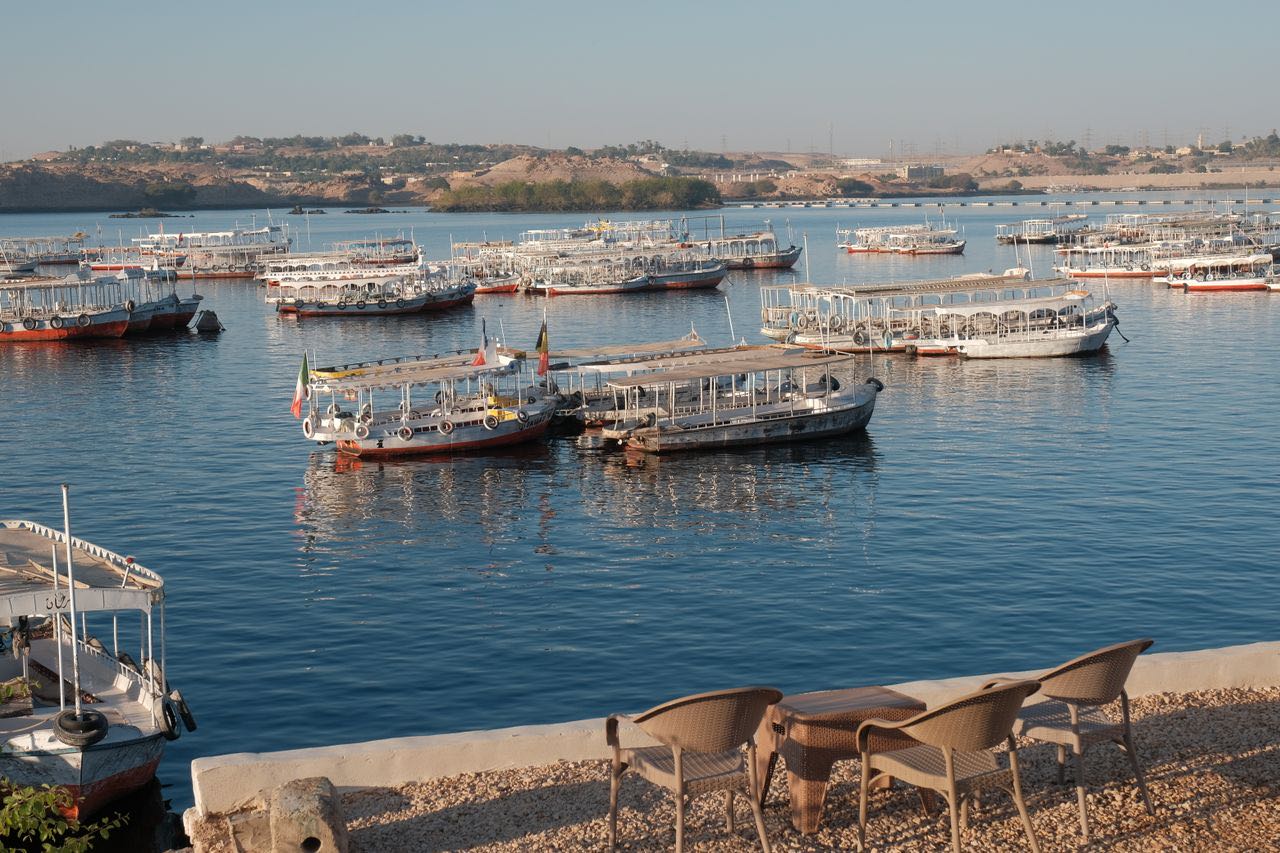
Aswan sits further south than Luxor and is noticeably hotter and drier for most of the year. It is also one of Egypt’s most rewarding destinations - the island temple of Philae, the enormous earthwork of the High Dam, the Nubian villages along the west bank, and the journey to Abu Simbel all justify the trip south. Timing matters more here than almost anywhere else in Egypt, both for comfort and for catching the Abu Simbel solar alignment if that is a goal.
Best Months at a Glance
November through February offers the most comfortable window for Aswan. Temperatures stay in the 22-28°C range during the day, dropping to 12-16°C at night - cool enough to appreciate the open-air Philae Temple and the boat journeys that connect the islands. October and March are acceptable but warmer; April through September is extremely hot.
High Season: November to February
This four-month window is Aswan’s main tourist season and for good reason. The temperature sits at its lowest, the Nile is a deep blue-green, and the felucca captains along the Corniche have competition for business - which tends to keep prices negotiable.
Philae Temple, dedicated to Isis and relocated to Agilkia Island after the construction of the High Dam, is accessible by short motorboat from the Aswan dock. The crossing takes about ten minutes each way and boat operators charge per person or per group. The evening Sound and Light show at Philae runs March through December; for the best experience visit the temple by day first, then return for the evening show on a separate evening.
The Nubian Museum in Aswan itself is excellent and air-conditioned - a worthwhile two hours covering the history of Nubia before and after the flooding of Lake Nasser. Entry is approximately EGP 200 (as of 2025).
For Abu Simbel, November and February bracket the solar alignment dates (February 22 and October 22). Visitors who time their trip to coincide with February 22 need to book accommodation in Abu Simbel village several months ahead - the event draws large crowds and the small number of hotels fills entirely.
Abu Simbel Alignment Days: February 22 and October 22
The solar alignment at Abu Simbel is one of Egypt’s most spectacular ancient engineering achievements. On these two days per year, the rising sun penetrates 65 metres into the inner sanctuary and illuminates four seated statues - three of the gods including Ramesses II himself, with the fourth statue of Ptah (god of the underworld) remaining in darkness. The effect lasts around twenty minutes.
The two annual alignment days are significant events, and Abu Simbel village is small - there are limited accommodation options. The alternative for many visitors is to do the road transfer from Aswan, arriving in the convoy that departs around 4am. This means a full day trip of 6-7 hours including travel, which is tiring but manageable.
Shoulder Season: October and March
October and March are the transition months. October sees temperatures from 28-38°C - warm by most standards but manageable if you limit outdoor activity to the mornings and treat the post-lunch hours as rest time. The October 22 alignment date falls within this window, making October a particularly worthwhile month for Abu Simbel visitors.
March is cooler than October and increasingly popular. It sits just before the heat begins building in April and is a good month for a Nile cruise south from Luxor through to Aswan, which typically takes four to five days. These cruises pass through the Esna and Edfu temples en route, both worth a stop.
Summer and Heat Season: May to September
Aswan’s summer is the most extreme in Egypt’s popular tourist corridor. June through August sees consistent highs of 42-46°C; in July and August, night temperatures rarely drop below 30°C. There is almost no cloud cover and the sun reflects off the Nile with intensity. The High Dam and the open Philae ticket booths are genuinely uncomfortable to stand in for more than a few minutes.
Visiting in summer is strongly discouraged for most travellers. The outdoor nature of Aswan’s main attractions - boat trips, temple plateaus, open-air ruins - makes a heat-avoidance strategy nearly impossible to execute.
Month-by-Month Summary
| Month | Temp (°C) | Notes |
|---|---|---|
| January | 12-24 | Best month; comfortable; busy near Abu Simbel |
| February | 14-26 | Alignment on Feb 22; book ahead |
| March | 17-30 | Excellent conditions; Nile cruise season |
| April | 22-37 | Heat rising; morning visits only |
| May | 26-42 | Very hot; outdoor sites challenging |
| June | 28-45 | Extreme heat; not recommended |
| July | 30-46 | Hottest month; very few visitors |
| August | 30-46 | Same as July; empty and very hot |
| September | 28-43 | Slight cooling; still very hot |
| October | 22-38 | Alignment on Oct 22; good shoulder period |
| November | 17-30 | Excellent; lower crowds than December |
| December | 13-26 | High season begins; comfortable and busy |
Plan Your Trip
If the Abu Simbel solar alignment is a priority, book accommodation in Abu Simbel village as early as possible for February 22 or October 22 - availability is extremely limited. For a standard visit, the 4am convoy from Aswan is a reliable fallback. Book the Philae evening Sound and Light show locally on arrival. For Nile boat trips and felucca crossings to Nubian villages, negotiate directly at the Corniche in Aswan; fixed-price tours through hotels are available but typically cost more.