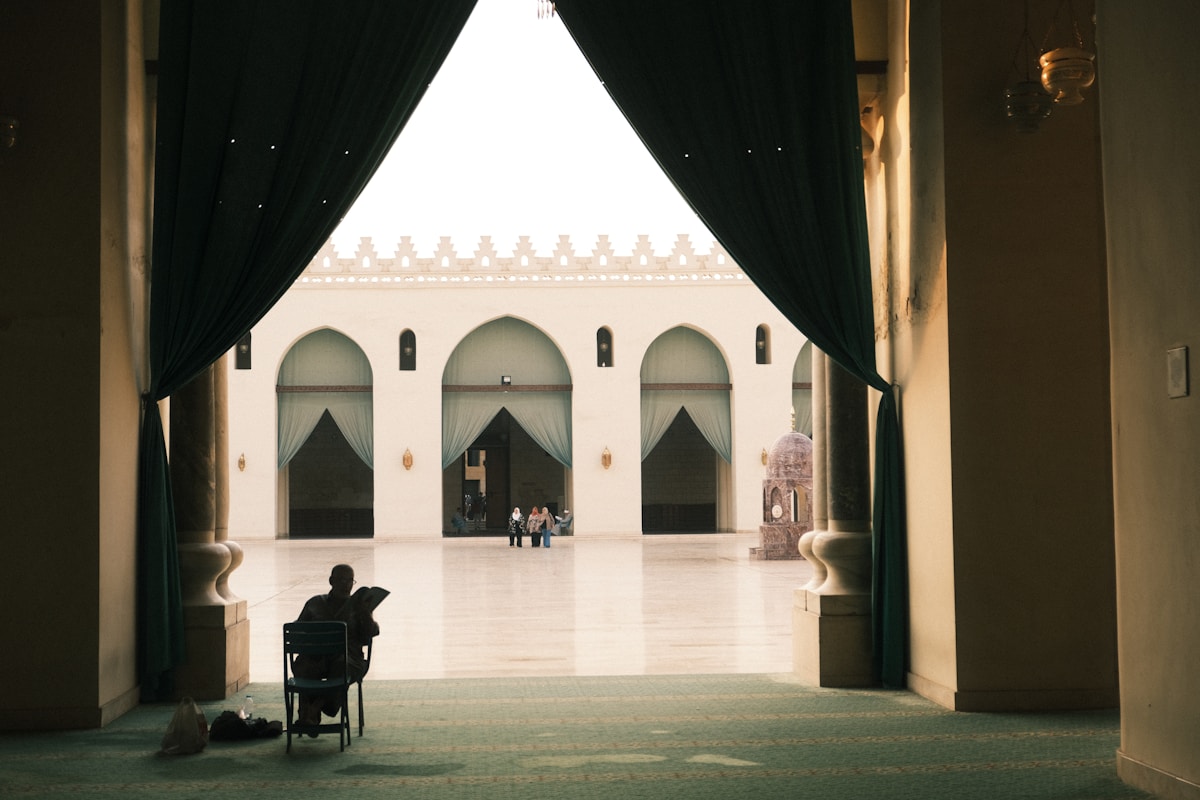
Islamic Cairo is the historic quarter of the city containing the highest concentration of medieval Islamic monuments anywhere in the world - over 600 listed structures within a relatively compact area. The district developed from the Fatimid foundation of Cairo in 969 AD and accumulated mosques, madrasas, mausoleums, and bazaars through the Ayyubid, Mamluk, and Ottoman periods. A full day gives time for the main sites; two days allows a more thorough exploration.
Al-Azhar Mosque and University
Al-Azhar was founded in 970 AD as the congregational mosque of the new Fatimid capital. The attached Al-Azhar University, established shortly after, is among the oldest universities in the world and remains the foremost institution of Sunni Islamic scholarship globally. The mosque has been significantly expanded since its founding; the architecture reflects contributions from multiple dynasties across a thousand years.
Non-Muslim visitors are welcome outside prayer times. Shoes are removed at the entrance and robes are available for women who need to cover their hair. Al-Azhar Square, immediately outside, is one of the more pleasant open spaces in this part of Cairo.
Khan el-Khalili
Khan el-Khalili is a covered bazaar established in the 14th century during the Mamluk period, initially as a caravanserai. It has operated as a commercial market continuously since then. The bazaar sells gold and silver jewellery, spices, perfume oils, textiles, papyrus, souvenirs, and a great deal of low-grade tourist merchandise. The key distinction is between the original covered lanes - where permanent merchants dealing in gold, silver, and spices operate - and the areas near Al-Hussein Square, which are more oriented toward tourist traffic.
Prices in the covered sections are negotiated; a fixed opening price is not the final price. If you are buying gold or silver, the price should be calculated by weight against the day’s metal price, with a separate agreed charge for workmanship. Agreeing this clearly before purchase avoids disputes.
The cafés around Al-Hussein Square, including the 19th-century Café Fishawi, are useful places to rest. They operate late into the night and give a different view of the bazaar after the daytime crowds have thinned.
Al-Hussein Square and the Mosque
Al-Hussein Mosque, adjacent to the bazaar, is one of the most significant religious sites in Egypt. It is held to contain relics associated with Imam Hussein, the grandson of the Prophet Muhammad, and is a major pilgrimage site during Shia observances. Non-Muslim entry to the interior is not typically permitted, though the square and exterior are accessible.
The Citadel (Qal’at al-Jabal)
Saladin began construction of the Citadel in 1176 on a rocky spur of the Muqattam Hills overlooking Cairo. It served as the seat of Egyptian government for nearly 700 years, through the Ayyubid, Mamluk, and Ottoman periods, until Khedive Ismail moved the seat of power to Abdeen Palace in the 19th century. The Citadel is approximately 3km from Khan el-Khalili - a taxi is the practical option.
Inside the Citadel complex, the Mohamed Ali Mosque (also called the Alabaster Mosque) is the dominant structure. Built between 1830 and 1848 in an Ottoman style, it is modelled loosely on the Blue Mosque in Istanbul. The interior walls are lined with alabaster to a height of approximately 11 metres, which gives the mosque its name. The twin minarets are visible from across Cairo. The courtyard contains an ornate clock tower gifted by King Louis-Philippe of France in 1846 in exchange for the obelisk now standing in the Place de la Concorde in Paris.
Navigating the District
Islamic Cairo is walkable but the streets are dense and the signage inconsistent. A basic map downloaded before your visit will prevent most orientation problems. The district is roughly bounded by Al-Azhar Street to the south, with the Citadel several kilometres to the southeast. Most visitors approach from Downtown Cairo by taxi; the walk from Downtown to Khan el-Khalili takes about 30 minutes.
Islamic Cairo pairs naturally with Coptic Cairo - the two districts together give a clear picture of the city’s pre-modern history. For the full Cairo overview including how to divide your days, see the Cairo city guide.
See Also
- Cairo Day Tours - guided tours of the Citadel, Al-Azhar, and Khan el-Khalili
- Guided Islamic Cairo and city tours - browse half-day and full-day guided walking tours
- Things to Do in Cairo - how Islamic Cairo fits into a wider Cairo visit
- Cairo History - the broader arc of Cairo’s development from Fustat to the modern city
Search hotels in Cairo on Booking.com
- Egyptian Museum Cairo - Islamic-era objects from Egypt sit alongside the pharaonic collections
- 3 Days in Cairo Itinerary - how to divide the main Cairo sites over three days