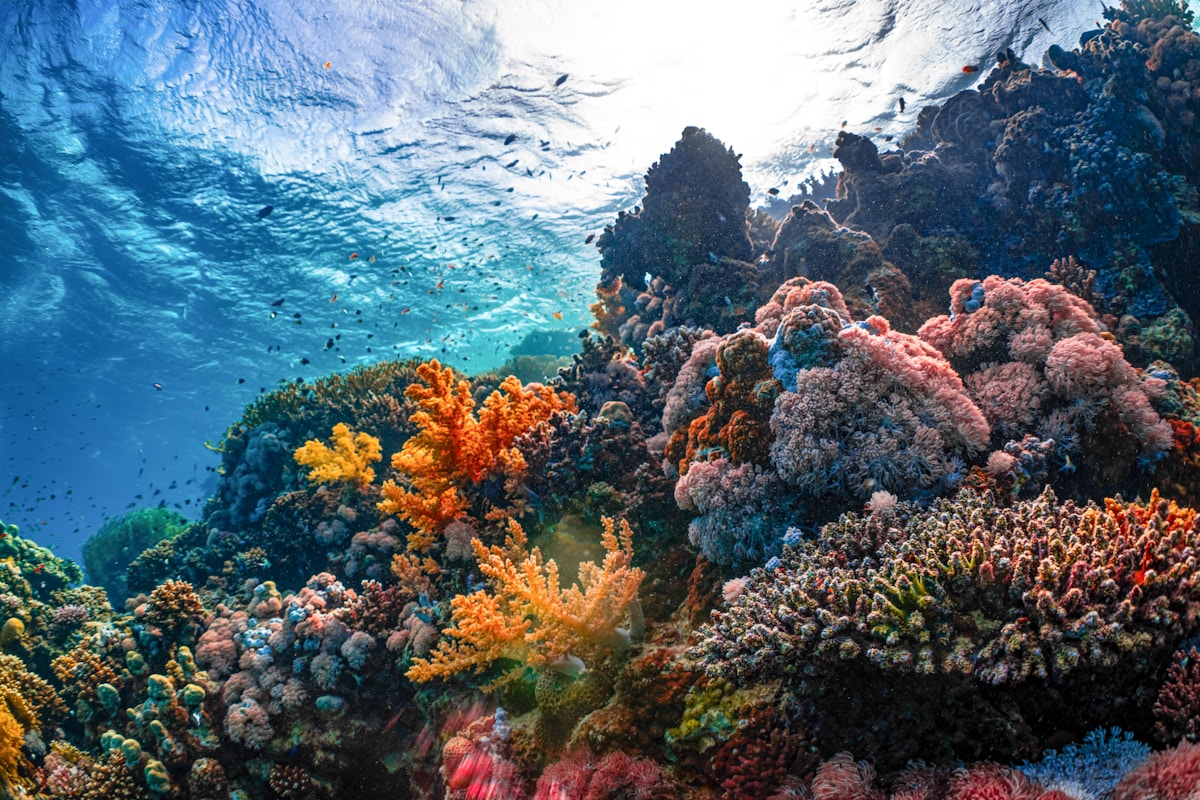
Hurghada and Marsa Alam share the same stretch of Red Sea but deliver fundamentally different experiences. Hurghada is Egypt’s busiest Red Sea resort: large, varied, and well connected. Marsa Alam, 200km to the south, is quieter, more focused, and home to some of the best reef diving in the Red Sea. Choosing between them is mainly a question of what you want from a Red Sea trip.
Quick Comparison
| Factor | Hurghada | Marsa Alam |
|---|---|---|
| Distance from Cairo | ~4.5 hrs by road / 1hr flight | ~6 hrs by road; own airport (RMF) |
| Reef condition | Degraded near shore; better offshore | Better preserved overall |
| Top dive sites | Giftun Island, Shaab Abu Nuhas, Brother Islands liveaboard | Elphinstone Reef, Abu Dabbab, Dolphin House |
| Dugong encounters | None | Yes, Abu Dabbab Bay |
| Budget options | Wide range — budget to luxury | Limited budget stock; skews mid and up |
| Combine with Nile | Easy (road to Luxor, flight to Cairo) | Possible (Luxor via Qena ~4–5 hrs) |
| European charter flights | Strong year-round | Seasonal (Oct–May) |
| Nightlife / restaurants | El Mamsha boardwalk; varied | Very limited |
| Best for | Mixed holidays, families, first-timers | Dedicated divers, dugong seekers |
Diving: Marsa Alam Wins on Reef Quality
Both cities have legitimate diving credentials. The meaningful difference is reef condition and site exclusivity.
Marsa Alam’s diving advantages:
- Elphinstone Reef — a narrow plateau with dramatic walls dropping to 70m+, consistently attracting oceanic whitetip sharks and occasional hammerheads. It ranks among the top five Red Sea dive sites and is not reachable from Hurghada on a day trip.
- Abu Dabbab Bay — a shallow, sandy bay that shelters resident dugongs. Dugong sightings are rare in the Red Sea; Abu Dabbab is one of the only reliable spots in Egypt. Green sea turtles are also regularly spotted here.
- Dolphin House (Shaab Samadai) — a protected horseshoe reef that a resident pod of spinner dolphins uses as a nursery. Snorkelling in the outer zone (permitted zones are enforced) yields virtually guaranteed dolphin encounters.
- Reef health generally — less boat traffic and fewer visitors over decades has kept corals in better condition than the Hurghada area, where shallow reefs near shore show significant degradation from anchoring and diver pressure.
Hurghada’s diving:
- Giftun Island Marine Reserve — colourful shallow reefs, turtles, reef sharks; accessible on a day trip for approximately EGP 800–1,200 including two dives. The headline Hurghada site for most visitors.
- Shaab Abu Nuhas — a submerged reef that has claimed four wrecks (including the Carnatic and Giannis D), now popular with recreational wreck divers.
- Brother Islands liveaboard — the Brothers (Al Akhawein) are two remote islands accessible only by liveaboard from Hurghada or Marsa Alam. Grey reef sharks, hammerheads, oceanic whitetips, and walls dropping past 200m make this a world-class liveaboard circuit. Many serious divers base themselves in Hurghada specifically to access this.
For snorkelling: Marsa Alam’s Abu Dabbab is excellent for beginners — shallow, calm, and with large charismatic animals. Hurghada’s Giftun Island is also popular and more accessible from a large resort base. The gap is smaller for snorkelling than for diving.
Verdict: Marsa Alam for reef diving, dugongs, and those wanting Elphinstone specifically. Hurghada for wreck diving, liveaboard access, and more operator competition on price.
Beaches and Atmosphere
Hurghada is a sprawling resort town that has grown continuously since the 1980s. The main resort strip (Sahl Hasheesh, Makadi Bay) consists of all-inclusive hotels with private beaches, pools, and organised activities. The El Mamsha pedestrian boardwalk in the older Sakalla area gives Hurghada a genuine evening social scene: restaurants, shisha cafes, souvenir shops, and beachside bars. The variety is considerable — budget guesthouses alongside five-star resorts, local restaurants alongside international chains. For visitors who find Hurghada’s sprawl overwhelming, El Gouna is a quieter, purpose-built lagoon town 25km north.
Marsa Alam is not a resort town in the same sense. The “town” itself is a small service settlement; the resorts are dispersed along a 60km stretch of coast, each relatively isolated. There is minimal nightlife, no equivalent to El Mamsha, and limited dining outside resort restaurants. What it offers instead is space, quiet, and unspoiled coastline. For some visitors, that is exactly what they want; for others, it becomes tedious after a week.
For a mixed family holiday: Hurghada. The variety of on-site facilities, the boardwalk, and the day-trip options to Luxor and Cairo give non-divers a full week without struggle.
For a dedicated underwater trip: Marsa Alam. The isolation is less of a problem when you are spending most daylight hours in the water.
Day Trips and What Else Is Nearby
From Hurghada:
- Luxor — approximately three to four hours by road; several day-trip operators run Karnak, the Valley of the Kings, and the Colossi of Memnon in a long day. Approximately $45–80 per person.
- Cairo — one-hour domestic flight (EgyptAir, EGP 900–1,500 one-way as of 2026); feasible as a two-day excursion.
- El Gouna — 25km north, 30-minute drive; easy afternoon trip.
- Eastern Desert and Wadi Hammamat — jeep excursions into the desert interior.
From Marsa Alam:
- Wadi El Gemal National Park — a combined land and marine protected area south of town with flamingos, gazelles, and undeveloped Red Sea coast; entry approximately EGP 100.
- Luxor via Qena — approximately four to five hours by road, feasible by private transfer; this route through the Eastern Desert is scenic.
- Berenice — a remote southern port, occasionally used as a starting point for advanced liveaboards further south.
Marsa Alam’s land excursion options are limited compared to Hurghada. If day trips to ancient sites are important to you, Hurghada’s logistics are easier.
Accommodation
Hurghada options range from backpacker hostels at EGP 300–600 per night to five-star all-inclusives at $200+ per night. The all-inclusive format dominates the mid and upper market; packages including flights from Europe are widely available. Notable mid-range properties include Steigenberger Aqua Magic (with its extensive water park, popular with families), Le Méridien Hurghada, and Albatros Aqua Blu.
Marsa Alam options skew toward mid-range and above dive-package resorts. Properties along the coast include:
- Shams Alam Beach & Dive Resort — one of Marsa Alam’s most established dive-focused resorts; packages include diving and meals; EGP 4,000–7,000 per night as of 2026
- Red Sea Diving Safari — camp-style accommodation at three sites south of Marsa Alam; popular with experienced divers; from approximately $60–100 per person per night
- Brayka Bay Resort — larger all-inclusive property; EGP 3,500–6,500
Budget accommodation in Marsa Alam is thin. If you are travelling on a tight budget, Hurghada has significantly better options.
See our full guides: where to stay in Hurghada and where to stay in Marsa Alam.
Getting There
Hurghada International Airport (HRG):
- Strong charter connections from UK, Germany, Poland, Czech Republic, Netherlands (especially October–April)
- EgyptAir flights from Cairo in ~1 hour; from EGP 900 one-way
- Frequent domestic connections across Egypt
Marsa Alam International Airport (RMF):
- Seasonal charters from Europe, mainly October–May; routes thinner and less reliable than HRG
- Air Arabia Egypt and EgyptAir from Cairo; approximately EGP 900–1,500 one-way
- Outside peak season, limited options — many visitors fly into HRG and transfer south
Overland from Hurghada to Marsa Alam: approximately three hours on the coastal highway (Route 65). Private taxis cost $70–100; shared transfers less. The drive itself passes interesting desert scenery and a few beach stops.
Prices at a Glance
All figures approximate, as of 2026.
| Expense | Hurghada | Marsa Alam |
|---|---|---|
| Budget accommodation (per night) | EGP 300–800 / $10–25 | EGP 2,000–3,500 / $60–110 |
| Mid-range hotel (per night) | EGP 2,500–5,000 / $80–160 | EGP 3,500–7,000 / $110–220 |
| Dive day trip (2 dives) | ~$55–90 | ~$65–100 |
| Snorkel excursion (half day) | EGP 600–900 | EGP 700–1,100 |
| Local restaurant meal | EGP 100–200 | Very limited outside resorts |
| Transfer from Cairo airport | ~$100–150 direct | ~$150–200+ or fly to RMF |
Who Should Choose Each
Choose Hurghada if:
- This is your first Red Sea trip
- You want budget flexibility — hostels to five-star all-inclusives
- Non-diving members of your group need beach clubs, restaurants, and evening activity
- You plan to combine the Red Sea with Cairo, Luxor, or the Nile Valley
- You want liveaboard access to the Brother Islands circuit
- You are flying from Europe on a package deal
Choose Marsa Alam if:
- Diving is the primary — or only — purpose of the trip
- Elphinstone Reef is on your bucket list
- Dugong encounters at Abu Dabbab are a target
- You actively want fewer tourists and lower boat traffic
- You have been to Hurghada before and want something different
- You are happy in a resort-only environment without a town to explore
Still undecided between Red Sea and Sinai? See our Hurghada vs Sharm el-Sheikh comparison — or if you are looking at the northern end of the Red Sea coast, El Gouna vs Hurghada covers the 30km stretch between those two towns.
Hurghada wins for variety and logistics; Marsa Alam wins for reef quality and marine life — if diving is what brought you to Egypt, the extra 200km south is worth it.
Ready to Plan Your Red Sea Trip?
- Marsa Alam Travel Guide
- Hurghada Travel Guide
- Red Sea & Sinai Itinerary
- Diving and Snorkeling in Marsa Alam
- Things to Do in Hurghada