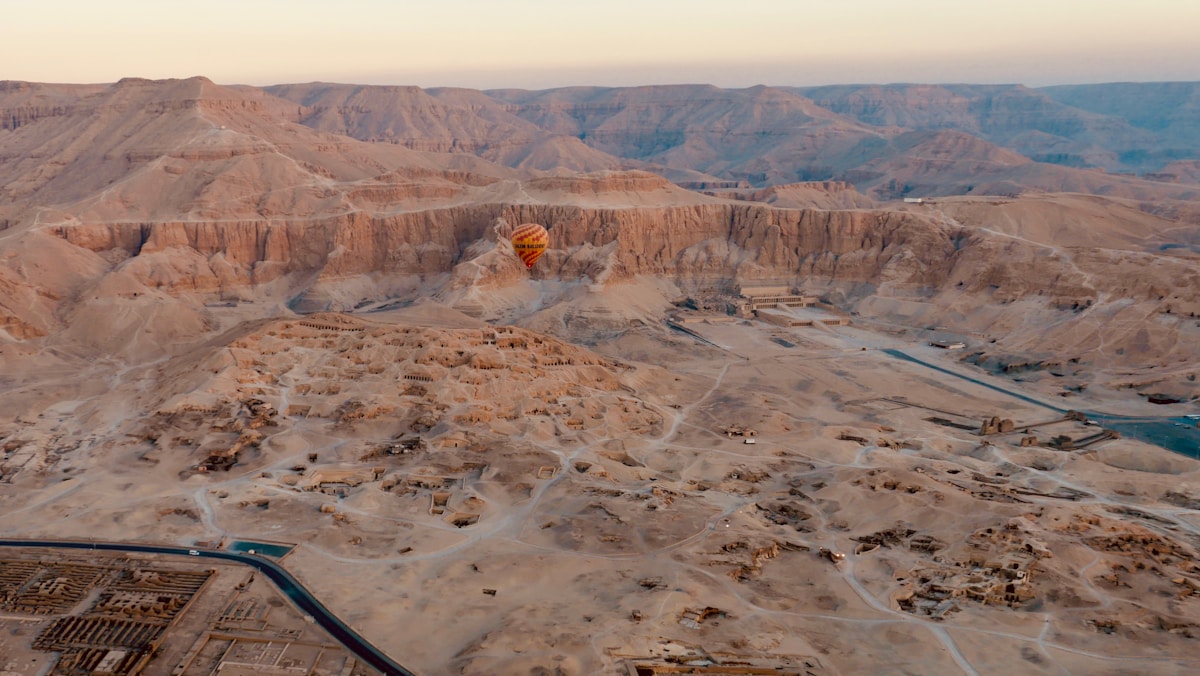
October marks the return of Egypt’s peak tourist season. The suffocating summer heat breaks, temperatures across the country drop to levels that allow full-day sightseeing, and tour operators run their complete schedules. The Abu Simbel sun festival on 22 October adds a once-a-year draw. For many travellers, October is the month Egypt starts to feel like its best self.
Weather Across Egypt in October
Cairo and the Delta: Daytime highs of 28–32°C with overnight lows of 18–21°C. A sharp drop from the 35–40°C of summer. The Pyramids of Giza are comfortable for extended morning visits, and afternoon sightseeing (the Citadel, Old Cairo, Khan el-Khalili) is manageable without the heat stress of previous months. Rain remains negligible — Cairo receives on average less than 5mm across the entire month.
Luxor and Aswan: Upper Egypt cools to 30–35°C in Luxor and 32–36°C in Aswan. These temperatures still warrant early starts — a 6am arrival at the Valley of the Kings gives several productive hours before the midday heat builds. By late October, Luxor afternoons drop to 28–30°C, which is genuinely comfortable for walking between Karnak and Luxor Temple. Aswan remains slightly warmer throughout the month.
Red Sea coast (Hurghada, Sharm El Sheikh, Dahab): Air temperatures of 30–34°C, water temperatures of 26–28°C. October is widely considered the single best month for Red Sea conditions — warm water, excellent visibility (20–30m), calm seas, and water temperatures that suit long dives without a wetsuit. The dive sites are busy but not yet at November–December capacity.
Sinai interior: Pleasant. St Catherine’s area sees 25–30°C by day and 10–14°C overnight — excellent for trekking. The Mount Sinai sunrise hike is comfortable with a light fleece for the pre-dawn summit wait. Trail conditions are dry and well-defined through October.
Entry Fees and Site Costs
Entry fees are charged in Egyptian pounds. The following approximate rates apply for 2025–2026:
| Site | Approximate Entry Fee |
|---|---|
| Giza Pyramid Complex | 160–200 EGP adults |
| Inside the Great Pyramid | 300 EGP extra |
| Valley of the Kings (3 tombs) | 240 EGP |
| Tomb of Tutankhamun (KV62) | 100 EGP extra |
| Karnak Temple | 150 EGP |
| Luxor Temple | 140 EGP |
| Egyptian Museum, Cairo | 200 EGP |
| Grand Egyptian Museum (GEM) | 450 EGP (permanent galleries) |
| Abu Simbel | 250 EGP |
| Colossi of Memnon | Free (exterior only) |
| Kom Ombo Temple | 100 EGP |
| Edfu Temple | 100 EGP |
A Luxor-focused day covering the Valley of the Kings, Karnak, and Luxor Temple runs approximately 530–640 EGP in fees. The Luxor Pass (available at official ticketing offices) offers a 5-day or 10-day option covering multiple sites and represents good value if you plan to visit four or more locations.
Red Sea Diving Conditions
October is the consensus best month for Red Sea diving. Water temperatures of 26–28°C balance comfort and marine activity — warm enough for wetsuit-free diving, cool enough that divers are not overheating on long ascents. Visibility at Ras Mohammed, the Thistlegorm wreck, and the Straits of Tiran averages 25–30m. Pelagic encounters remain strong at the southern sites, with hammerheads at Daedalus and thresher sharks at the Brothers. Liveaboard trips are in high demand — book 6–10 weeks ahead for October departures.
Day trips from Sharm El Sheikh to the Thistlegorm wreck run approximately 900–1,400 EGP including equipment, two dives, and lunch. Liveaboard rates from Hurghada for a 7-night southern Red Sea circuit start around 7,000–10,000 EGP per person.
Getting Around Egypt in October
Cairo to Luxor: The overnight sleeper train (Train 86, departing 7:30pm from Ramses Station, arriving Luxor approximately 7:30am) costs around 650–900 EGP per person in a first-class sleeper compartment with dinner and breakfast. Day trains to Luxor take 9–11 hours and start from approximately 120–180 EGP for second class. Book early in October — peak season demand fills the better cabins 2–3 weeks out.
Luxor to Aswan: Trains run frequently between the two cities — the journey takes 2.5–3.5 hours depending on the service. Second-class fares run 60–100 EGP; the air-conditioned first-class carriages cost 120–160 EGP. A day boat up the Nile between Luxor and Aswan (through a private tour) takes all day but includes Esna Lock and temple stops.
Aswan to Abu Simbel: The convoy system departs at around 3:30am–4am for a 3-hour drive to Abu Simbel, returning at midday. Shared minibus seats run 200–250 EGP per person; private taxis cost 700–1,000 EGP round trip. Egyptian Air flies between Aswan and Abu Simbel in 45 minutes for approximately 1,400–2,000 EGP one-way — worth considering for the 22 October festival when road demand peaks.
Cairo rideshare and taxis: Uber and Careem cover central Cairo and are far more reliable than hailing taxis at peak-season prices. Short rides within Downtown, Zamalek, or Maadi run 40–80 EGP; airport transfers to Heliopolis or Maadi typically run 200–350 EGP. The Cairo Metro covers the central axis (Helwan to New El-Marg) for around 6–10 EGP per journey and is useful for reaching Coptic Cairo from central stations.
Crowds and Pricing
October is the start of peak season, and pricing reflects the shift. Mid-range Cairo hotels rise to 2,500–5,000 EGP per night. Properties near the Pyramids — including the Mena House and several boutique options in Nazlet el-Semman — book out quickly for October weekends; reserve at least 6 weeks ahead. In Luxor, the Sofitel Winter Palace is the landmark property at 5,500–10,000 EGP per night during peak season, with river-facing rooms carrying a premium. Mid-range options in central Luxor run 1,500–3,000 EGP.
Search hotels in Egypt on Booking.com
Nile cruises between Luxor and Aswan charge peak rates from October onwards — a standard 4-night cruise on a mid-range boat starts around 6,500–10,000 EGP per person. Deluxe vessels and the Lake Nasser cruises (Aswan to Abu Simbel) start significantly higher. Book 6–8 weeks ahead for good cabin selection. Red Sea resort all-inclusives in Hurghada run 3,500–7,000 EGP per night.
The Pyramids, Valley of the Kings, and Abu Simbel see a significant jump in visitor numbers compared to September. Morning queues return at the most popular sites. Guided tours and private vehicles should be booked in advance rather than arranged on the day.
Festivals and Events
Abu Simbel Sun Festival (22 October): Twice a year — on 22 February and 22 October — sunlight penetrates the inner sanctuary of the Great Temple of Abu Simbel and illuminates three of the four statues at the rear wall. The October date marks the anniversary traditionally associated with Ramesses II’s coronation. Hundreds of visitors gather before dawn to witness the alignment, which lasts approximately 20 minutes. If you plan to attend, book Aswan accommodation early — the October festival is slightly less crowded than the February one but demand still exceeds local capacity. Basic hotels in central Aswan start from 1,200–1,800 EGP on festival dates; book 8–10 weeks ahead.
Moulid an-Nabi (date varies): The Prophet Muhammad’s birthday sometimes falls in October. Cairo’s celebrations centre on the Al-Hussein Mosque area, with Sufi music, processions, and street food. It is a public holiday — government offices and some shops close. Khan el-Khalili bazaar is particularly atmospheric during Moulid celebrations.
El Gouna Film Festival (October): One of the Arab world’s more prominent film events, held annually in El Gouna on the Red Sea coast. The festival draws international submissions alongside Egyptian and regional cinema, with screenings held across several venues in the resort town. If your visit overlaps, accommodation in El Gouna and nearby Hurghada books out — plan two to three months ahead.
Start of Nile cruise peak season: Most operators run their full fleet from October. The Luxor–Aswan route (3–4 nights) is the standard, with frequent departures. Lake Nasser cruises between Aswan and Abu Simbel also resume full schedules.
What to Do in October
- Complete Egypt circuits: October is ideal for the classic Cairo–Luxor–Aswan–Abu Simbel–Red Sea itinerary. Temperatures are comfortable everywhere and all services run at full capacity. A 10-day circuit covering all four zones is achievable without rushed scheduling
- Abu Simbel sun festival (22 October): Time a Nile cruise or Aswan stay to coincide with this date. The experience is unique — the engineering precision of a 3,200-year-old temple demonstrated in real time. Arrive by 5am for a position inside the inner sanctuary
- Hot air balloon over Luxor: Sunrise flights are weather-permitting and October’s clear skies give the best success rates of the season. Reputable operators including Magic Horizon and Sky Cruise charge approximately 1,500–2,000 EGP per person. Book the day before through your hotel or direct with the operator
- Nile cruises: The most popular month for the Luxor–Aswan route. Cool mornings on deck, warm afternoons at temple stops, and excellent light for photography. Edfu Temple at sunset from the cruise dock is a highlight most visitors don’t expect
- Desert expeditions: The White Desert and Bahariya Oasis enter their best season. Overnight camping under desert stars is comfortable again after the summer heat. Guided 2-night trips from Cairo (including transport, camping equipment, and meals) run approximately 3,000–5,000 EGP per person
Regional Tips for October
Luxor West Bank: The Valley of the Kings gets congested from 9am onwards in October. Visiting at opening (6am) and spending 2–3 hours before the majority of tour groups arrive makes a significant difference to the experience. Bring your own water — vendors inside the valley charge 25–40 EGP per bottle.
Red Sea certification: October is the most popular month for Open Water diving courses. Prices in Hurghada run approximately 3,500–5,000 EGP for a 3–4 day PADI Open Water course including all equipment and certification. Book at least a week ahead during October; courses fill fast.
Cairo heat management: By late October, Cairo afternoons are manageable — the Citadel, Islamic Cairo, and Coptic Cairo can be visited in the afternoon without heat stress. Khan el-Khalili is particularly good after 4pm when the temperature drops and the bazaar atmosphere builds. Budget 3–4 hours for the full circuit from the Tentmakers’ Bazaar to the Al-Hussein Square.
Where to Go in Egypt in October
- Cairo and the Pyramids: Cairo guide | Things to do in Cairo
- Luxor: Luxor guide | Valley of the Kings
- Aswan and Abu Simbel: Aswan guide | Abu Simbel
- Red Sea: Hurghada | Sharm El Sheikh | Dahab
Planning
See the best time to visit Egypt for a full month-by-month breakdown, or the Egypt travel budget guide for cost planning. October is ideal for the 10 days in Egypt itinerary combining Cairo, Luxor, Aswan, and the Red Sea. For diving in October, the Red Sea diving guide has site and operator recommendations. The Abu Simbel temples guide covers the 22 October sun festival in detail. Browse October Egypt tours — the season reopens with good availability and temperatures.
Ready to Plan Your Trip?
Here are our most popular Egypt itineraries to help you make the most of your visit:
- 1-Week Egypt Itinerary
- 5 Days in Egypt
- 10-Day Egypt Itinerary
- 2 Weeks in Egypt
- Egypt Budget Itinerary
Plan Your Egypt Trip: Compare flights to Cairo · Travel insurance · Egypt eSIM