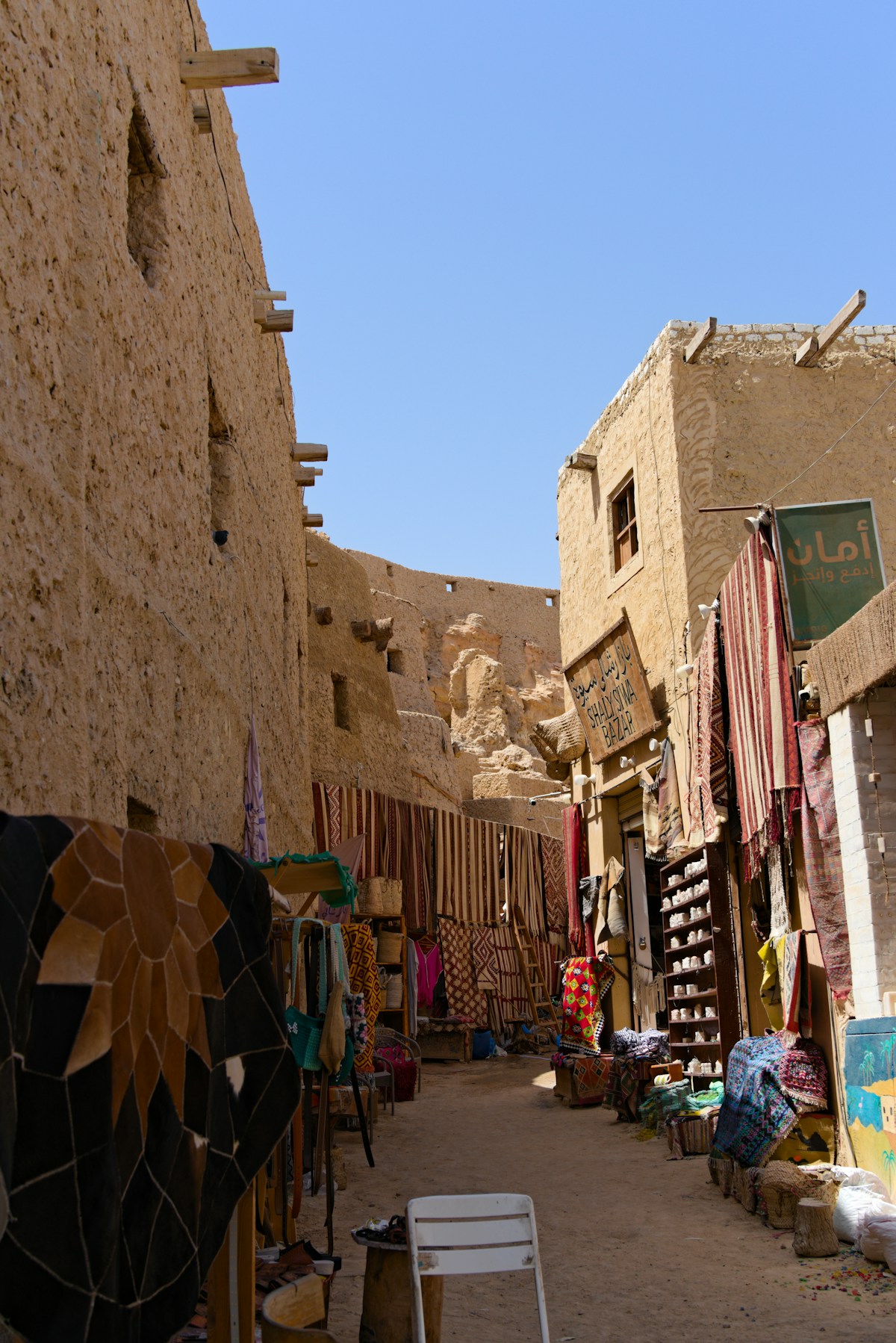
Egypt speaks its own dialect of Arabic - Egyptian Arabic (Masri) - which differs significantly from the Modern Standard Arabic taught in textbooks. Egyptian Arabic is the most widely understood dialect in the Arab world thanks to Egyptian cinema and music. While the written language uses Arabic script, we have provided phonetic transliterations below. English is spoken in tourist infrastructure, but local markets, taxis and neighbourhood restaurants operate almost entirely in Arabic.
Greetings and Basics
| English | Egyptian Arabic | Pronunciation |
|---|
| Hello | Ahlan | AH-lan |
| Hello (formal) | Assalamu alaikum | as-sa-LA-mu a-LAY-kum |
| Goodbye | Ma’a salama | MA-a sa-LA-ma |
| Please | Min fadlak (m) / Min fadlik (f) | min FAD-lak / min FAD-lik |
| Thank you | Shukran | SHUK-ran |
| Yes | Aywa | AY-wa |
| No | La’ | LA |
| Excuse me | Law samaht | law sa-MAHT |
| Sorry | Ana asef (m) / Ana asfa (f) | a-na A-sef / a-na AS-fa |
| How are you? | Izzayak? (m) / Izzayik? (f) | iz-ZAY-ak / iz-ZAY-ik |
Getting Around
| English | Egyptian Arabic | Pronunciation |
|---|
| Where is…? | Fein…? | FEIN |
| How much is it? | Bi kam da? | bi KAM da |
| Left | Shimal | shi-MAL |
| Right | Yimeen | yi-MEEN |
| Stop here | Hena kwayyes | HE-na KWAY-yes |
| Taxi | Taxi | TAK-si |
| Bus station | Mahattit al-otobees | ma-HAT-tit al-o-to-BEES |
| Airport | Matar | ma-TAR |
| I don’t understand | Mish fahem (m) / Mish fahma (f) | mish FA-hem / mish FAH-ma |
| Too expensive | Ghali awi | GHA-li A-wi |
Food and Dining
| English | Egyptian Arabic | Pronunciation |
|---|
| The menu, please | El-menu, law samaht | el-ME-nu law sa-MAHT |
| The bill, please | El-hesab, law samaht | el-he-SAB law sa-MAHT |
| Water | Mayya | MAY-ya |
| Delicious | Helw awi | HEL-w A-wi |
| Not spicy | Min gheir harr | min GHEIR HARR |
| I am vegetarian | Ana nabati | a-na na-BA-ti |
| Bread | Eish | EISH |
| Tea | Shai | SHAI |
| Coffee | Ahwa | AH-wa |
| Cheers! | Fi sehetak! | fi se-HE-tak |
Numbers
| Number | Egyptian Arabic | Pronunciation |
|---|
| 1 | Wahed | WA-hed |
| 2 | Itnein | it-NEIN |
| 3 | Talata | ta-LA-ta |
| 4 | Arba’a | ar-BA-a |
| 5 | Khamsa | KHAM-sa |
| 6 | Sitta | SIT-ta |
| 7 | Sab’a | SAB-a |
| 8 | Tamanya | ta-MAN-ya |
| 9 | Tis’a | TIS-a |
| 10 | Ashara | A-sha-ra |
Emergency Phrases
| English | Egyptian Arabic | Pronunciation |
|---|
| Help! | Elhaoni! | el-ha-OO-ni |
| Hospital | Mustashfa | mus-TASH-fa |
| Police | Bolees | bo-LEES |
| I need a doctor | Ana ayz doktor (m) / Ana ayza doktor (f) | a-na AYZ dok-TOR |
| Call an ambulance | Etasal bi al-is’af | et-A-sal bi al-is-AF |
A few pronunciation notes for Egyptian Arabic: the “kh” sound is a throaty rasp from the back of the mouth (like clearing your throat gently), and the “gh” is its voiced equivalent. The letter “ain” (represented by the apostrophe in words like “sab’a”) is a constriction of the throat that has no English equivalent - if you cannot produce it, simply skip it and you will still be understood. One essential cultural tip: when someone does you a favour, respond with “shukran giddan” (thank you very much) and you will see an immediate smile.
See Also
Guided tours of Egypt are a practical context in which to practise the basics above - local guides appreciate the effort and will often correct pronunciation in a helpful way.
Ready to Plan Your Trip?
Here are our most popular Egypt itineraries to help you make the most of your visit: