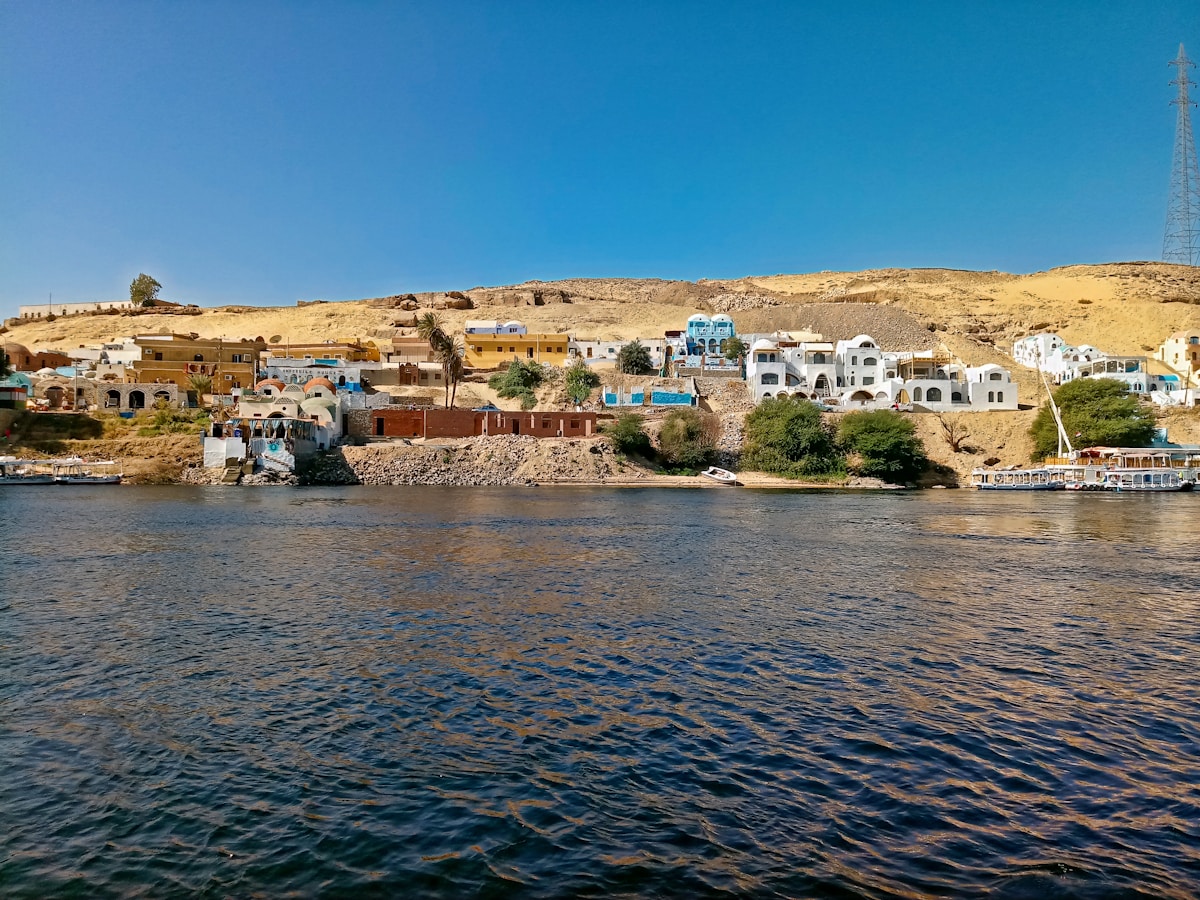
The Nubian Museum in Aswan opened in 1997 and has since established itself as one of the finest regional museums in Egypt - arguably one of the finest in Africa. Its collection exists because of a crisis: the construction of the Aswan High Dam in the 1960s and early 1970s created Lake Nasser, permanently submerging approximately 500km of the Nile Valley that had been home to Nubian settlements, temples, cemeteries, and cities for over three millennia.
UNESCO coordinated an international rescue campaign that salvaged thousands of objects before the waters rose. Some of the most significant monuments - Abu Simbel, Philae Temple, Kalabsha - were moved entirely. Smaller finds, sculptures, tools, pottery, and everyday objects were excavated and transferred to storage. The Nubian Museum was purpose-built to house this collection and to tell the story of Nubian civilisation to a public that had, until then, encountered Nubia primarily as a footnote to Egyptian history.
The Building
The museum was designed by Egyptian architect Mahmoud El-Hakim in consultation with UNESCO, built into a hillside below the Fatimid cemetery on the southern edge of Aswan city. The building works with its landscape rather than against it - rooms are partly embedded in the hillside, and an outdoor sculpture garden descends through planted terraces toward the valley below.
The exterior includes several large architectural elements typical of Nubian vernacular design: painted facades, geometrically patterned walls, and the use of local sandstone. The building itself is considered a significant work of contemporary Egyptian architecture.
What to See: The Permanent Collection
Prehistoric and Early Nubian Cultures
The ground floor opens with the earliest chapters of human habitation in the Nile Valley - rock art, stone tools, pottery from the Neolithic period, and objects from the A-Group culture (approximately 3800–3100 BC), which flourished in Lower Nubia during the same period as Predynastic Egypt. The A-Group Nubians traded extensively with Egypt and left elaborate cemeteries with grave goods that reveal a sophisticated material culture.
The Kerma Culture
The Kerma culture (approximately 2500–1500 BC) represents the first great indigenous Nubian kingdom, centred at Kerma in what is now northern Sudan. Kerma’s rulers were powerful enough to challenge Egyptian domination of the region and formed alliances with the Hyksos invaders of Egypt during the Second Intermediate Period.
The museum holds significant Kerma pottery - distinctive black-topped red ware that is among the finest ceramic production of the ancient world. The geometric precision of the designs and the quality of firing reflect a highly developed tradition. There are also bronze weapons, ivory objects, and jewellery recovered from elite Kerma burials.
New Kingdom Egypt in Nubia
During the New Kingdom (1550–1070 BC), Egypt conquered Nubia as far south as the fourth cataract and built a series of temples to Egyptian gods alongside the existing Nubian religious traditions. The museum holds architectural fragments, statuary, and relief carvings from temples in this period, including pieces from sites that no longer exist above water.
The Kingdom of Kush
Following Egypt’s decline at the end of the New Kingdom, Nubia reasserted its independence and eventually produced the 25th Dynasty - Nubian (Kushite) pharaohs who conquered Egypt and ruled as kings of both countries from approximately 747–664 BC. The museum’s collection includes royal sculptures from this period that demonstrate the close interweaving of Egyptian and Nubian royal iconography: the double uraeus (a mark of dual kingship), the Nubian cap crown, and statues that reflect both artistic traditions simultaneously.
The Kingdom of Kush survived the Assyrian invasion of Egypt and continued independently for another thousand years at its capital Meroë in Sudan. The museum covers this later period with jewellery, bronze objects, and pottery from the Meroitic period.
The UNESCO Rescue Artifacts
A dedicated section covers the 1960s–1970s international rescue campaign in detail, with historical photographs, maps of the submerged area, and objects representative of the different excavation projects. The human scale of the displacement is made concrete here - photographs of Nubian families leaving villages that would soon be flooded, documentation of the community resettlements, and records of the race against rising water.
This section functions as both an archaeological record and a memorial to a living culture that was profoundly disrupted by the dam’s construction.
The Outdoor Garden
The museum’s terraced garden contains a series of large sculptures and architectural elements too large for interior display - including a tomb façade, a reconstructed traditional Nubian house showing vernacular architecture, and several large granite sculptures. The garden is pleasant to walk through in the cooler hours and provides good views toward the Nile and the Elephantine Island.
A reconstructed Nubian house in the garden shows the characteristic architectural features of traditional Nubian dwellings before the displacement: thick mud-brick walls, interior courtyards, and painted exterior decorations in blue, white, and yellow.
Entry Fees and Opening Hours
Entry to the Nubian Museum costs approximately EGP 200 per person as of 2026. Opening hours are 9am to 9pm daily (the museum stays open into the evening, making it one of the few Aswan sites suitable for a late-afternoon visit after the afternoon heat has passed).
A combined ticket covering the Nubian Museum and Philae Temple may be available at a reduction; ask at either ticket window. English-language labelling throughout the museum is good - a guide is not essential, but the museum does offer guided tours in English at approximately EGP 100–150 as of 2026 per group; arrange at the information desk. Pre-booked guided Aswan tours that include the Nubian Museum alongside Philae and the Unfinished Obelisk are also available and remove the logistics of arranging independent transport.
Getting to the Museum
The Nubian Museum is located approximately 2km south of central Aswan, near the Basma Hotel. From the Aswan Corniche, a taxi takes 5–10 minutes and costs approximately EGP 20–30 as of 2026. Some hotels in the southern part of Aswan are within walking distance (15–20 minutes). There is a small car park at the museum entrance.
Search hotels in Aswan on Booking.com
Combining the Museum with Other Aswan Sites
Recommended full-day itinerary for history visitors:
- 9am: Nubian Museum (2 hours)
- 11:30am: Walk or taxi to Unfinished Obelisk (20 minutes; entry approximately EGP 100 as of 2026)
- 1pm: Lunch - restaurants along the Corniche near Elephantine Island serve traditional Nubian dishes including ful, ta’amiya, and grilled fish
- 3pm: Taxi to Shellal boat landing for Philae Temple (40-minute visit plus boat time)
- Evening (optional): Philae Sound and Light Show
For the context behind the rescue campaign, the Philae Temple guide covers the UNESCO relocation operation in detail. The most ambitious rescue project of the same campaign - moving the entire temples of Abu Simbel - is covered in our Abu Simbel guide.
For full logistics on staying in Aswan - hotels at different price points, restaurant recommendations, and transport options - see our Aswan city guide.
See Also
- Philae Temple - the island sanctuary of Isis, also rescued by UNESCO
- Abu Simbel Temples - the most dramatic of the Nubian rescue operations
- Aswan Itinerary - how to plan two to three days in Aswan
- Karnak Temple - the largest pharaonic temple complex in Egypt
- Ancient Egypt History Overview - context for Egypt’s relationship with Nubia across three millennia
- Nile Cruise Egypt - the Nubian Museum makes an excellent first or last stop on a Luxor–Aswan cruise