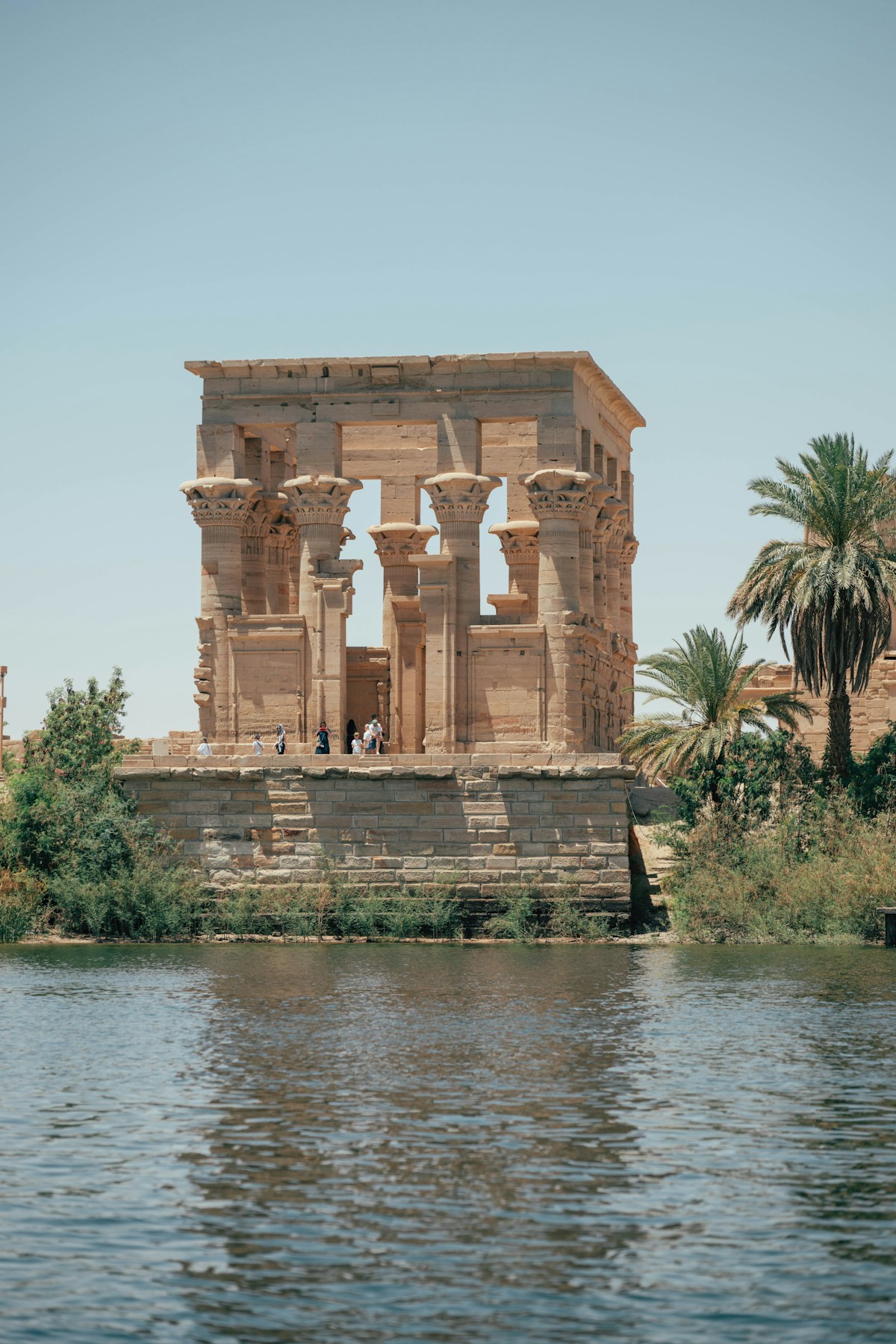
Aswan is where the Nile grows wilder and the desert comes closest to the water. The pace here is slower than Cairo or Luxor, the Nile is broad and island-studded, and the Nubian culture gives the city a distinct character from anywhere else in Egypt. Two days is enough to see Aswan’s best - the island temple of Philae, a Nubian village reached by motorboat, the ancient Unfinished Obelisk still attached to the quarry floor, and the extraordinary Abu Simbel temples 280 km to the south.
Most travellers reach Aswan from Luxor. The sleeper train that runs Cairo to Luxor and Aswan continues south, arriving in Aswan approximately 2–3 hours after Luxor. If you are flying into Egypt, search and book flights to Egypt - EgyptAir operates direct services to Aswan from Cairo and Luxor.
Day 1: Philae Temple, Nubian Village and Felucca
Morning - Philae Temple
Start at Philae Temple (open 7:00 AM – 5:00 PM). Admission costs approximately EGP 450 (USD 9 as of 2026). The temple sits on Agilkia Island and is reached by a short motorised boat crossing from the dock at the Old Cataract landing - the boat costs approximately EGP 100–200 per person return (negotiate before boarding). Allow 2 hours to explore the main sanctuary, the colonnaded forecourt and the small kiosk of Trajan, which is among the most photographed structures in Upper Egypt.
Dedicated to Isis, Philae was the last active ancient Egyptian temple - still in use into the 6th century AD. When the Aswan High Dam was completed in 1971, UNESCO oversaw the extraordinary relocation of the entire temple complex, stone by stone, from its original island (now submerged) to Agilkia. Look for the Christian crosses carved into the older hieroglyphs - evidence of the temple’s use as a church in the early Byzantine period.
Lunch: Return to Aswan and head to Makka Restaurant on the Corniche. A reliable local favourite serving Egyptian staples including ful, grilled fish and fresh bread, approximately EGP 200–400 (USD 4–8) per person.
Afternoon - Nubian Village
Arrange a motorboat to a Nubian village from the Corniche dock - agree a price before boarding (approximately EGP 200–400 / USD 4–8 for a 2-hour trip including time in the village). The Gharb Sehel and West Sehel villages are the most commonly visited. Nubian families here have built vivid, colour-painted houses; many offer tea and invite visitors to walk through their compounds.
This is one of Aswan’s most memorable experiences - the Nubian communities displaced by the Aswan High Dam resettled here, and their culture (distinct language, music, architecture and cuisine) is consciously preserved and shared with visitors who approach respectfully.
Late Afternoon - Unfinished Obelisk
The Unfinished Obelisk sits in an ancient granite quarry 2 km south of the Aswan city centre. Open 7:00 AM – 5:00 PM, admission approximately EGP 180 (USD 4 as of 2026). At 42 metres long and estimated at 1,200 tonnes, it would have been the largest obelisk ever erected had a crack not developed in the granite during quarrying, causing the ancient engineers to abandon it in place. The quarry marks are still clearly visible - chisel grooves and worker marks cut into the pink Aswan granite 3,500 years ago.
Evening - Sunset Felucca and Dinner
Join a felucca sunset sail around Elephantine Island (approximately EGP 150–300 / USD 3–6 per person for a shared hour-long trip, or EGP 500–800 private). The light on the Nile at dusk in Aswan is particularly fine - the water turns copper and the palm-fringed islands glow.
Dinner: Panorama Restaurant on the Corniche offers good Nile views and a reliable Egyptian menu including grilled meats, kofta and salads. Expect approximately EGP 400–700 (USD 8–14) per person. For something cheaper, street-food stalls near the south end of the Corniche sell fresh-cooked kofta and flatbreads for EGP 50–100.
Where to stay:
- Budget: Keylany Hotel - a family-run guesthouse in the centre of Aswan with small, clean rooms and a Nile-facing roof terrace. From approximately EGP 800–1,200 (USD 16–24) per night. Excellent value and a genuinely welcoming atmosphere.
- Mid-range: Mövenpick Resort Aswan - 4-star property on Elephantine Island, accessible by free hotel ferry from the Corniche. From approximately USD 90–140 per night.
- Luxury: Sofitel Legend Old Cataract Aswan - the Victorian-era palace on a granite promontory above the Nile. From approximately USD 300 per night as of 2026. This is where Agatha Christie wrote Death on the Nile and where Winston Churchill once stayed. The terrace bar at sunset is one of Egypt’s great atmospheric experiences even if you are not a guest.
Search hotels in Aswan on Booking.com
Day 2: Abu Simbel, Unfinished Obelisk and Aswan Souk
Pre-Dawn - Abu Simbel Day Trip
This requires an early start. The overland convoy departs Aswan at 3:00–3:30 AM and arrives at Abu Simbel by 6:00–6:30 AM, giving you 2–3 hours before the midday heat becomes oppressive.
By road: Shared minibuses in the tourist convoy cost approximately USD 20–30 per person return (including transport only - not entrance fees). Book through your hotel the evening before. The 280 km desert road takes approximately 3 hours each way.
By flight: EgyptAir operates a daily flight from Aswan to Abu Simbel (approximately 45 minutes, USD 100–150 return as of 2026). This gives more time at the site and is significantly more comfortable. For organised Abu Simbel day trips with transport included, browse Abu Simbel tours.
Abu Simbel admission: Approximately EGP 900 (USD 18 as of 2026). The site opens at 5:00 AM. Two temples were cut from the sandstone cliff and relocated 65 metres uphill between 1964 and 1968 to save them from the rising waters of Lake Nasser - one of the most ambitious engineering operations in history. The Great Temple of Ramses II contains four colossal seated pharaoh statues 21 metres high. The smaller Temple of Nefertari (dedicated to Hathor) is unusual in ancient Egypt for depicting a queen of equal scale to her husband. Allow 90 minutes on site.
Return to Aswan by early afternoon.
Afternoon - Aswan Souk
The Aswan Souk runs along Sharia el-Souk in the centre of the city, one of the most atmospheric markets in Upper Egypt. Unlike Khan el-Khalili in Cairo, it remains primarily a working local market rather than a tourist souk. Look for Nubian spices (hibiscus/karkade, cumin, fenugreek), hand-woven baskets, and the characteristic deep-blue and yellow hand-embroidered Nubian textiles. Hard bargaining is expected - start at roughly 40–50% of the first asking price.
Optional: If you have energy remaining, the Aswan Museum on Elephantine Island (approximately EGP 200 / USD 4) houses objects from the ancient settlement of Yebu, including a Nilometer - a calibrated stone staircase used to measure and predict the Nile flood.
Evening - Departure or Extension
If continuing south is not on your plan, evening trains from Aswan return to Luxor (approximately 3–4 hours) and Cairo (approximately 12–13 hours overnight). For travellers using a 3-week Egypt itinerary, Aswan is typically followed by Dahab or the Red Sea coast via flight or road.
Dinner: Return to the Corniche for a final meal. Nubian House Restaurant near the north end of the waterfront specialises in Nubian dishes including pigeon, fish tagine and date-sweetened desserts. Approximately EGP 400–700 (USD 8–14) per person.
Practical Notes
Connectivity: An eSIM for Egypt covers Aswan city reliably - useful for Uber equivalents and maps around the Corniche. Travel insurance for Egypt is worth arranging before you travel, particularly if the Abu Simbel day trip is on the plan.
Weather: Aswan is one of the hottest cities on earth in summer - regularly exceeding 45°C. October to March is the recommended window, with temperatures of 20–30°C during the day.
Getting around Aswan: The city centre is compact and walkable. Tuk-tuks are available for short hops (EGP 20–40). Taxis to the airport or the High Dam cost approximately EGP 100–200. The hotel ferry to Elephantine Island is typically free for guests of properties on the island.
Abu Simbel Sound and Light Show: If you choose the flight option and stay overnight at Abu Simbel, the Sound and Light Show (approximately USD 20 per person) runs nightly and is an atmospheric way to see the temples again after dark. For guided Aswan excursions with transport included, browse Aswan tours and activities.
Book Your Trip
- Flights - Find the best fares to Egypt
- Travel Insurance - Get covered before you go
- eSIM - Stay connected from landing
- Airport Transfers - Pre-book your transfer from Cairo or Hurghada
- Car Rental - Compare prices across providers
- Tours & Activities - Browse Egypt tours on GetYourGuide