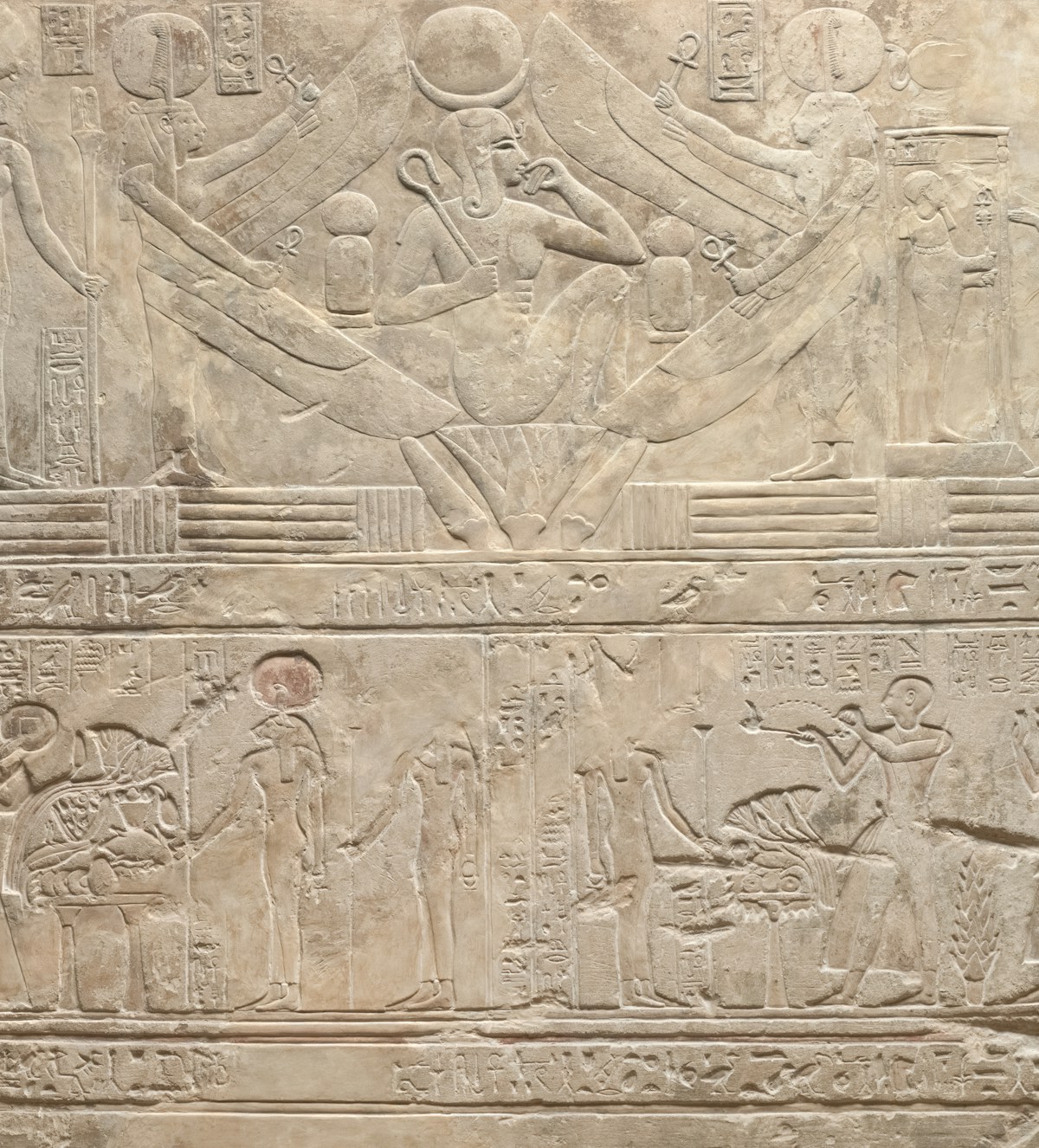
Ancient Egyptian civilisation lasted approximately 3,000 years. It began with the unification of Upper and Lower Egypt under Narmer around 3100 BC and ended when Cleopatra VII died in 30 BC and Egypt became a Roman province. No other state-level civilisation in recorded history maintained a recognisable cultural and political identity for a comparable period. This overview covers the major periods, key rulers, and the systems of belief and writing that defined pharaonic Egypt.
The Old Kingdom: The Age of Pyramids
The Old Kingdom (c.2686–2181 BC) is associated above all with pyramid construction. Djoser’s Step Pyramid at Saqqara, designed by the architect Imhotep around 2650 BC, is the earliest large-scale stone structure in history. Sneferu, Khufu, Khafre, and Menkaure followed in rapid succession with progressively refined pyramid complexes on the Giza Plateau and at Dahshur. The pyramid form was not simply a tomb - it was a theological statement about the pharaoh’s relationship to Ra and the mechanisms of resurrection.
The Old Kingdom collapsed into the First Intermediate Period (c.2181–2055 BC), a century of political fragmentation and regional rule.
The Middle Kingdom
The Middle Kingdom (c.2055–1650 BC) saw reunification under the Eleventh Dynasty Theban rulers. Literature flourished - works like the Story of Sinuhe date from this period. Egypt expanded trade networks into Nubia and the Levant. The period ended with the Second Intermediate Period and the Hyksos - a West Asian people who controlled northern Egypt for over a century before being expelled by Theban rulers who established the New Kingdom.
The New Kingdom: Imperial Egypt
The New Kingdom (c.1550–1070 BC) represents Egypt at the height of its imperial reach. The pharaohs buried in the Valley of the Kings all belong to this period. Hatshepsut ruled as pharaoh for roughly two decades - unusual in a system built around male rulership - and launched major building campaigns including her mortuary temple at Deir el-Bahari. Thutmose III extended Egyptian control into the Levant through a series of military campaigns.
Akhenaten (c.1353–1336 BC) introduced a radical religious shift: abandoning the traditional polytheist pantheon in favour of exclusive worship of the sun disc Aten. He moved the capital to a new city at Amarna. His changes were reversed after his death - his successors, including Tutankhamun, restored the traditional cults and eventually erased Akhenaten’s name from monuments. Ramesses II (c.1279–1213 BC) ruled for approximately 66 years, built Abu Simbel and the Ramesseum, and signed what is believed to be the world’s first recorded peace treaty with the Hittites.
The Late and Ptolemaic Periods
Following the New Kingdom’s collapse, Egypt experienced periods of Libyan, Nubian, and Assyrian rule before the Late Period (664–332 BC) saw a partial revival under native dynasties. Alexander the Great conquered Egypt in 332 BC without significant resistance. After his death, his general Ptolemy established a dynasty that lasted nearly three centuries.
The Ptolemaic rulers were Macedonian Greeks who adopted pharaonic titles and supported Egyptian religious institutions while conducting government primarily in Greek. Cleopatra VII (69–30 BC) was notably the first of the dynasty to learn the Egyptian language. Following her death after the defeat by Octavian, Egypt became a Roman province.
Writing: Hieroglyphs and the Rosetta Stone
Ancient Egyptian writing existed in three scripts: hieroglyphs (monumental, carved on temple and tomb walls), hieratic (a cursive script for administrative and literary use), and demotic (a later simplified script for everyday use). The ability to read these scripts was lost in late antiquity and not recovered until 1822, when Jean-François Champollion deciphered hieroglyphs using the Rosetta Stone - a decree from 196 BC inscribed in hieroglyphs, demotic, and ancient Greek.
Religion and the Major Deities
The Egyptian pantheon was large and regionally variable. The most significant deities across the pharaonic period include Ra and Amun (later syncretised as Amun-Ra, the dominant state deity), Osiris (god of the afterlife and resurrection), Isis (mother goddess, sister-wife of Osiris), Horus (god of kingship - pharaohs were considered living manifestations of Horus), Anubis (associated with death and mummification), Thoth (god of wisdom and writing), and Ptah (god of creation and crafts, patron of craftsmen). The interplay between these figures formed the theological framework behind funerary practice, temple ritual, and royal ideology.
Explore Key Sites
- Pyramids of Giza
- Saqqara and the Step Pyramid
- Dahshur and Memphis
- Akhenaten and Amarna
- Valley of the Kings
- Karnak Temple
- Abu Simbel Temples
- Grand Egyptian Museum
Plan Your Visit
Search hotels in Egypt on Booking.com
Most of the sites connected to this history are concentrated in Cairo and Upper Egypt. See our city guides for Cairo, Luxor, and Aswan, or browse the Egypt history itinerary for a trip designed around the pharaonic sites. You can also browse Egypt tours and guided Egyptological experiences to find Egyptologist-led itineraries.