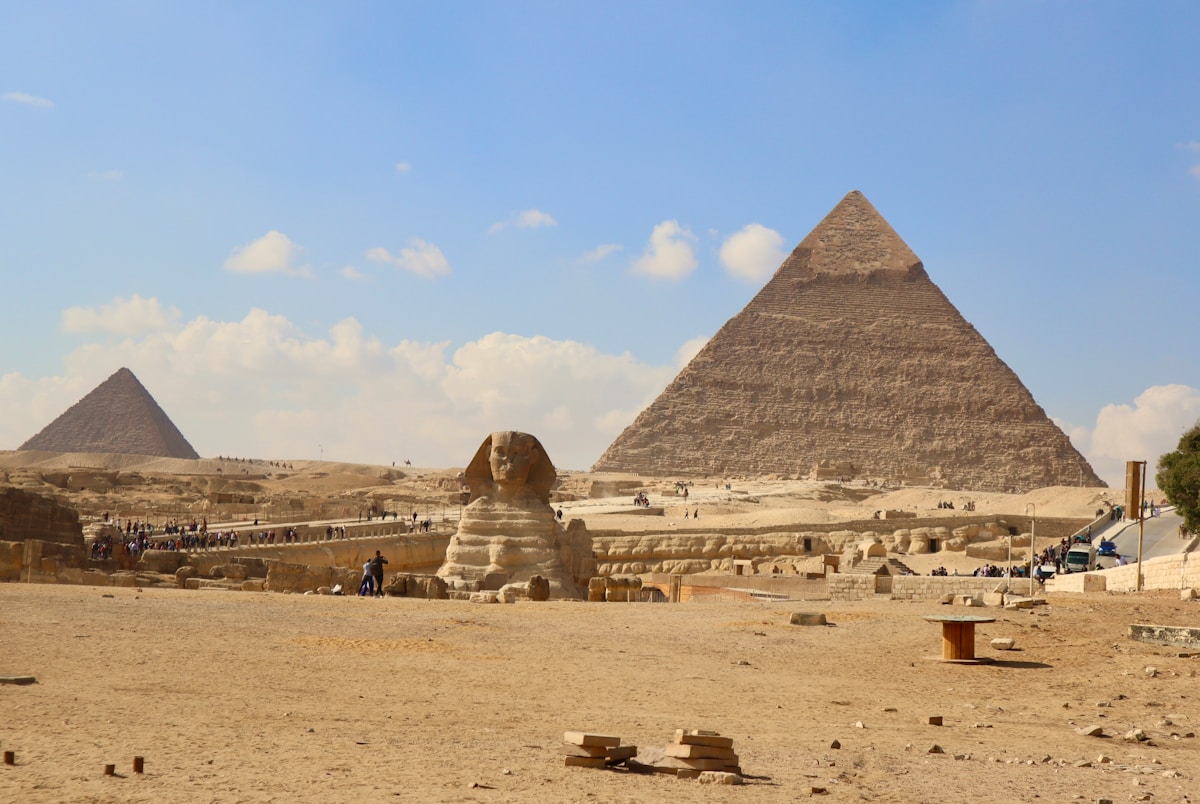
January is one of the most comfortable months to explore Egypt. The summer heat is months away, the post-Christmas rush has subsided, and conditions across the country suit full-day sightseeing without the need for constant shade breaks.
Weather Across Egypt in January
Cairo and the Delta: Daytime highs of 19–22°C with overnight lows around 9–11°C. Rain is rare - Cairo averages just 5mm across the entire month. Mornings can feel cool, particularly at the Giza Plateau where wind picks up across open desert, so a light jacket is useful for early visits.
Luxor and Aswan: Upper Egypt is warmer. Luxor sees 22–25°C by day and 8–11°C at night. Aswan is slightly warmer still at 23–26°C. These are ideal temperatures for walking between tombs and temples without heat stress.
Red Sea coast (Hurghada, Sharm El Sheikh, Dahab): Air temperatures of 20–24°C and water temperatures of 22–24°C. Comfortable for diving with a 3mm wetsuit. Wind can be a factor in Dahab, making it popular with kitesurfers.
Sinai interior: Cold at altitude - St Catherine’s area drops to 2–5°C overnight and occasionally sees frost. Warm layers are essential for a Mount Sinai sunrise hike.
Crowds and Pricing
January sits between peak season (October–December) and the quieter months. The first week remains busy as New Year travellers depart, but from mid-January onwards visitor numbers drop noticeably. The Pyramids of Giza, Valley of the Kings, and Abu Simbel are all manageable without long queues.
Hotel rates in Cairo average 2,500–5,000 EGP per night for a mid-range hotel (roughly 30–50% below peak November rates). Red Sea all-inclusive resorts in Hurghada run 3,000–6,000 EGP per night - good value compared to the December holiday peak. Nile cruise boats between Luxor and Aswan are well-priced but should still be booked 4–6 weeks ahead.
Search hotels in Egypt on Booking.com
Festivals and Events
Coptic Christmas (7 January): Egypt’s Coptic Christian community celebrates Christmas on 7 January. Midnight mass at the Hanging Church in Old Cairo and the Cathedral of the Nativity in Cairo’s New Administrative Capital draw large congregations. It is a public holiday - some businesses and government offices close.
Cairo International Book Fair (late January): One of the largest book fairs in the Arab world, held annually at Egypt International Exhibition Center. It runs for approximately two weeks and draws several million visitors, though it is primarily a local event rather than a tourist attraction.
What to Do in January
- Full archaeological circuits: January is ideal for combining Cairo, Luxor, Aswan, and Abu Simbel in a single trip - comfortable temperatures allow full-day visits at every site
- Nile cruises: The 3–4 night Luxor-to-Aswan route is at its best - pleasant deck weather during the day, cool evenings onboard
- Red Sea diving: Visibility is typically 20–30m in winter. Fewer boats at popular dive sites like Ras Mohammed, Thistlegorm wreck, and the Blue Hole mean less crowded underwater conditions
- Desert excursions: The Western Desert (Siwa, Bahariya, White Desert) is perfect in January - warm days and cold nights, with none of the scorching summer heat that makes desert camping miserable
Nile Cruises in January
Winter is the peak season for Nile cruises, and January sits at the heart of that peak. The logic is simple: daytime deck temperatures hover at 22–25°C in Upper Egypt, the light on the river is excellent for photography, and evening dining on deck is comfortable without the oppressive heat of summer or the unpredictability of spring. Boats run near-full capacity throughout the month.
The standard Luxor-to-Aswan route takes 4 nights southbound (or 3 nights in reverse). It stops at Esna Lock — where the boat waits in a narrow stone lock while locals sell goods from rowing boats alongside — then Edfu Temple (one of the best-preserved Ptolemaic temples in Egypt), and Kom Ombo before arriving in Aswan. The route in reverse (Aswan to Luxor) takes 3 nights. Both include the same temple stops; direction is mostly a question of logistics.
Mid-range cruise vessels on this route run approximately 8,000–15,000 EGP per person sharing, including full board and temple entry fees. Deluxe and luxury operators charge 22,000–40,000 EGP per person. Well-regarded vessels in the mid-luxury tier include the MS Mayfair and the Oberoi Philae (the Oberoi is at the top end — transfers and single cabin supplements push the total higher).
Dahabiya cruises — traditional wooden sailing boats carrying 8–16 passengers — offer a slower, quieter alternative. These typically run 5–7 nights between Esna and Aswan and appeal to travellers who want a genuine felucca-and-sailboat rhythm rather than a motor cruise. Budget approximately 1,800–2,500 USD per person for a 5-night dahabiya in January. Availability is limited; book 10–12 weeks ahead.
Book January departures at least 6–8 weeks ahead — popular sailings in the first half of the month fill quickly.
Valley of the Kings in January
January is one of the more comfortable months to visit the Valley of the Kings. The October–November peak has passed, and crowds are manageable rather than heavy. The valley opens at 6am — arriving at that time means you have the main tombs almost to yourself for the first hour, before the day-trip buses from Hurghada and the Nile cruise contingent arrive around 8:30–9am.
The standard entry ticket covers three open tombs and costs approximately 240 EGP (around 5 USD). The ticketing desk is at the entrance; you choose your three tombs from those open on the day. KV62 (Tutankhamun’s tomb) requires a separate ticket of approximately 300 EGP — the interior is modest in scale given what was found there, but historically it is the defining tomb of the valley. The original burial goods are now at the Grand Egyptian Museum in Giza, where they are presented far better than in the cramped original.
The tomb of Seti I (KV17) carries a premium ticket of approximately 1,000 EGP — expensive by Egyptian standards, but it is the most elaborately decorated tomb in the valley, with fully painted walls and ceilings across multiple chambers. In January, with lighter crowds, a visit to Seti I feels less rushed than in peak October. Budget 1,500–2,000 EGP per person for a thorough morning at the valley covering three standard tombs, Tutankhamun, and Hatshepsut’s mortuary temple across the ridge (approximately 140 EGP separate entry).
Hatshepsut Temple (Deir el-Bahri) is a 10-minute drive from the valley entrance or a 20-minute walk. Early January mornings here are excellent — the terraced colonnades catch the low winter sun and the site is relatively quiet before 9am.
Where to Go in Egypt in January
- Cairo and the Pyramids: Cairo guide | Things to do in Cairo
- Luxor: Luxor guide | Valley of the Kings
- Aswan and Abu Simbel: Aswan guide | Abu Simbel
- Red Sea: Hurghada | Sharm El Sheikh | Dahab
Planning
See the best time to visit Egypt for a full month-by-month breakdown, or the Egypt travel budget guide for cost planning. For a ready-made trip plan, the 1 week in Egypt itinerary works well in January with comfortable temperatures at every stop. The Egypt visa guide covers entry requirements regardless of when you travel. Browse January Egypt tours to compare Nile Valley packages during the peak winter season.
Ready to Plan Your Trip?
Here are our most popular Egypt itineraries to help you make the most of your visit:
- 1-Week Egypt Itinerary
- 5 Days in Egypt
- 10-Day Egypt Itinerary
- 2 Weeks in Egypt
- Egypt Budget Itinerary
Plan Your Egypt Trip: Compare flights to Cairo · Travel insurance · Egypt eSIM