February is one of Egypt’s strongest months for tourism - comfortable weather everywhere, manageable crowds, and the highlight of the Abu Simbel sun festival. Conditions suit every type of trip, from archaeological touring to Red Sea diving to desert camping.
Weather Across Egypt in February
Cairo and the Delta: Daytime highs of 20–24°C with overnight lows around 10–12°C. Virtually no rain. Mornings at the Giza Plateau can be cool and breezy, but by mid-morning conditions are perfect for walking.
Luxor and Aswan: Warmer than Cairo. Luxor averages 25–27°C by day, dropping to 10–13°C at night. Aswan reaches 26–28°C. Full-day temple visits are comfortable - you can spend a complete morning at Karnak and an afternoon at the Valley of the Kings without heat fatigue.
Red Sea coast: Air temperatures of 21–25°C, water at 22–23°C. Good diving conditions with 20–30m visibility. Wind is moderate - not as strong as March but still good for kitesurfing in Dahab and El Gouna.
Sinai interior: Cold at night (3–7°C around St Catherine’s), comfortable by day (15–18°C). Good month for hiking in the Sinai mountains - the trails are quiet and conditions are clear.
Crowds and Pricing
February falls in the shoulder period between the October–January peak and the Easter surge. Visitor numbers at the Pyramids, Valley of the Kings, and Abu Simbel are moderate - expect some queues at popular sites but nothing unmanageable.
Hotel rates in Cairo run 2,200–4,500 EGP per night for mid-range options. Red Sea resorts average 2,800–5,500 EGP per night. Nile cruise pricing is reasonable - February offers better value than the October–November peak while still providing excellent conditions.
Search hotels in Egypt on Booking.com
Festivals and Events
Abu Simbel Sun Festival (22 February): Twice a year - 22 February and 22 October - the rising sun illuminates the inner sanctuary of the Great Temple of Ramesses II, lighting up three of the four statues at the back of the chamber. The February date marks the anniversary of Ramesses II’s coronation. Hundreds of visitors gather before dawn for the event. If you can time your trip around this date, it is one of Egypt’s most remarkable experiences.
Khamsin winds (late February onwards): The hot, dusty khamsin winds from the Sahara can occasionally reach Cairo and Upper Egypt in late February, though they are more common in March–May. These episodes typically last 2–3 days and reduce visibility significantly.
What to Do in February
- Abu Simbel sun alignment: Time your trip around 22 February for the solar phenomenon - book Abu Simbel accommodation or a day trip from Aswan well in advance
- Nile cruises: February conditions are ideal for the Luxor-Aswan route. Comfortable deck weather and temples that are enjoyable all day, not just in the early morning
- Cairo museum circuit: The Grand Egyptian Museum at Giza, the Egyptian Museum in Tahrir Square, and the National Museum of Egyptian Civilization in Fustat are all comfortable to visit across a full day
- Western Desert trips: Bahariya Oasis, the White Desert, and Siwa are excellent in February - warm days, cold clear nights for stargazing, and none of the summer heat
Nile Cruises in February
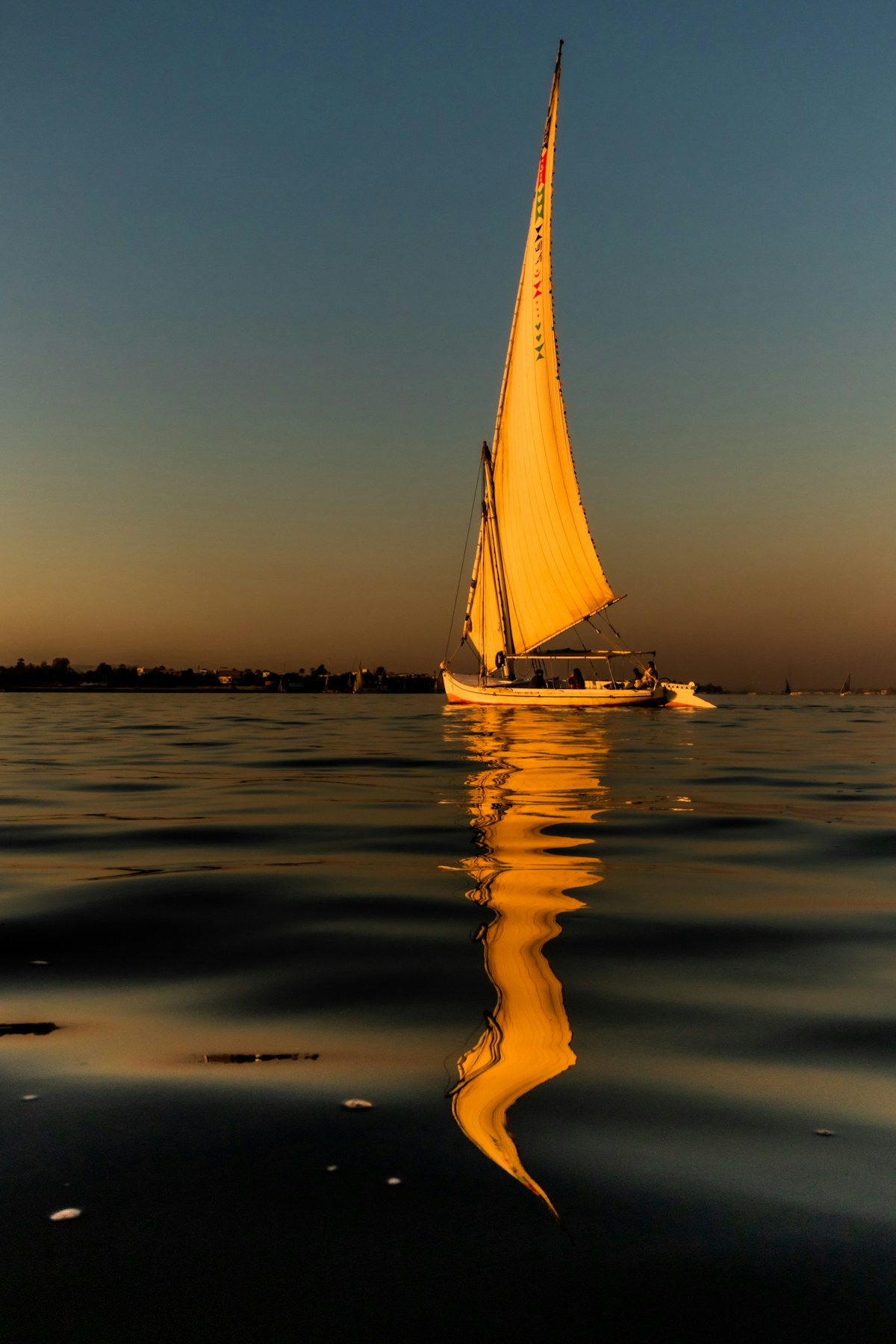
February is firmly within Nile cruise peak season. Conditions in Upper Egypt are ideal — daytime temperatures reach 25–27°C on deck, the sun is strong but not oppressive, and evenings cool to 10–13°C, making open-air dinner on the river a genuine pleasure rather than a sweaty endurance test. The standard Luxor–Aswan route (4 nights southbound, stopping at Esna Lock, Edfu Temple, and Kom Ombo) runs at high capacity throughout the month.
Mid-range cruise vessels cost approximately 8,000–16,000 EGP per person sharing, including full board and temple entry fees. Luxury operators — the Oberoi Philae, the Sonesta Nile Goddess, and boutique operators — run 25,000–45,000 EGP per person. These rates are broadly similar to January; February does not command a higher premium unless you are booking around the 22 February Abu Simbel sun festival, when Aswan-end departures and private Abu Simbel tours book out 8–10 weeks in advance.
The most efficient combination for the sun festival is a Nile cruise ending in Aswan around 21–22 February, followed by an early morning day trip (or brief flight) to Abu Simbel on the 22nd. This requires planning but is manageable: most Aswan-based tour operators run dedicated sun-festival coaches and small-group tours departing at 3–4am for the 280km drive south.
Dahabiya sailing boats (traditional 8–16 passenger wooden vessels) are worth considering if you have 5–7 nights and want a quieter pace. February dahabiya pricing runs approximately 1,800–2,500 USD per person for a 5-night itinerary between Esna and Aswan. These boats move more slowly, anchor more frequently, and attract a different traveller profile to the motor cruise. Book 10–12 weeks ahead — dahabiya capacity is genuinely limited.
Valley of the Kings in February
February is one of the best months to visit the Valley of the Kings. Temperatures peak at 25–27°C by midday — warm and comfortable, but nothing like the 40°C-plus heat that effectively narrows the viable visiting window to a two-hour scramble in summer. The valley opens at 6am; arriving then gives you 90 minutes of quiet before the main cruise-boat contingent appears around 8:30–9am.
The standard ticket covers three tombs (approximately 240 EGP). A focused February strategy: use one ticket slot for a well-decorated, less-visited tomb (KV2, Ramesses IV, has an excellent painted ceiling and is often skipped by group tours) and save two slots for the larger-decorated tombs of Ramesses III (KV11, a very long corridor tomb) or Merenptah (KV8, a direct son of Ramesses II). Tutankhamun (KV62) requires a separate ticket (approximately 300 EGP); the interior is modest but visiting it is worthwhile given it is the most important discovery in the valley’s history.
The tomb of Seti I (KV17) carries a premium entry of approximately 1,000 EGP and is the finest decorated tomb in the valley — painted ceilings and multi-chamber layout in excellent condition. In February, visitor numbers are lower than October–November and the experience feels measured rather than rushed. Budget 1,500–2,000 EGP per person for a thorough west-bank morning covering the valley, Tutankhamun, and either Hatshepsut Temple (approximately 140 EGP, 10 minutes away) or Medinet Habu (the mortuary temple of Ramesses III, approximately 100 EGP, on the south side of the west bank).
West-bank site maps are sold at the valley entrance for approximately 10 EGP and are worth having — the tombs are numbered, not named at their entrances, and without a map the non-obvious ones are easy to miss.
Where to Go in Egypt in February
- Cairo and the Pyramids: Cairo guide | Things to do in Cairo
- Luxor: Luxor guide | Valley of the Kings
- Aswan and Abu Simbel: Aswan guide | Abu Simbel
- Red Sea: Hurghada | Sharm El Sheikh | Dahab
Planning
See the best time to visit Egypt for a full month-by-month breakdown, or the Egypt travel budget guide for cost planning. Browse Egypt tours for february and book ahead if visiting during peak season.
Ready to Plan Your Trip?
Here are our most popular Egypt itineraries to help you make the most of your visit:
- 1-Week Egypt Itinerary
- 5 Days in Egypt
- 10-Day Egypt Itinerary
- 2 Weeks in Egypt
- Egypt Budget Itinerary
Plan Your Egypt Trip: Compare flights to Cairo · Travel insurance · Egypt eSIM