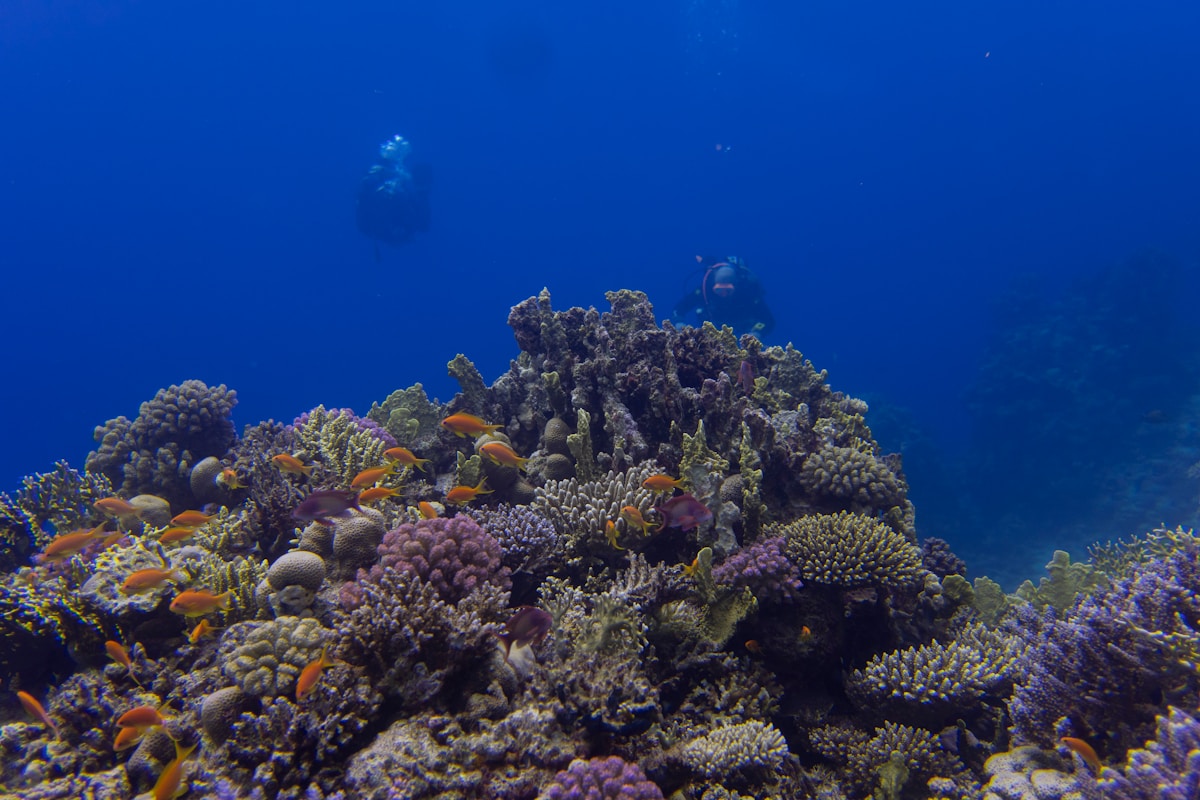
Shore-based diving from Sharm el-Sheikh, Dahab, Hurghada, or Marsa Alam covers an impressive slice of the Red Sea - but the offshore reefs are inaccessible without an overnight vessel. The Brother Islands sit 70km off the coast of Hurghada. Daedalus Reef is 80km from Marsa Alam. Rocky Island and Zabargad in the deep south are beyond comfortable day-trip range from anywhere. A liveaboard is the only realistic way to dive these sites. For a full overview of shore-based dive hubs and sites, see our Red Sea diving guide.
What Is a Liveaboard?
A liveaboard is a purpose-built dive vessel where guests sleep, eat, and dive for the duration of the trip - typically 7 nights, though 5- and 10-night itineraries exist. The standard schedule is three to four dives per day, including a night dive, with meals and accommodation included in the package price. The boat moves between sites overnight while guests sleep.
Egypt has one of the most developed liveaboard industries in the world. Hundreds of vessels operate out of Hurghada, Port Ghalib, and Marsa Alam, ranging from budget-friendly safari boats with basic cabins to purpose-built expedition vessels with nitrox on tap, full camera facilities, and en-suite doubles. What makes Egypt liveaboard diving world-class is simple: the offshore reef systems here are some of the healthiest in the Red Sea, the marine life is exceptional, and the costs are significantly lower than comparable trips in the Pacific or Indian Ocean.
The Main Routes
Northern Route: Sinai Reefs and Wrecks
The Northern route operates primarily from Hurghada and Sharm el-Sheikh, covering the Gulf of Suez, the Straits of Tiran, and Ras Mohammed National Park. Key sites:
SS Thistlegorm - The British WWII supply ship sunk in 1941 remains one of the most celebrated wreck dives in the world. Its cargo holds contain military motorcycles, trucks, Lee-Enfield rifles, and boxcars still on their rails. The wreck sits at 28–30m; Advanced Open Water is the minimum certification required. Day trips from Sharm operate to the Thistlegorm, but a liveaboard allows an early-morning dive before the day-trip crowds arrive - a significantly different experience.
Ras Mohammed - The national park at the tip of the Sinai Peninsula. Shark Reef and Yolanda Reef are the headline sites, with large populations of reef sharks, barracuda, and Napoleon wrasse, plus a resident school of hammerheads periodically encountered along the wall at depth.
Straits of Tiran - Four shallow reefs (Jackson, Woodhouse, Thomas, and Gordon) running between the Sinai Peninsula and Saudi Arabia. The currents can be strong, but this brings the fish life: trevally, barracuda, and reef sharks are reliable. Visibility often exceeds 30 metres.
Best season for the Northern route: October to May. Summer months bring calmer seas but heavier day-trip boat traffic at Thistlegorm. For day trips from Sharm covering Ras Mohammed and the Thistlegorm between liveaboard legs, GetYourGuide lists vetted Sharm el-Sheikh dive options with confirmed pricing.
Southern Route: Offshore Pinnacles and Shark Action
The Southern route departs from Hurghada, Port Ghalib, or Marsa Alam and targets the offshore reefs that are the real draw for serious divers.
Brother Islands (El Akhawein) - Two small islands roughly 70km offshore. Big Brother is a long reef with two wrecks on its walls - the Numidia (1901) and the Aida (1957) - plus reef walls dropping to beyond 60m. Little Brother is a pinnacle known for consistent encounters with oceanic whitetip sharks and silky sharks. This is among the most reliable oceanic whitetip diving in the world. Best season for hammerheads: June–August. Oceanic whitetips: October–December.
Daedalus Reef - An isolated seamount 80km from the coast, marked by a lighthouse visible for miles. The walls here are covered in soft coral, and the shark life can be exceptional - hammerheads, threshers, and oceanic whitetips are all possible. The currents are unpredictable; this is a site for experienced divers comfortable in open water.
Elphinstone - Closer to shore than the other Southern sites but still included on most liveaboard itineraries. An offshore pinnacle near Marsa Alam with steep walls and one of the more reliable oceanic whitetip populations in the Red Sea. Best visited October–March when the whitetips are most active.
St. John’s Reefs - A large reef system south of Marsa Alam, rarely visited by day trips. Multiple reef formations, pristine coral coverage, and consistently calm conditions make this a highlight of deeper-south itineraries. Expect turtles, dolphins, and outstanding macro life.
Best season for the Southern route: year-round, though hammerheads concentrate June–August and oceanic whitetips are most reliably seen October–December.
Deep South: Rocky Island and Zabargad
A handful of operators run extended itineraries that reach Rocky Island and Zabargad (St. John’s Island), close to the Egyptian-Sudanese border. These sites see a fraction of the diver traffic of the Brothers or Daedalus, the coral is pristine, and whale shark encounters are reported regularly in summer months. These trips typically require 10 nights or are combined with Sudanese Red Sea itineraries. Expect to depart from Port Ghalib or Marsa Alam.
Operators
Egypt’s liveaboard market is large and ranges in quality. Vetting matters - check certifications, maintenance records, and divemaster ratios before booking.
Red Sea Aggressor (aggressor.com) operates the Red Sea Aggressor IV, a purpose-built luxury vessel departing from Port Ghalib. Weekly itineraries covering the Southern route, from approximately $2,200–3,000 per person as of 2026. Nitrox included.
Explorer Ventures (explorerventures.com) runs the Grand Sea Explorer and Glory Sea Explorer. Strong reputation for Southern and Deep South routes. Pricing from approximately $1,800 per person for 7 nights as of 2026.
Blue Seas / Discovery - Among several Egyptian-operated mid-range boats that offer reliable service at lower price points, typically $1,100–1,500 for 7 nights. These boats attract a higher proportion of European divers on package bookings. Quality varies more within this bracket; book through a specialist dive travel agent rather than direct.
LiveAboard.com and Bluewater Dive Travel aggregate listings from 60+ Egypt liveaboard operators and allow direct comparison of vessel specs, certification requirements, itineraries, and current pricing. These platforms are the most efficient starting point for a first booking. For shore-based day dive trips from Hurghada alongside a liveaboard stay, you can also browse Hurghada dive tours and excursions.
What to Expect Onboard
Cabin types range from multi-bunk dorm cabins (4–6 persons) on budget boats to en-suite twin and double cabins on mid-range vessels, through to air-conditioned staterooms with private bathrooms on top-tier boats. The difference in sleep quality over 7 nights is significant. If the budget allows, upgrading to at least a twin share is worth it.
Dive schedule is typically 3–4 dives per day: morning, afternoon, late afternoon, and night. Night dives are usually optional but consistently excellent - the Red Sea reefs at night are active with hunting moray eels, resting turtles, and sleeping parrotfish.
Nitrox is available on most mid-range and premium boats (32–36%). Budget boats may not carry it. Nitrox certification is straightforward and extends bottom time on repetitive dives, which matters when you’re doing 4 dives a day for 7 days. If you don’t have it, consider getting certified before your trip.
Dive briefings are thorough on reputable vessels - specific to each site, covering currents, entry/exit procedures, depth limits, and any notable hazards. Pay attention: the Southern route reefs involve real open-water conditions.
Certification Requirements
Most liveaboards require at minimum:
- Advanced Open Water (AOW) or equivalent
- Minimum 50 logged dives for Northern route boats
- Minimum 100 logged dives for Southern route boats targeting Brothers or Daedalus
- Nitrox certification recommended but rarely mandatory
Dive emergency cover (DAN or equivalent) is required by all reputable operators.
Budget Breakdown
A typical 7-night liveaboard in Egypt:
| Item | Approximate cost (as of 2026) |
|---|---|
| Boat package (cabin + full board + diving) | $1,200–2,500 per person |
| Marine park fees (Brothers, Daedalus) | $30–60 |
| Equipment rental (if not bringing own) | $80–150 for the week |
| Nitrox (if not included) | $70–120 for the week |
| Crew tips (customary) | $50–100 |
| Flights to Hurghada or Marsa Alam | variable |
Budget boats run $1,200–1,500 for 7 nights; mid-range $1,500–2,000; premium $2,000–3,000+. These figures include full board but exclude flights, marine park fees, and tips.
Departure Ports
Hurghada - The most common departure point for both Northern and Southern route boats. Well connected by air from European hubs and Cairo. Most marina facilities are at the main port or the newer Hurghada Marina.
Port Ghalib - A purpose-built marina south of Hurghada, used by several higher-end operators. More direct access to Southern route sites cuts transit time.
Marsa Alam - Smaller, with fewer operators, but the logical departure point for Deep South itineraries (St. John’s, Rocky Island, Zabargad). Flights connect less frequently than Hurghada.
Packing for a Liveaboard
Soft bags are essential - hard cases don’t fit in liveaboard cabins. Key items specific to liveaboard trips:
- Soft dive bag (not a hard roller)
- Reef hook - useful for drift diving, particularly at Ras Mohammed and the Brothers
- Surface marker buoy (SMB) and reel - mandatory at most boats
- Seasickness medication - take it the night before departure, not the morning of
- Thin merino baselayer - air conditioning on some boats is aggressive
- Wetsuit (5mm recommended) - even in summer, four dives a day will cool you down
- Underwater torch - useful even if night dives aren’t your priority
- Lens wipes and silica gel - essential if you’re bringing camera gear
Most boats supply tanks and weights. Regulators, BCDs, fins, and masks are available to rent but own equipment in good condition is preferred.
How to Book
Book 3–6 months ahead for peak season (March–May, October–December). Last-minute deals exist but reduce your choice of vessel and cabin. Specialist dive travel agencies (Bluewater Dive Travel, Simply Liveaboards, LiveAboard.com) offer operator-vetted listings and can advise on itinerary versus vessel trade-offs based on your certification level and interests. Direct booking with an operator saves the agency fee but requires more due diligence on vessel quality.
Confirm the following before paying a deposit: the vessel’s safety certification, divemaster-to-diver ratio (ideally 1:6 or better), nitrox availability, certification requirements, and the cancellation policy.