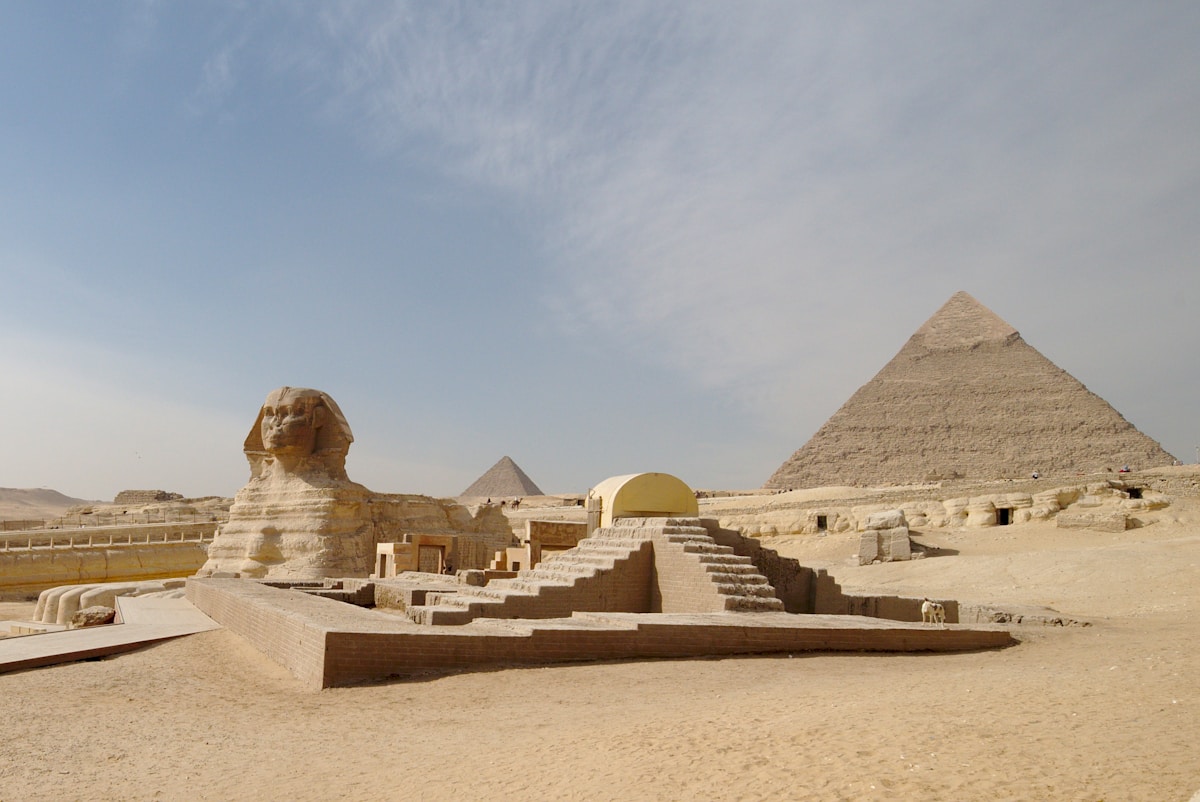
Egypt and Morocco are North Africa’s two most visited countries, yet they offer almost entirely different experiences. Egypt is about monuments on an almost incomprehensible scale - the Pyramids, the Nile, the temples of Upper Egypt, and some of the world’s finest Red Sea diving. Morocco is about texture and variety: a sensory overload of medinas, desert dunes, mountains, and an Atlantic coastline, all packed into a country the size of Texas. Here is how they compare.
Quick Verdict
| Category | Egypt | Morocco |
|---|---|---|
| Ancient monuments | Winner | - |
| Diving | Winner | - |
| Desert experience | - | Winner (Sahara) |
| Medinas / souks | - | Winner |
| Value for money | Winner | - |
| Visa ease | Moderate (e-visa) | Winner (visa-free many passports) |
| Accessibility | Moderate | Winner |
| Atlantic surfing | - | Winner |
Choose Egypt if you want to stand in front of the pyramids, cruise the Nile, and dive the Red Sea. Choose Morocco if you want variety - cities, mountains, desert, and coast - in one highly accessible package.
Climate and Best Time to Visit
Egypt: The best time to visit is October to April. Summer (June to August) in Cairo and Upper Egypt is brutally hot - Luxor and Aswan regularly exceed 40°C, making outdoor archaeological visits uncomfortable. The Red Sea coast (Hurghada, Sharm el-Sheikh, Dahab) is manageable year-round, with winters mild enough for beach holidays and diving conditions excellent throughout.
Morocco: Morocco’s climate varies more than Egypt’s. Marrakech is at its best in spring (March to May) and autumn (September to November) - summer temperatures reach 38–42°C, and the medina in August is intense. Fes follows a similar pattern. The Sahara at Merzouga is best visited October to April. The Atlantic coast (Essaouira, Agadir, Taghazout) is cooler and windier year-round - a draw for surfers but less ideal for sunbathers.
Winner: Morocco for flexibility; Egypt for a focused winter escape when European weather is poor.
Cost Comparison
Egypt has become extremely affordable for foreign visitors, particularly following changes in the Egyptian pound’s exchange rate in recent years.
Egypt: Local food costs EGP 50–150 (approximately USD 1–3 as of 2026) at local restaurants. A full plate of koshari - Egypt’s national dish of rice, lentils, pasta, and tomato sauce - costs EGP 15–30 at street-side koshary shops. Mid-range hotels in Cairo run USD 30–60/night; Nile cruise cabins from USD 80–150/night all-inclusive. Budget travellers can realistically manage on USD 40–60/day including accommodation, food, and site entry.
Morocco: A realistic budget runs USD 50–70/day. A riad (traditional courtyard hotel) in Marrakech from MAD 400–800 (approximately USD 40–80) per night; a sit-down restaurant meal from MAD 60–150 (USD 6–15). Guided tours to the Sahara from Marrakech typically cost MAD 600–1,500 (USD 60–150) for a multi-day trip including accommodation in a desert camp.
Winner: Egypt, particularly for those willing to eat and travel locally.
Must-See Experiences
Egypt
The Giza Pyramids are the oldest and only surviving wonder of the ancient world. Entry to the Giza complex costs approximately EGP 540 (around USD 11 as of 2026) for foreigners; entering the Great Pyramid interior requires a separate ticket (EGP 360). The camel and horse rides at the perimeter are not included and touting is persistent - agree a price before boarding.
Luxor contains more than a third of the world’s ancient monuments. The Valley of the Kings (EGP 300), where 63 royal tombs have been discovered, is the centrepiece. Karnak Temple is free to enter at night during the sound and light show (EGP 175). The West Bank, reachable by felucca across the Nile, includes the Temple of Hatshepsut and the Colossi of Memnon.
Abu Simbel - the twin rock temples of Ramesses II built to align with the rising sun on two days per year (February 22 and October 22) - is a detour that justifies itself entirely. It sits 280km south of Aswan and is reached by a 3-hour road convoy (approximately EGP 300 entry) or short flight.
Dahab, on the Sinai’s eastern coast, is Egypt’s most relaxed diving and snorkelling base. The Blue Hole - a famous underwater sinkhole dropping to 130m - is approachable at the outer reef for snorkellers; scuba divers should only attempt the arch with qualified guides. Dive day trips from Dahab run approximately USD 35–55 including equipment.
Morocco
Marrakech’s Djemaa el-Fna square is one of the world’s great public spaces - by day a marketplace, by dusk a circus of food stalls, musicians, snake charmers, and storytellers. The surrounding medina, a UNESCO World Heritage Site, is best explored with a guide to navigate its 40km of labyrinthine lanes.
Fes contains the world’s oldest university and one of the most intact medieval medinas anywhere. The Chouara tannery, viewed from leather shop terraces above, is the definitive image of Moroccan craftsmanship. Guided tours of Fes el-Bali from MAD 200 (USD 20) per person; essential for first-time visitors.
The Sahara Desert at Merzouga is Morocco’s most dramatic experience. Camel treks at sunset into the Erg Chebbi dunes cost from MAD 600 (USD 60) per person for an overnight including a desert camp. A full overland circuit from Marrakech via Aït Benhaddou (the ksar used in Game of Thrones) takes three to four days by private transfer.
Chefchaouen - the blue city in the Rif Mountains - is extremely photogenic and justifiably popular, but gets crowded; visit early morning or stay overnight when day-trippers leave.
Safety
Both countries are safe in their main tourist zones with some caveats.
Egypt has a high police and security presence at tourist sites. The Sinai peninsula has had security issues in some zones (away from the main Red Sea resorts) - check government advisories. Petty scams at the Pyramids (unofficial guides, inflated prices) are common but not dangerous. Women travelling solo report varying experiences; dressing modestly reduces unwanted attention significantly.
Morocco’s medinas - particularly Fes and Marrakech - are well known for aggressive touting and unofficial “guides” who attach themselves to tourists and then demand payment. This is manageable with firm, polite refusals. Marrakech in particular requires more assertiveness than most destinations. Overall safety, particularly outside the medinas, is good.
Winner: A draw in terms of physical safety. Egypt’s tourist infrastructure is more controlled; Morocco requires more situational awareness.
Visas
Egypt: Most Western passport holders need an e-visa, obtainable online at visa2egypt.gov.eg for approximately USD 25. Alternatively, a visa on arrival is available at Cairo, Luxor, and Hurghada airports (USD 25 cash). The Sinai-only permit (free, for entering via Taba or Sharm el-Sheikh and staying in the Sinai only) is a cheaper option for Red Sea holidays.
Morocco: Visa-free entry for 90 days for most Western passports, including EU, US, UK, Canadian, and Australian nationals. No application required.
Winner: Morocco, clearly.
Diving and Watersports
The Egyptian Red Sea is among the world’s finest diving destinations and is Egypt’s standout advantage for active travellers.
- Ras Mohammed National Park (near Sharm el-Sheikh): shark and reef fish in extraordinary numbers, strong currents - for intermediate to experienced divers.
- The Blue Hole, Dahab: a world-famous site; snorkelling is excellent at the outer edge, scuba to the arch (56m) is for certified technical divers only.
- SS Thistlegorm, Gulf of Suez: one of the world’s top wreck dives - a WWII-era British supply ship with motorcycles, trucks, and train carriages still aboard. Day trips from Hurghada or Sharm, approximately USD 80–100.
Morocco’s Atlantic coast offers exceptional surfing rather than diving. Taghazout, north of Agadir, is North Africa’s best-known surf destination - beach breaks and point breaks for all levels; surf schools from MAD 400 (USD 40) per day. Essaouira further north has consistent wind for kitesurfing.
Winner: Egypt for diving; Morocco for surfing.
Food
Morocco wins for street food richness and variety. Tagine (slow-cooked meat or vegetable stew served in a clay pot with bread) is the staple - from MAD 60–120 at a local restaurant. Pastilla - a filo pastry pie of pigeon or chicken, almonds, and cinnamon - is a sophisticated dish worth seeking out in Fes. Harira soup (tomato, lentil, chickpea) eaten during Ramadan is warming and cheap. Fresh-squeezed orange juice on the Djemaa el-Fna runs MAD 4–8.
Egypt’s food culture is less celebrated internationally but is satisfying and extremely cheap. Koshari (EGP 15–30) is genuinely excellent. Ful medames (stewed fava beans with olive oil and cumin, eaten for breakfast) is a national institution. Grilled kofta and feteer meshaltet (flaky pastry) are street staples.
Winner: Morocco for variety and depth of street food culture.
Who Should Choose Each?
Choose Egypt if you:
- Want to see ancient monuments that exist at no scale anywhere else on earth
- Are interested in diving or snorkelling the Red Sea
- Want exceptional value for money
- Are primarily interested in history and archaeology
Choose Morocco if you:
- Want variety: cities, mountains, desert, and coast in one trip
- Are a first-time Africa visitor (Morocco is more immediately accessible)
- Prefer ease of entry (no visa for most passports)
- Want a shorter, more compact trip (Morocco is very manageable in 10–12 days)
Final Verdict
Egypt and Morocco are both extraordinary - but they are not interchangeable. Egypt’s monuments are in a category of their own: the Pyramids, Luxor, and Abu Simbel are among the most significant human-made structures on earth. Morocco’s strength is its variety and accessibility - it is a country that rewards open-ended exploration without needing a rigid archaeological itinerary.
If you have one trip to North Africa and are drawn to ancient history and diving, Egypt is the answer. If you want a sensory-rich, varied, and accessible adventure across a genuinely diverse landscape, Morocco delivers it better.
Related Comparisons
- Egypt vs Jordan: Temples, Deserts, and the Dead Sea
- Egypt vs Turkey: Ancient History, Beaches, and Value
Guided tours of Egypt cover the main Nile Valley and Red Sea sites that distinguish Egypt from Morocco. Compare flights to Egypt across carriers to find the best fare for your origin city.
Ready to Plan Your Trip?
Here are our most popular Egypt itineraries to help you make the most of your visit: