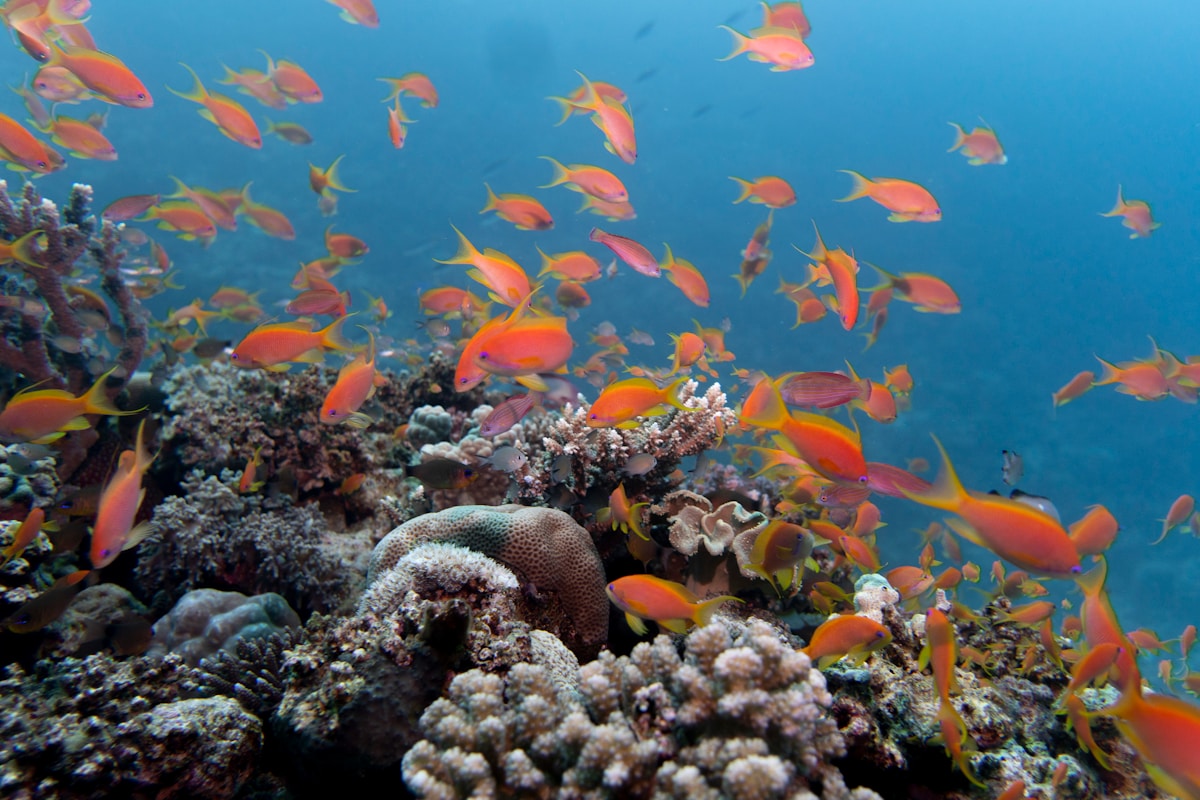
Ras Mohammed - “Head of Mohammed” in Arabic, named for the profile its headland casts - sits at the very tip of the Sinai Peninsula where the Gulf of Aqaba and Gulf of Suez converge. Established as Egypt’s first national park in 1983, it protects around 480 sq km of desert, mangroves, and some of the most biodiverse coral reef in the world. For any visitor in Sharm el-Sheikh, not going here is a serious missed opportunity.
Why the Reefs Are So Good Here
The meeting of two gulfs creates strong tidal currents that push nutrient-rich water up against the reef walls. The coral at Ras Mohammed starts close to the surface - in some spots, just half a metre of water separates the reef crest from the air - and drops in near-vertical walls to 60 metres or beyond. The combination of strong current, clear water (visibility regularly exceeds 20–25 metres), and undisturbed reef growth over decades produces the density of fish life that makes the park famous.
Humphead wrasse, Napoleon wrasse, jackfish in enormous schools, barracuda walls, hammerhead sharks in certain seasons, sea turtles grazing on seagrass - Ras Mohammed has a marine life checklist that keeps divers returning over multiple trips. The coral itself is in good condition, having recovered significantly from bleaching events in the 1990s and early 2000s.
Key Dive Sites
Shark Reef and Jolanda Reef
These two adjacent sites are the park’s signature dive. The Shark Reef wall is a vertical drop covered in gorgonian fans, soft corals in electric colours, and permanent resident populations of glassfish, anthias, and grouper. Jolanda Reef is named after a 1980 shipwreck - the Jolanda - whose cargo of bathtubs and toilets sits distributed across the slope in surreal contrast to the coral. The two reefs are separated by a sandy channel at around 25–30 metres.
Currents here can be strong, and conditions change. Local dive centres assess the site before allowing groups in. Certification required: Open Water minimum; Advanced strongly recommended.
What you’ll see: Large pelagic fish, reef sharks (sometimes), enormous schools of snappers and jacks, stunning wall coral formations. Depth range: 10–40+ metres. Best for: Confident divers who want the definitive Ras Mohammed experience.
Shark Bay
Despite the name, Shark Bay is one of the more accessible sites - a sheltered bay with a sandy bottom and coral reef running along both sides. In the shallows (1–5 metres), juvenile sharks (mostly blacktip and whitetip reef sharks) rest during daylight hours, making this genuinely one of the easiest places to see sharks while snorkelling. The water is calm, the current is minimal, and the coral garden hosts triggerfish, pufferfish, and moray eels at snorkelling depth.
What you’ll see: Resting reef sharks, colourful reef fish, coral garden, occasional turtles.
Best for: Snorkellers and beginner divers.
Marsa Bareika and Marsa Ghozlani
Two protected lagoons within the park, both accessible from the shore. Marsa Bareika has a shallow reef flat and is good for snorkelling families. Marsa Ghozlani is a larger bay with deeper water where hawksbill turtles are regularly spotted grazing on the seagrass. Both are calm and suitable without a guide if you have your own snorkel kit.
What you’ll see: Turtles, reef fish, seahorses in the seagrass (if you look slowly).
Best for: Independent snorkellers, families.
Anemone City
A plateau at 20–28 metres covered in enormous anemones hosting clownfish - an unusual spectacle that looks almost designed. Not the most dramatic wall dive, but a serene mid-afternoon dive when other sites feel crowded.
Snorkelling at Ras Mohammed
You don’t need to dive to have an exceptional experience at Ras Mohammed. Boat tours typically drop anchor in sheltered spots where the reef comes within arm’s reach of the surface. The life visible at 1–3 metres - Moorish idols, parrotfish grazing on coral, lionfish hovering in corners, surgeonfish in pastel schools - would be considered outstanding at almost any other reef in the world.
Most day tour operators provide full snorkel kit (mask, fins, snorkel vest). If you prefer your own, bring it. A shorty wetsuit helps in December–March when air temperatures can feel cold after long periods in the water (around 22°C in winter).
Getting There
By Boat (Recommended)
Most visitors reach Ras Mohammed on an organised day trip departing from Sharm el-Sheikh Marina. Boats travel around the headland and anchor at designated sites, typically visiting two or three spots over a full day. Standard day trip prices from Sharm range from approximately USD 30–50 per person including park entry, equipment, and lunch. Departures: typically 8–9am, return 4–5pm.
You can book Ras Mohammed snorkelling and diving day trips from Sharm el-Sheikh, or contact reputable operators including Camel Dive Club, Oonas Dive Club, or Emperor Divers directly.
By Car
The park entrance is approximately 20 minutes south of Naama Bay by car. You’ll pass through the park gate (entry fee payable here) and reach the main visitor area, beach access, and car parks. A 4WD is not required - the roads within the park are sealed. Bringing your own snorkel kit and arriving early (before the boat tours anchor) gives you more space on the water.
By Taxi
A return taxi from Naama Bay to Ras Mohammed costs approximately EGP 300–500 (as of 2026). Agree the price and waiting time before departure. The driver will wait at the car park while you snorkel.
Entry and Fees
As of 2026, the national park entry fee is approximately USD 5–10 per person for foreign visitors, with a vehicle fee on top for those arriving by car. Boat tour prices typically include the permit. The park is managed by the South Sinai Environmental Affairs Agency; fees are reviewed periodically - confirm current amounts with your tour operator.
The park opens daily from approximately 8am to 5pm. It closes on Fridays for a short window around midday prayers. Camping requires a separate permit and is only permitted in designated areas.
What Else Is in the Park
Beyond the sea, Ras Mohammed has a desert interior with mangrove channels, salt pans with crystallised formations, and a Visitors Centre near the main entrance that gives an overview of the park’s ecosystems. The mangroves on the northern edge of the park are one of the most northerly mangrove forests in the world - an odd and atmospheric bonus to the marine focus.
Birdwatchers: the park sits on a major migration corridor between Africa and Eurasia. Spring (March–May) sees large movements of raptors, herons, and passerines, and autumn (September–November) brings similar flows. Ospreys are resident year-round.
Practical Tips
- Bring sunscreen. The boat deck, reef flat, and car park all require it. Use reef-safe formulas - the park prohibits oxybenzone-containing sunscreens.
- Bring water. On-site facilities are limited. Pack 2+ litres per person.
- Book boat trips early. Summer and school holiday periods see tours fully booked. Reserve a day in advance or at least the morning of.
- Check your fins. Borrowed fins that don’t fit cause blisters and frustration. If you’re serious about snorkelling, bring your own mask at minimum.
- Respect the no-contact rule. Touching coral is prohibited. Standing on the reef, collecting shells or coral, and feeding fish are all banned within the park.
- Strong swimmers only for the open-water drops. Boat tours sometimes anchor in areas with some current. If you’re not a confident swimmer, stay near the boat.
See Also
- Sharm el-Sheikh travel guide - the main base for Ras Mohammed day trips, with dive operator listings and accommodation options
- Red Sea diving Egypt - the full overview of dive hubs, sites, and costs across the Egyptian Red Sea
- Dahab travel guide - the Blue Hole and the Sinai’s alternative dive scene, an hour from St. Catherine’s