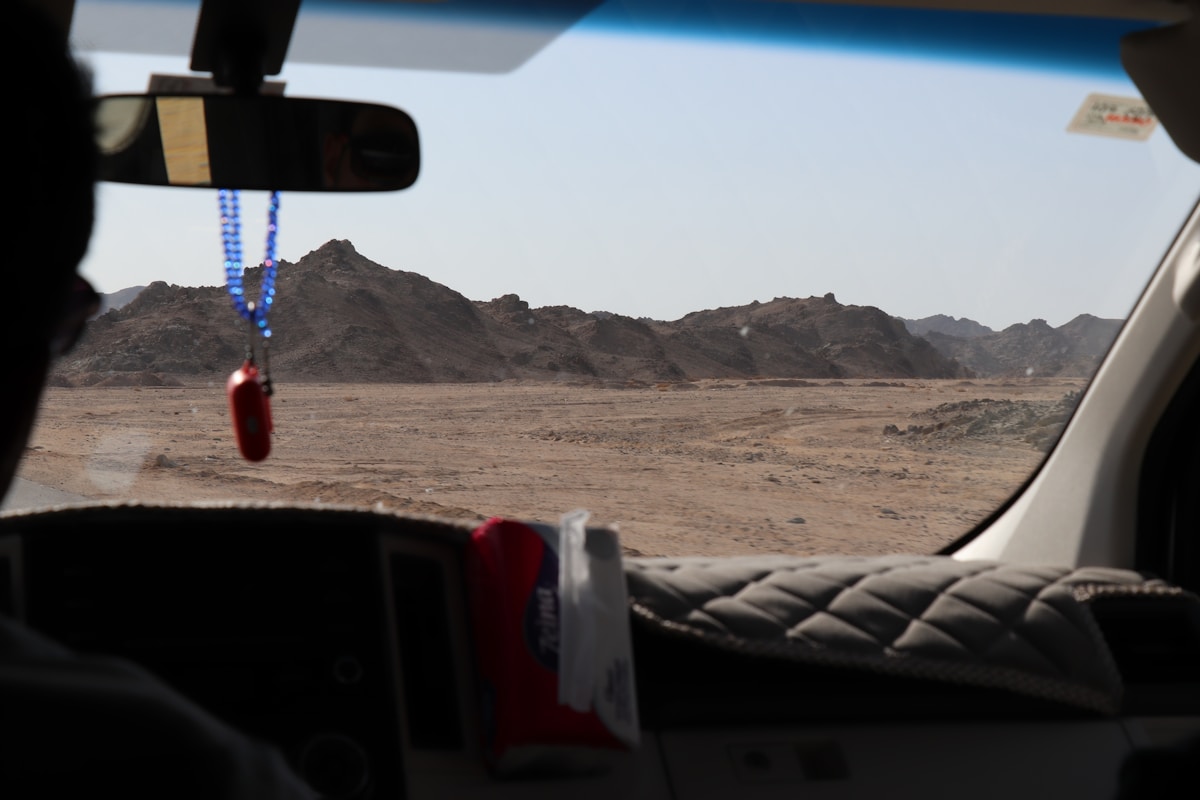
Egypt is a fascinating self-drive destination - but only in certain parts of the country. The calculus depends entirely on where you’re going. This guide covers when renting a car makes sense, when it doesn’t, and exactly what you need to know to do it safely.
Should You Rent a Car in Egypt?
Where a rental car makes sense:
- The Nile Valley south of Cairo (Luxor–Aswan corridor)
- The Sinai Peninsula (Dahab, Nuweibaa, St Catherine’s Monastery)
- The Western Desert and Siwa Oasis route
- Between Red Sea resort towns along the coastal highway
Where a rental car does not make sense:
- Cairo - the city is large, traffic is dense, lanes are treated as suggestions, and Uber is cheap and efficient
- Alexandria - similar to Cairo, with aggressive driving and limited parking
- Any city centre after dark - navigation becomes genuinely difficult
The core question for most Egypt visitors: are you doing a structured tour of Cairo + Luxor + Aswan? If so, skip the car entirely and use domestic flights and trains. Are you planning a longer road trip - Red Sea coast, Western Desert, Sinai loop - with flexibility to stop where you want? Then a car hire in Egypt dramatically increases your options.
Driving Conditions in Egypt
Egyptian road infrastructure outside of cities is better than its reputation suggests. The main highways - the Desert Road between Cairo and Alexandria, the Luxor–Aswan highway, and the Red Sea coastal road - are well-maintained dual carriageways with rest stops. Distance travel is straightforward.
What to expect:
- Lane discipline is loose. Vehicles move between lanes continuously, often without signalling. You adapt quickly, but it requires a more assertive driving style than Northern Europe or North America.
- Horns communicate everything. A single short beep means “I’m here” rather than aggression. You’ll use your horn constantly.
- Speed bumps are unmarked. Villages and built-up areas often have speed bumps with no signage. Slow down through any settlement.
- Police checkpoints: Common on intercity routes, especially in Upper Egypt. Have your passport, rental documents, and international driving permit accessible. Checks are routine, not cause for concern.
- Donkey carts and pedestrians on highways: Particularly common in rural Upper Egypt. Give them a wide berth.
- Desert roads: The Cairo–Siwa route and Western Desert roads are excellent asphalt through emptiness. Carry extra water and ensure your rental car has a functioning spare tyre.
Night driving: Avoid if possible, particularly in Upper Egypt. Livestock and unlighted vehicles on rural roads make night driving higher-risk than daytime.
Licence Requirements
International Driving Permit (IDP): Required by most Egyptian car rental companies. Obtain this before leaving home - you cannot buy one in Egypt. Available from:
- UK: The AA or RAC (approximately GBP 10–15)
- USA: AAA (approximately USD 20)
- Australia: NRMA or state RAA (approximately AUD 45)
- EU: National automobile associations
The IDP is valid for one year. Bring both your home licence and the IDP - car hire agents want to see the original licence alongside the permit.
Minimum age: 25 at most agencies. Some accept 21–24 with a young driver surcharge. Maximum age limits vary - check when booking if you’re over 70.
Licence validity: Your home licence must be current. An expired licence will result in a refused rental and may affect your insurance coverage.
Rental Companies and Prices
International Companies
Hertz: Operating in Cairo, Luxor, Aswan, Hurghada, and Sharm airports. Prices from approximately EGP 1,800–2,500 per day for an economy car as of 2026. Reliable fleet, English-language support, and consistent insurance documentation.
Avis: Similar coverage and pricing to Hertz. Strong on airport pickup/drop-off logistics.
Budget / Sixt: Growing presence in Egypt, often slightly cheaper than Hertz or Avis for comparable vehicles.
Local Egyptian Companies
Europcar Egypt: Local franchise with good fleet maintenance and established airport desks. Prices from approximately EGP 1,200–1,800 per day - better value than Hertz/Avis for the same vehicle class.
Cairo Car Rental (local agencies): Dozens of local agencies operate in Cairo, Luxor, and Aswan, often with prices from EGP 800–1,200 per day. The trade-off: insurance documentation is sometimes less clear, vehicles may be older, and breakdown support is less structured. If using a local agency, verify insurance terms in writing before signing.
Weekly rates: All companies offer significant discounts for weekly bookings - typically 20–30% less than the daily rate multiplied by 7. If you’re doing a 10-day road trip, always request the weekly rate plus a few daily extensions.
Booking via GetRentACar
The comparison widget below aggregates rates across both international and local Egyptian rental companies - useful for price-checking before committing to a specific provider. Filter by vehicle type, pickup location, and included mileage.
Insurance: What You Actually Need
This is where Egyptian car rental gets complicated. Standard rental agreements include Collision Damage Waiver (CDW) but with excess amounts that can be very high - EGP 5,000–20,000 (approximately USD 100–400) for minor damage. Full insurance with zero excess costs more upfront but removes this risk.
Types of cover:
- CDW (Collision Damage Waiver): Covers vehicle damage in collisions. Often included in the base rate with an excess.
- TP (Theft Protection): Covers vehicle theft. Not always included - check your agreement.
- Personal Accident Insurance: Covers you and passengers in injury cases.
Practical advice:
- Ask the rental company to walk you through the insurance document in English before you sign.
- Photograph the vehicle thoroughly (all panels, interior, tyres) before driving away. Email yourself the photos with a timestamp.
- Check whether your credit card provides secondary rental car insurance - many premium cards do in Egypt, which can reduce or eliminate the CDW excess.
Fuel Costs
Petrol is subsidised in Egypt and considerably cheaper than European or North American prices. As of 2026:
- 92-octane (regular): approximately EGP 11 per litre
- 95-octane (premium): approximately EGP 13.75 per litre
- Diesel: approximately EGP 10 per litre
Verify current prices when you arrive - subsidy adjustments occur periodically. At these rates, fuel for a week of moderate driving (around 1,000 km) costs approximately EGP 600–900 in an economy car.
Petrol stations are abundant on main highways and in city outskirts. On remote desert routes (Cairo to Siwa, for example), fill up before heading out - stations can be 150+ km apart.
Practical Route Ideas
Luxor to Aswan (220 km): The Nile Valley Highway runs through sugar cane fields and small towns between the temples. Allows stops at Edfu (Temple of Horus) and Kom Ombo Temple without tour group schedules. Allow 4–5 hours including stops. Road quality is good.
Cairo to Siwa Oasis (560 km): A long but straightforward drive on the desert road via Marsa Matrouh. Allow 6–7 hours. Siwa has no convenient public transport, making a car hire the most practical option. Alternatively, a private transfer from Cairo is worth considering if you’d rather not drive yourself. Ensure you have extra water and a fully functioning vehicle.
Red Sea Coastal Highway (Hurghada to Marsa Alam, 200 km): Well-maintained dual carriageway along the coast. Beach-hopping between smaller resorts is significantly easier with your own transport.
Sinai: Sharm el-Sheikh to Dahab (90 km): Straightforward mountain road with dramatic scenery. Allows you to explore the Blue Hole, Canyon dive site, and other Dahab-area beaches at your own pace.
Tips for the Road
GPS works well. Google Maps has good Egyptian coverage and handles Arabic script. Download offline maps before leaving cities in case of signal loss in desert areas.
Carry cash. Petrol stations on rural routes are often cash only. Keep EGP bills in small denominations for toll booths and minor purchases.
Toll roads: Egypt has an expanding network of paid highways, particularly around Cairo and between Cairo and Alexandria. Tolls are typically EGP 5–25 per section.
Emergency numbers: Police 122, Ambulance 123. In practice, your rental company’s emergency line is your most useful contact - save it before you set off.
Parking in Luxor and Aswan: Both cities have clear parking areas near major temples. Unofficial parking attendants near tourist sites will approach to “manage” your parking - pay them a token EGP 10–20 for peace of mind.
Breakdown: Stick to international companies if you’re planning remote desert driving - their roadside assistance is meaningfully better than local agencies’ in genuinely remote areas.
The Bottom Line
A rental car is one of the best decisions you can make for Egypt’s countryside. The Nile Valley, Sinai, and Western Desert routes are genuinely beautiful and allow a depth and flexibility that no group tour achieves. The calculus reverses in Cairo and Alexandria, where Uber does the job better and the driving environment is unforgiving for the unfamiliar. If you’d rather leave the driving to someone else for the full trip, Egypt tours with private transport cover the main circuit with a guide included.
If you’re spending a week or more and your itinerary involves anything outside the main tourist cities, a rental car will repay the effort. Plan your route, get the IDP in advance, take photos of the vehicle, and go.
Ready to Plan Your Trip?
Here are our most popular Egypt itineraries to help you make the most of your visit: