10-Day Egypt Itinerary: Cairo, Alexandria, Luxor and Aswan
Contents
- Days 1–2: Cairo — Pyramids, GEM and Egyptian Museum
- Day 3: Coptic Cairo
- Day 4: Day Trip to Alexandria
- Day 5: Fly Cairo → Luxor — East Bank
- Day 6: Luxor — Hot Air Balloon and West Bank
- Day 7: Luxor — West Bank Continued and Luxor Museum
- Day 8: Luxor → Aswan — Philae Temple
- Day 9: Aswan — Nubian Village, Elephantine Island, Felucca
- Day 10: Abu Simbel and Departure
- Practical Notes
Ten days gives you enough time to move through Egypt without rushing. This itinerary adds Alexandria to the 7-day route and allows a full two days in Luxor — enough to cover both banks properly. We also note where a Nile cruise can replace the independent Luxor and Aswan days for travellers who prefer that format.
Sort your Egypt e-visa online before departure. Most nationalities can apply and receive approval within a few days.
Days 1–2: Cairo — Pyramids, GEM and Egyptian Museum
Day 1: Arrive in Cairo and head to the Pyramids of Giza in the morning. Arrive before 8am if possible. Your standard site ticket covers the plateau; tomb entry is priced separately at the gate. The Sphinx is on the eastern side of the plateau. Finish at the Grand Egyptian Museum (GEM), a 5-minute drive from the Pyramids. Pre-book timed entry online. The Tutankhamun galleries are the centrepiece — allow at least 2 hours for them. The complete Tutankhamun upgrade ticket unlocks additional rooms and is worth purchasing when booking.
Day 2: Egyptian Museum at Tahrir Square (a separate institution from the GEM, still housing important collections including the Royal Mummies Hall). Afternoon: Islamic Cairo — the Citadel of Saladin, Al-Azhar Mosque and Khan el-Khalili bazaar. Evening around Fishawy’s café.
Day 3: Coptic Cairo
A quieter morning in Coptic Cairo — the Hanging Church, Babylon Fortress and the Coptic Museum are all within walking distance of each other and take 2–3 hours. Afternoon: use this time for anything missed in the first two days, or rest before the early start for Alexandria.
Day 4: Day Trip to Alexandria
Take the early bus from Cairo to Alexandria (departure around 7am from Turgoman or Maa’moura stations; 2.5 hours). The Bibliotheca Alexandrina is the obvious first stop — a striking piece of modern architecture on the site of the ancient library. Qaitbay Citadel sits on the eastern harbour, built on the foundations of the ancient Lighthouse of Alexandria. For lunch, the fish restaurants along the Corniche are where Alexandrians eat. The Catacombs of Kom el-Shoqafa are the most important Greco-Roman archaeological site in the city and are rarely crowded. Return bus to Cairo in the late afternoon; arrive by 8–9pm.
Day 5: Fly Cairo → Luxor — East Bank
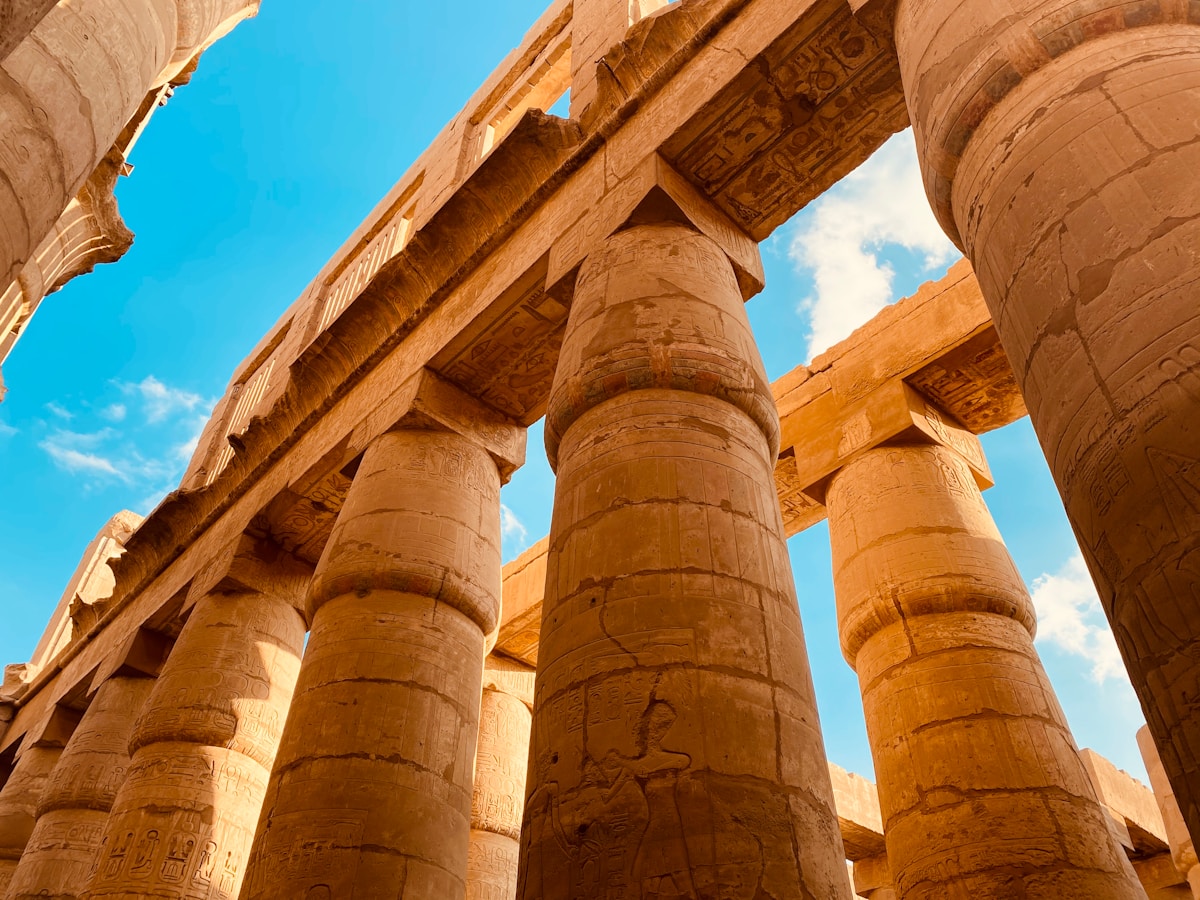
Morning flight to Luxor (50 minutes). Check in, leave bags, and go straight to Karnak Temple. The Hypostyle Hall — 134 columns, some 23 metres high — requires time to absorb. The Sacred Lake and the Avenue of Rams are also worth walking. Allow 2 hours minimum.
Late afternoon: Luxor Temple, 3km south of Karnak, is best at dusk when it is lit from below. The restored section of the Avenue of Sphinxes connecting the two temples is walkable.
Day 6: Luxor — Hot Air Balloon and West Bank
Book a hot air balloon over the West Bank through your hotel the evening before. Flights depart at approximately 5am. The view over the Theban necropolis and Nile at sunrise is the best aerial view available on this itinerary.
After the balloon: Valley of the Kings. Your standard ticket covers three tombs; the Tutankhamun tomb (KV62) and Seti I require separate tickets purchased at the gate. Allow 2–3 hours.
Afternoon: Valley of the Queens, then Medinet Habu (mortuary temple of Ramesses III — substantial and far less visited than the Valley sites). Evening back in Luxor.
Day 7: Luxor — West Bank Continued and Luxor Museum
Morning: Hatshepsut Temple at Deir el-Bahari, Deir el-Medina (the village where the tomb workers lived — the paintings inside are intact and detailed), and the Colossi of Memnon.
Afternoon: Luxor Museum is small, uncrowded and contains well-presented pieces from the Theban region. Allow 1.5 hours. This is considerably more manageable than the Egyptian Museum and the labelling is better.
Nile cruise option: A 3-night cruise departing Luxor on Day 6 (or Day 5 evening) and arriving Aswan on Day 8 or 9 covers the temples at Esna, Edfu and Kom Ombo en route. This replaces Days 6–9 of the hotel-based version. Nile cruises range from budget Nile feluccas to five-star ships — the infrastructure is well established and there is a cruise format for most budgets.
Day 8: Luxor → Aswan — Philae Temple
Train from Luxor to Aswan takes approximately 2 hours and is comfortable in first class. Alternatively, fly (30 minutes).
Afternoon: Philae Temple, reached by motorboat from the Aswan quay. The temple was dismantled and moved to Agilkia Island in the 1970s to save it from Lake Nasser’s rising waters. It is a Ptolemaic-era complex dedicated to Isis. The island setting and the quality of the carved reliefs make it one of the better afternoon sites in Egypt.
Evening: walk the Aswan Corniche, which runs along the east bank of the Nile. The city is noticeably quieter and more relaxed than Cairo or Luxor.
Day 9: Aswan — Nubian Village, Elephantine Island, Felucca
Morning at the Aswan High Dam and the nearby Unfinished Obelisk (still lying in the quarry where it was abandoned in antiquity — a useful illustration of how the Egyptians worked granite). Elephantine Island sits in the Nile opposite the Corniche and contains an archaeological park with ruins from several periods.
Afternoon: hire a felucca to cross to the west bank and visit a Nubian village. Agree the price — and the tip — before boarding. The Nubian Museum in Aswan is modern, well-curated and covers the history and culture of the Nubian people relocated by the building of the High Dam.
Day 10: Abu Simbel and Departure
Abu Simbel is best reached by a 45-minute flight from Aswan — EgyptAir operates regular morning departures. The road convoy option departs at 4am and takes 3.5 hours each way; it is cheaper but costs most of the day.
The two temples — Ramesses II and the smaller temple of Nefertari — were relocated from their original position in the 1960s to save them from Lake Nasser. Allow 2 hours on-site.
Return to Aswan and fly home from Aswan (ASW), or connect back through Cairo if your routing requires it. Some international airlines serve Hurghada and Sharm el-Sheikh as alternative exit points.
Practical Notes
Pre-book: GEM timed entry, Abu Simbel flight, and the KV62 (Tutankhamun) separate ticket at the Valley of the Kings.
Transport between cities: fly Cairo–Luxor and Aswan–home; train or fly for Luxor–Aswan. See the getting around Egypt guide for detailed options and pricing.
Tipping: budget EGP 2,000–3,000 across 10 days for guide and driver tips. It is part of the local economy.
Best season: October to April. Avoid June through August in Upper Egypt.
Book an experience
Itinerary in the area
Instant confirmation · Free cancellation on most bookings
Frequently Asked Questions
- Can I do a Nile cruise on a 10-day Egypt itinerary?
- Yes. A 3-night Nile cruise from Luxor to Aswan fits neatly into days 6–8, replacing the separate Luxor and Aswan hotel nights. It covers Esna, Edfu and Kom Ombo temples en route.
- Is Alexandria worth a full day on a 10-day trip?
- Yes. The Bibliotheca Alexandrina, Qaitbay Citadel and Catacombs of Kom el-Shoqafa cannot be rushed. A day trip from Cairo by bus takes 2.5 hours each way, so leave early.
- Should I fly or take the train between Luxor and Aswan?
- Both work. The train takes around 2 hours and costs very little; the scenery along the Nile is good. If you're short on time, fly (30 minutes). On a 10-day itinerary, the train is fine.
- When is the best time to visit Egypt?
- October through April. The summer months (June–August) bring extreme heat to Upper Egypt — regularly above 40°C in Luxor and Aswan — which makes outdoor sites difficult.