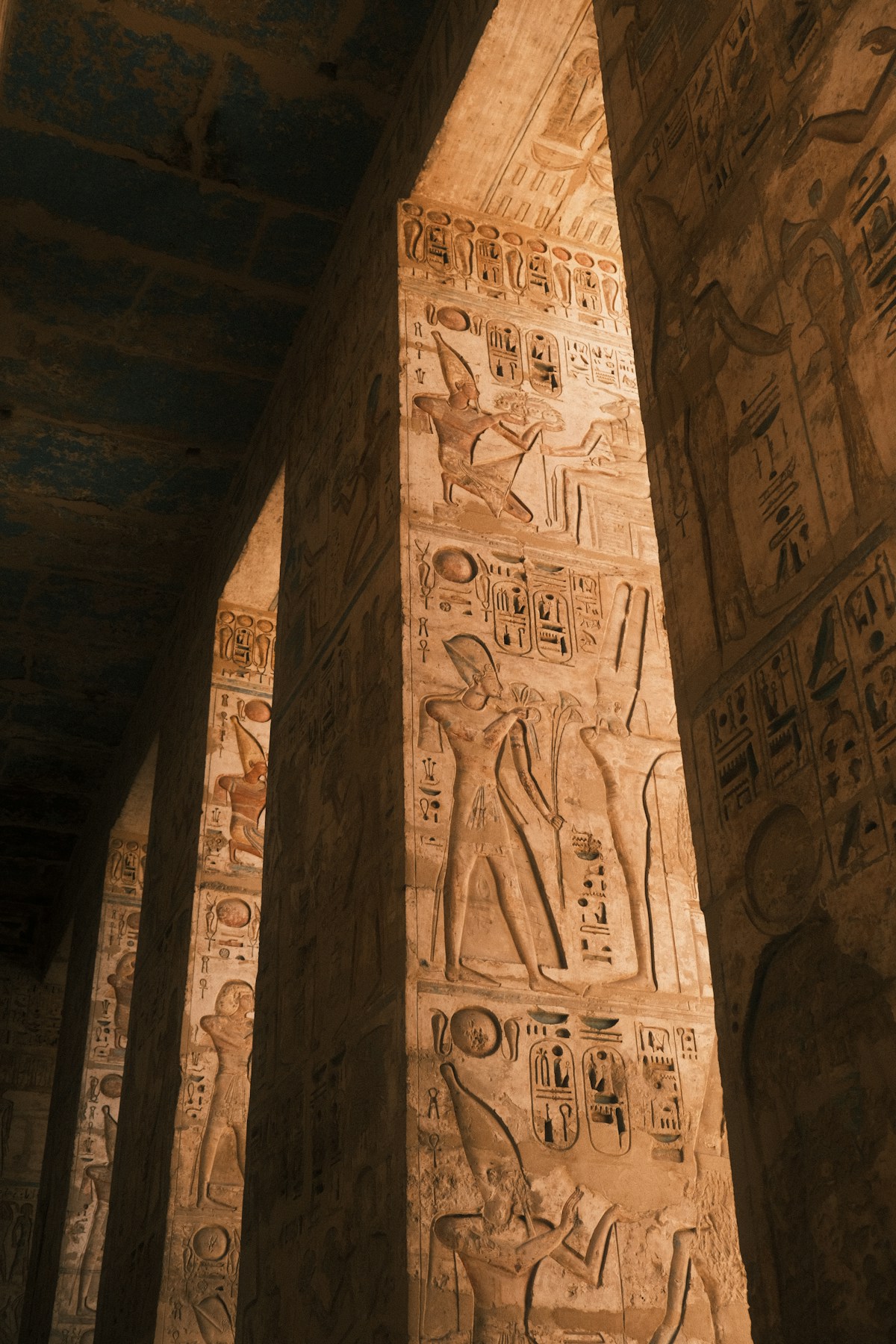
This itinerary prioritises historical depth over breadth. It covers the same cities as a standard Egypt trip but spends more time at each site, includes locations that general tours skip, and is structured to allow genuine engagement with what you are looking at rather than a photograph-and-move-on pace.
For the Luxor West Bank in particular, hiring a licensed Egyptologist guide makes a material difference. The iconography in the royal tombs and mortuary temples is dense; understanding what you are looking at doubles the value of the visit.
Days 1–2: Cairo - The Museums
Day 1: Grand Egyptian Museum (GEM) in Giza. Allocate a full day. The Tutankhamun galleries - 5,000 objects across multiple rooms - require 2.5–3 hours on their own. Purchase the complete Tutankhamun upgrade ticket when pre-booking timed entry online. The rest of the museum, covering prehistory through to the Late Period, is comprehensive and well laid out. Arrive at opening time and eat at the museum café.
Day 2 morning: Egyptian Museum at Tahrir Square. This institution is separate from the GEM and still holds important pieces, including the Royal Mummies Hall (separate ticket required) and the Tutankhamun death mask - still here until the GEM transfer is finalised. The museum is older and less well labelled than the GEM, but the collection is irreplaceable.
Day 2 afternoon: Coptic Cairo - the Hanging Church (Al-Moallaqa), the Church of St Sergius and Bacchus (built over a crypt where the Holy Family is said to have sheltered), Babylon Fortress and the Coptic Museum. The Coptic Museum’s collection of textiles and manuscripts is the best in existence. For Egyptologist-led GEM and Cairo museum tours, browse Cairo tours and activities.
Day 3: Islamic Cairo
The Citadel of Saladin (12th century, with its Mohammed Ali Mosque and military museum) occupies the morning. From there, walk down through the historic Fatimid city to Al-Azhar Mosque (founded 970 CE, one of the oldest universities in the world) and the adjacent Al-Azhar Park for lunch. Khan el-Khalili bazaar in the afternoon - the warren of streets around it dates to the 14th century Mamluk period and the older caravanserai buildings are visible if you look above the shopfronts. Search hotels in Cairo on Booking.com
Day 4: Day Trip to Alexandria
Bus from Cairo to Alexandria (depart 7am; 2.5 hours). For a history-focused trip, the key stops are:
Bibliotheca Alexandrina - the modern library built on the ancient site, with a good antiquities museum underneath containing Ptolemaic pieces.
Qaitbay Citadel - a 15th-century fortress built on the exact foundations of the Lighthouse of Alexandria, one of the Seven Wonders of the Ancient World. The site itself is more evocative than any reconstruction.
Catacombs of Kom el-Shoqafa - the most important Greco-Roman archaeological site in Alexandria. The catacombs date to the 2nd century CE and combine Egyptian and Roman funerary iconography in a way found nowhere else. They are not widely publicised but should not be missed.
Lunch at one of the fish restaurants on the eastern Corniche - this is where Alexandrians eat. Return bus to Cairo by 6pm.
Day 5: Fly Cairo → Luxor - Evening at Luxor Temple
Morning flight to Luxor (50 minutes). Check in and rest through the afternoon heat. Luxor Temple at dusk: the temple is lit from below after dark and the Avenue of Sphinxes section is best walked when the air cools. The temple’s construction spans multiple pharaohs from Amenhotep III to Ramesses II to Alexander the Great (who built a sanctuary here) - the layering is visible if you look for it. Search hotels in Luxor on Booking.com
Day 6: Karnak Temple and Luxor Museum
Karnak Temple in the morning. This is the largest religious complex ever built - the Hypostyle Hall alone (134 columns, built under Seti I and Ramesses II) takes 30–45 minutes to walk properly. The Sacred Lake, the Temple of Khonsu and the Avenue of Rams at the southern entrance all warrant time. Allow 2.5–3 hours minimum.
Luxor Museum in the afternoon. This is one of the best small archaeological museums in Egypt. The collection focuses on objects from the Theban region, labelled clearly with context. The two royal statues from the foundation deposit of Amenhotep III and the reconstructed wall of Akhenaten’s Aten Temple are the standout pieces. Rarely crowded.
For Egyptologist-led Karnak and Luxor Temple tours, browse Luxor tours and activities.
Day 7: Hot Air Balloon and West Bank - Valley of the Kings
Book a hot air balloon over Luxor for 5am. The view over the West Bank necropolis at sunrise - the Valley of the Kings, Hatshepsut’s temple, the Ramesseum - is unmatched and provides a spatial understanding of the site layout that a map cannot replicate.
Valley of the Kings: standard ticket covers three tombs. Choose based on what is open and your preferences - KV11 (Ramesses III) and KV14 (Tausret and Setnakhte) are among the largest and most decorated. KV62 (Tutankhamun) requires a separate ticket and is the smallest tomb but historically the most significant. The tomb of Seti I (KV17) also requires a separate premium ticket and contains the finest wall paintings in the Valley.
Afternoon: Valley of the Queens and Medinet Habu. Medinet Habu - the mortuary temple of Ramesses III - is one of the best-preserved temple complexes in Egypt and is frequently skipped by group tours. The outer walls carry detailed reliefs depicting the Sea Peoples battle. Allow 1.5 hours.
Day 8: West Bank - Deir el-Medina, Tombs of the Nobles, Hatshepsut
An intensive morning on the West Bank covering three sites that most itineraries miss entirely.
Deir el-Medina: the village where the craftsmen who built and decorated the royal tombs lived for over 400 years. The workers’ own tombs are here, smaller than royal tombs but with paintings in exceptional condition - hunting scenes, domestic life, agricultural cycles. The adjacent village ruins are one of the most important archaeological sites of daily life from ancient Egypt.
Tombs of the Nobles (Sheikh Abd el-Qurna and Khokha): the tombs of officials, priests and nobles use a different visual programme from the royal tombs - more scenes of everyday life, banquets, hunting and occupational activity. Less solemn and in some ways more accessible. Allow 2 hours for a selection of tombs.
Hatshepsut Temple (Deir el-Bahari): the three-tiered mortuary temple of the female pharaoh. The colonnaded facade is the most photographed on the West Bank. The Punt reliefs (recording a trading expedition to eastern Africa) are in the middle colonnade.
For guided Aswan excursions - Philae, Abu Simbel, Nubian village, and Kalabsha - browse Aswan tours and activities.
Day 9: Luxor → Aswan - Philae Temple
Train from Luxor to Aswan (2 hours). Afternoon: Philae Temple on Agilkia Island, reached by motorboat. The temple is Ptolemaic - construction primarily under the Ptolemies with Roman-era additions - dedicated to Isis. The reliefs are well preserved and the island setting, surrounded by the waters of Lake Nasser, is one of the more atmospheric in Egypt.
Day 10: Aswan - Nubian Museum, Elephantine Island, Felucca
Elephantine Island: the island in the middle of the Nile opposite Aswan town has been inhabited since the Predynastic period. The archaeological park on the southern tip contains ruins from multiple periods including an Old Kingdom temple and a Nilometer used to measure annual flood levels. The Aswan Museum on the island holds objects from the excavations.
Nubian Museum: opened 1997 on the Corniche. Covers Nubian history and culture from prehistoric times to the present, with particular focus on the communities displaced by the building of the Aswan High Dam. Modern, well curated, excellent English labelling. Allow 2 hours.
Evening: felucca on the Nile. The stretch of river between Elephantine Island and Kitchener’s Island (the botanical gardens) is pleasant in the early evening.
Day 11: Abu Simbel
Fly from Aswan to Abu Simbel - 45 minutes each way, EgyptAir operates morning departures. The alternative road convoy (departs 4am, 3.5 hours each way) costs less but gives the same temple access.
The Great Temple of Ramesses II and the smaller Temple of Nefertari were carved into the cliff face in the 13th century BCE and relocated in their entirety in the 1960s in one of the most complex engineering operations in history. Allow 2 hours on-site; the interior paintings and the arrangement of the sanctuary (aligned so sunlight reaches the innermost statues on specific dates each year) merit careful attention.
Day 12: Return Cairo and Depart
Fly Aswan to Cairo. If your international departure is in the evening, a few hours in Cairo are possible - the Giza Plateau or the GEM gift shop. If not, connect directly.
Specialist Notes
Connectivity and insurance: An eSIM for Egypt keeps you online across Cairo, Luxor and Aswan - useful for offline maps and booking tickets. Travel insurance for Egypt is essential on a 12-day trip spanning multiple domestic flights and rail journeys.
Egyptologist guides: for the Valley of the Kings and the Luxor West Bank, a licensed Egyptologist guide costs more than a standard driver-guide but provides substantially more context. Book through a reputable agency rather than at the site gate.
Photography: flash is prohibited in all tombs and many museums. A camera without flash and good low-light capability is essential if photography matters to you.
Visiting Deir el-Medina and Tombs of the Nobles: these sites are not always included in group tour packages. If booking through an operator, confirm they are on the itinerary; if travelling independently, both require their own entrance tickets purchased at the West Bank ticket office.
Key Site Guides
- Pyramids of Giza - the complete visitor guide for the Giza Plateau
- Grand Egyptian Museum - tickets, the Tutankhamun galleries, and getting there from Cairo
- Karnak Temple - the largest religious complex ever built
- Valley of the Kings - which tombs to prioritise and how tickets work
- Hatshepsut Temple at Deir el-Bahari - the colonnaded mortuary temple
- Medinet Habu: Temple of Ramesses III - one of the West Bank’s best-preserved sites
- Deir el-Medina: The Workers’ Village - the community that built the royal tombs
- Abu Simbel Temples - the relocated rock-cut temples of Ramesses II
- Ancient Egypt History Overview - background on the pharaonic periods
Other Egypt Itineraries
- 1 Week in Egypt - the essential Cairo, Luxor, and Aswan circuit
- 2 Weeks in Egypt - adds Alexandria and the Red Sea
- Egypt Nile Cruise Itinerary
- Browse Egypt history-focused tours - compare Egyptologist-led tours of the main pharaonic sites
Book Your Trip
- Flights - Find the best fares to Egypt
- Travel Insurance - Get covered before you go
- eSIM - Stay connected from landing
- Airport Transfers - Pre-book your transfer from Cairo or Hurghada
Search hotels in Egypt on Booking.com
- Car Rental - Compare prices across providers
- Tours & Activities - Browse Egypt tours on GetYourGuide