Nile Cruise Egypt: Routes, Ship Types, and What to Expect
Book an experience
Book this activity
These are the top-rated activities for this area — book ahead to lock in your preferred date.
A Nile cruise between Luxor and Aswan is one of the few travel experiences that genuinely justifies the cliché. The temples appear directly from the riverbank; the landscape between them is palm-lined and largely unchanged; and the travel itself — on a boat on the world’s most historically significant river — is the point. Here’s what you need to know before booking.
The Standard Route
The classic Nile cruise runs between Luxor and Aswan (or Aswan to Luxor), covering roughly 200 kilometres over 3–4 nights. En route, boats stop at Edfu, Kom Ombo, and Esna. The direction doesn’t significantly affect the experience — most operators offer both.
This stretch is the right choice. Longer cruises extending through Lake Nasser or toward Cairo add significant time for diminishing returns in terms of ancient sites.
Types of Boat
Standard cruise ships are the most common option. Carrying 50–150 passengers, these operate on fixed schedules with guided excursions included. Meals, accommodation, and temple entry fees are typically part of the package. The experience is group-oriented; the ships range from budget functional to genuinely comfortable. This is what most tour operators sell and what most travellers take.
Dahabiyya boats are traditional wooden sailing vessels carrying 4–10 passengers. The pace is slower — deliberately so — and the itinerary can be more flexible. A dahabiyya anchors at small villages away from the mass tourism stops. The on-board experience is more intimate, and the sailing itself has a distinct quality. Dahabiyyas cost significantly more than standard cruise ships and suit travellers who want to spend time on the river rather than rushing between sites.
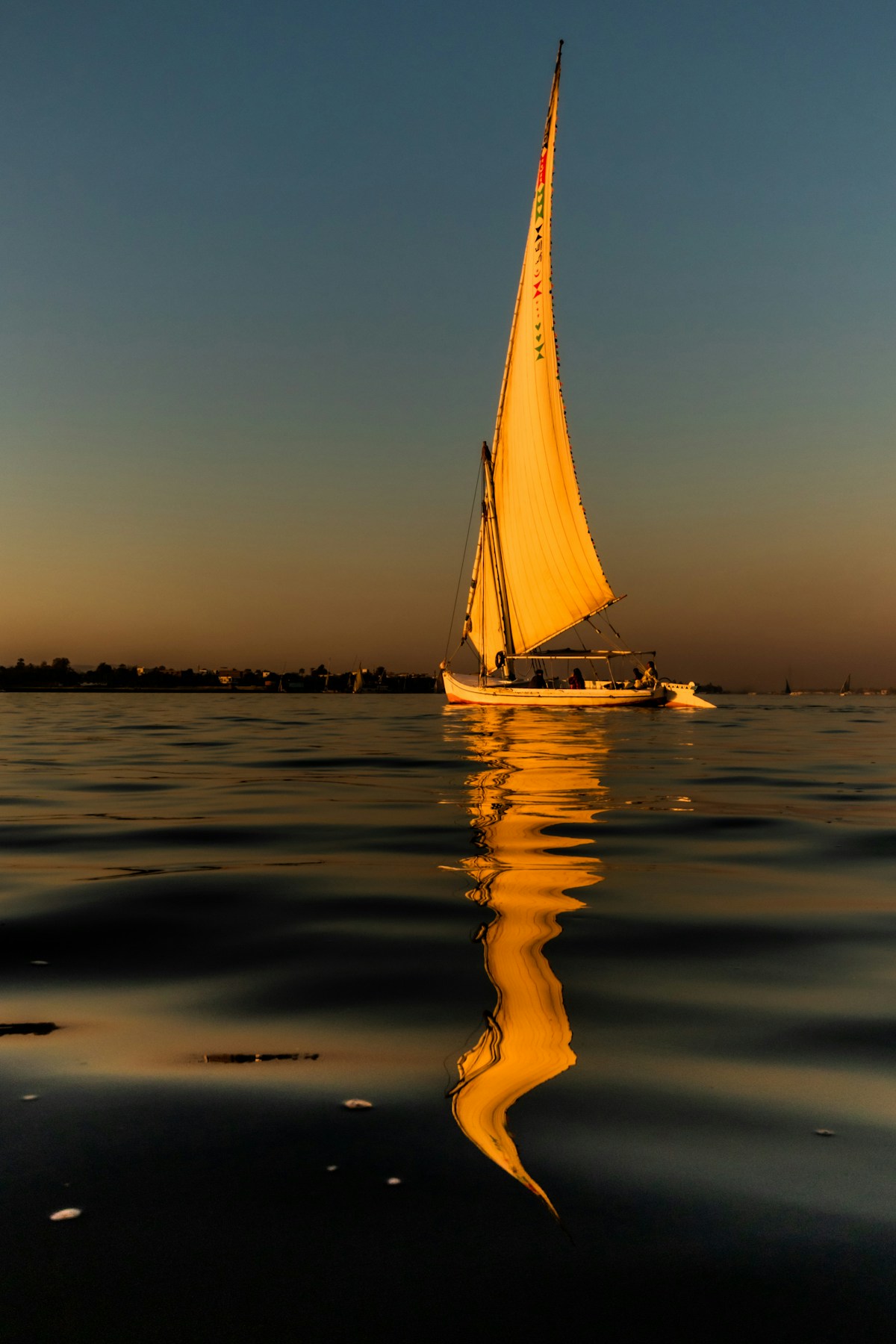
Feluccas are the budget end: traditional open-air wooden sailboats with no private cabins. You sleep on mattresses on deck under a canopy. A cook prepares simple meals on board. Two to three nights on a felucca between Luxor and Aswan costs very little and remains one of Egypt’s classic backpacker experiences. It’s rough, sociable, and memorable. Book locally in Luxor or Aswan rather than in advance.
What You’ll See
Edfu Temple is the best-preserved ancient temple in Egypt — dedicated to Horus, built during the Ptolemaic period, and striking precisely because it’s intact. Walking through the pylons and into the inner sanctuary at Edfu gives a clearer sense of what these buildings looked like at full capacity than almost anywhere else.
Kom Ombo is an unusual double temple shared between Sobek (the crocodile god) and Horus the Elder. The adjacent Crocodile Museum holds mummified crocodiles from the site. The temple sits directly on the Nile; approaching by boat at dusk is the best way to arrive.
Esna Temple is partially excavated — the hypostyle hall sits inside a pit about nine metres below the modern street level, with the town built up around and above it. It’s stranger and more disorienting than the other sites, worth 30–45 minutes.
When to Go
October through April is the right window. June through August is genuinely very hot — 40°C+ in Upper Egypt — and reduces the enjoyment of any outdoor activity significantly. December and January are peak season; book well ahead for those months.
Booking
Standard cruise ships are bookable through tour operators in Cairo, Luxor, and Aswan, and through international booking platforms. Dahabiyyas are generally booked directly with the operators — a handful of well-regarded operators run regular departures. Feluccas: book locally on arrival.
For context on the temples at either end of the route, see our guides to Luxor and Aswan.
Frequently Asked Questions
- How long is a Nile cruise?
- Standard cruises are 3–4 nights covering the Luxor–Aswan stretch. Some extend to Cairo via Lake Nasser but those are longer liveaboard-style trips. The Luxor–Aswan route is the most popular and practical.
- What is the difference between a dahabiyya and a regular cruise?
- A dahabiyya is a traditional wooden sailing boat carrying 4–10 passengers. The pace is slower, the experience more intimate, and you stop at smaller villages away from the mass tourism circuit. They're significantly more expensive than a standard cruise ship. Standard cruise ships carry 50–150 passengers and operate a fixed schedule with group excursions.
- Can you book a felucca independently?
- Yes. Feluccas are best booked locally in Luxor or Aswan — touts at both cities offer multi-night trips. Agree the price, duration, and what's included (food, blankets) clearly before departure. There are no private cabins; you sleep on mattresses on deck.
Ready to explore?
Browse hundreds of tours and activities. Book securely with free cancellation on most options.
Browse on GetYourGuide →We may earn a small commission — at no extra cost to you.