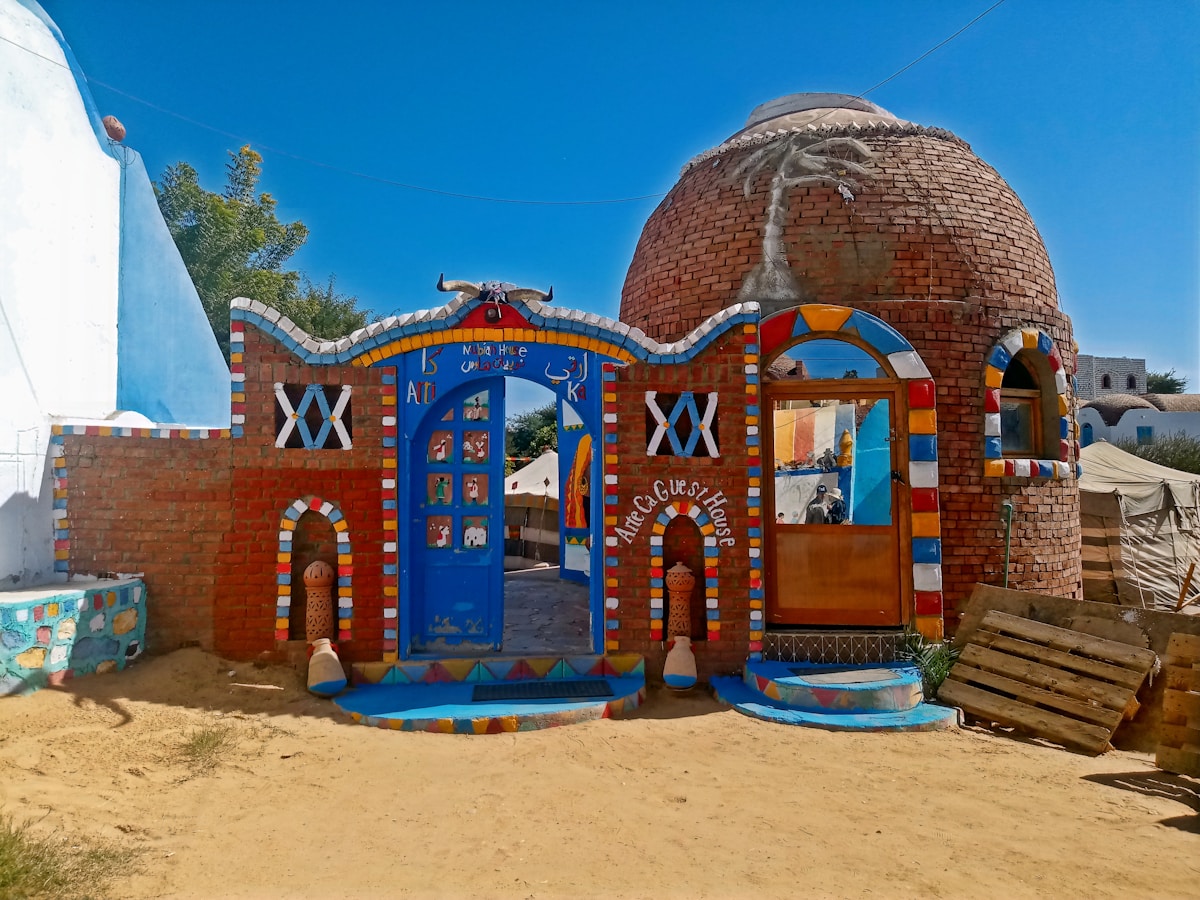
The Nubian villages on the west bank of the Nile around Aswan are among the most distinctive places in Egypt - houses painted in saturated blues, oranges, and yellows, decorated with geometric patterns and scenes of pilgrimage. Gharb Soheil, the most visited, sits opposite the southern end of Elephantine Island and has become one of Aswan’s signature half-day trips. Here is how to do it well, what it costs, and how to visit respectfully.
A short background
Nubians are an ethnic group with their own languages (Kenzi and Fadicca, unrelated to Arabic) whose homeland stretched along the Nile from Aswan deep into Sudan. The building of the Aswan High Dam in the 1960s flooded most of historic Nubia under Lake Nasser, displacing tens of thousands of people. Communities resettled around Aswan and Kom Ombo, and villages like Gharb Soheil carry the culture forward - the painted houses, the language, the music, and a fierce hospitality tradition. Understanding that backstory changes how you see the bright walls: this is a culture that lost its land and kept its identity.
Getting there from Aswan as of 2026
Gharb Soheil is reached by motorboat from Aswan’s corniche - the ride takes 20–30 minutes and passes Elephantine Island and the cataract scenery that makes this stretch of the Nile so photogenic.
- Private motorboat: approximately EGP 300–500 return for the whole boat as of 2026, including an hour or two of waiting time. Negotiate before boarding, agree the waiting period explicitly, and pay at the end. Boats seat 8–10, so this is economical for groups.
- Shared/public boat: locals pay a few pounds; tourists joining shared boats typically pay approximately EGP 20–50 per person, but departures are irregular.
- Organised tour: approximately USD 15–30 per person for a guided sunset village visit, often combined with a felucca ride. Convenient, but you move on the group’s schedule.
- By road: taxis can reach the village via the west bank road over the old dam (approximately EGP 200–300 each way), but the boat is half the experience.
Sunset departures (around 4–5pm) are the best: golden light on the dunes, and the village at its liveliest.
What to expect in Gharb Soheil
The waterfront lane is unashamedly set up for visitors: spice and souvenir stalls, henna artists (approximately EGP 50–150 for a small design - agree the price first), painted stairways built for photos, and cafés on cushioned terraces above the river. It is colourful, friendly, and yes, commercial.
Three things lift it beyond a photo stop:
- Tea in a Nubian house. Many families open their courtyards to visitors for hibiscus tea (karkadeh) for a small fee or as part of a tour. The domed, sand-floored architecture is ingenious passive cooling, and hosts are usually happy to talk about Nubian history.
- Walking inland. Two minutes back from the riverfront strip, the village becomes a village: kids heading to school, bread ovens, quiet sand lanes between painted walls.
- Camel rides along the dunes behind the village (approximately EGP 200–300 - negotiate) connect Gharb Soheil with the desert scenery around the Tombs of the Nobles.
On the crocodiles: several houses keep live Nile crocodiles in small tanks and cages, a nod to an old Nubian tradition of keeping crocodiles as protective symbols - mummified crocodiles once hung over doorways. Today it functions mainly as a paid photo opportunity, and the animals live in conditions that are hard to defend. We suggest admiring the crocodile motifs painted on the walls instead and spending your money on tea, food, or crafts.
Staying overnight: Nubian guesthouses
An overnight stay is the single best upgrade to a Nubian village visit. After the day boats leave, the village goes quiet, and dinner on a rooftop with the Nile below is the kind of evening people remember. Established options as of 2026:
Search hotels in Aswan on Booking.com
- Anakato Nubian Houses - the best-known cluster, with riverfront rooms in traditional domed buildings. Doubles from approximately USD 50–90 including breakfast.
- Kato Dool Nubian Resort - a step up in comfort, with a Nile-front terrace and restaurant. Doubles approximately USD 60–110.
- Eco Nubia (on nearby Bigeh Island, by Philae) - a quieter eco-lodge alternative, approximately USD 70–120.
- Family-run guesthouses throughout the village rent simple rooms from approximately USD 20–40 - basic, spotless, and the most direct way to support local households.
Book ahead for October–April; capacity is small. For hotels in Aswan proper, see our where to stay in Aswan guide.
Nubian food
Eat at least one meal in the village. Nubian cooking is distinct from mainstream Egyptian food - slow-cooked tagines of okra or beef, whole Nile fish baked with rice and spices, fresh flatbread (shamsi), and dukkah-style spice blends. A generous home-cooked dinner in a guesthouse runs approximately EGP 200–400 per person as of 2026. Finish with karkadeh or cinnamon tea. Vegetarians do well here - lentils, okra, and stuffed vegetables are staples.
Visiting respectfully
- Ask before photographing people - always, but especially women and children. A smile and a gesture toward the camera is enough.
- Dress modestly: shoulders and knees covered is appropriate in the village, as anywhere in rural Egypt.
- Buy something real: spices, handmade baskets, or a meal put money into the village more directly than posed photos do.
- Hospitality is genuine - accepting tea is polite, and a small purchase or tip in return is appreciated but rarely demanded.
- A simple Arabic “shukran” (thank you) goes a long way - and hosts light up if you ask them how to say it in Nubian.
Half-day or overnight?
With limited time, the sunset boat run plus dinner gives you the essentials in 3–4 hours and slots neatly after a day of Aswan sightseeing - Philae Temple and the Unfinished Obelisk in the morning, village in the late afternoon. With a spare night, sleep in the village: dawn over the Nile, breakfast on a rooftop, and a boat back to town by mid-morning connects easily to an Abu Simbel departure the following day.
See also: Things to Do in Aswan | Aswan Day Trips | Felucca Sailing on the Nile
For a fully organised experience that includes the boat, the village walk, and guide commentary, Nubian village tours from Aswan are available as half-day and sunset options.