Aswan feels different from Cairo or Luxor - slower, quieter, Nubian in character rather than Arab-Egyptian, and defined by the Nile in a way the northern cities are not. The river here is wide, broken by islands and granite outcrops, with feluccas moving between them at all hours. Two or three days in Aswan give you time to cover the main sites without rushing.
Philae Temple
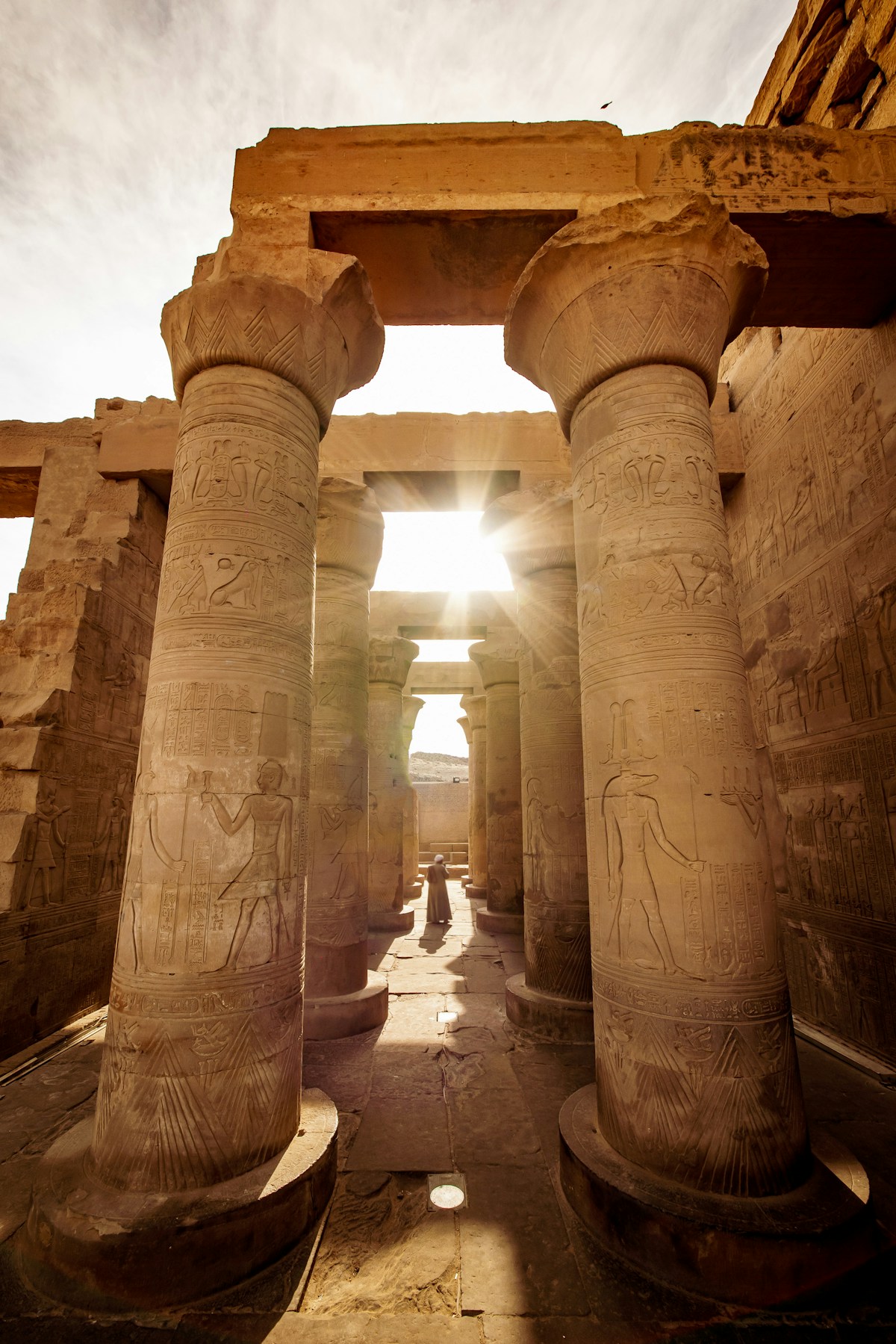
Philae is the most visited ancient site in Aswan and one of the most atmospheric temples in Egypt. Dedicated to Isis, the temple was built during the Ptolemaic and early Roman periods (c.280 BC–AD 300). When the Aswan High Dam raised the level of the Nile in the 1970s, the original island was permanently submerged. UNESCO coordinated a major rescue operation that physically relocated the entire temple, stone by stone, to the nearby island of Agilkia, where it stands today.
Access is by motorboat from the embarkation point near the Aswan Low Dam - a short, included transfer. An evening sound-and-light show operates several nights a week if you want to see the temple after dark.
Aswan High Dam
The High Dam (Sadd el-Ali) was constructed between 1960 and 1970 with Soviet technical and financial assistance. At 111m tall and 3.8km wide, it created Lake Nasser - one of the world’s largest reservoirs - and fundamentally changed Egyptian agriculture by regulating Nile flooding. The dam is 12km south of the city centre. A viewing pavilion sits at the top, with clear sight lines over the lake and back toward Aswan. The on-site interpretation is limited, but the scale of the structure is self-evident.
Nubian Village (Gharb Sohail)
The Nubian village of Gharb Sohail on the West Bank is one of the most rewarding things to do in Aswan. The houses are painted in vivid blues, yellows, and greens - a visual contrast to the stone and concrete of most Egyptian cities. The community is genuine and has lived here for generations; it is not a tourist reconstruction.
Reach it by felucca or local motorboat from the Corniche. A visit of 2–3 hours covers the painted lanes, local craft stalls, and a cup of karkade (hibiscus tea) with a local family. Return by felucca at sunset for one of the best experiences in Upper Egypt.
Felucca sailing on the Nile
Aswan is the best place in Egypt to sail on a felucca - the traditional lateen-rigged wooden boat that has worked the Nile for centuries. Felucca captains line the Corniche and rates are negotiable: EGP 100–200 per boat for 1–2 hours is typical, though prices shift. A sunset circuit around Elephantine Island is the standard route.
Elephantine Island
The large island in the middle of the Nile opposite the city centre holds both an active Nubian village and an archaeological site. Ancient Yebu (as Elephantine was known) was an important border garrison and trading post for thousands of years. The Aswan Museum on the island displays finds from the site. A local ferry from the Corniche reaches the island in minutes. The views back to the Aswan Corniche from the island’s eastern edge are particularly good in the late afternoon.
Unfinished Obelisk
In the northern granite quarries, a massive obelisk was abandoned in the rock after a crack appeared during cutting - approximately 1508 BC. Had it been completed and erected, it would have been the world’s largest obelisk at 42m. Lying exactly as it was left, it shows clearly how obelisks were carved directly from the living bedrock: workers cut channels around the form and hammered dolerite balls to free it from below. The site is a short drive from the city centre and takes 30–45 minutes to visit.
Nubian Museum
Opened in 1997, the Nubian Museum in Aswan is one of Egypt’s better regional museums. It covers Nubian culture, history, language, and material culture from prehistoric times through to the 20th century, with a dedicated section on the UNESCO rescue operation that relocated Abu Simbel and Philae. English labelling is strong throughout. Often skipped by visitors focused on the ancient sites, but worth 1.5–2 hours.
For the Abu Simbel day trip from Aswan, see our Abu Simbel guide and the full Aswan city guide.
Book an Aswan Tour
Aswan’s main sites — Philae, the Nubian villages, and an Abu Simbel day trip — are well served by organised tours. The table below covers the most-booked options, all bookable in advance.
| Tour | Duration | From | What’s included |
|---|---|---|---|
| Aswan guided tours — Philae, High Dam & Nubian village | 4–6 hrs | ~$25 | Philae Temple, Aswan High Dam, Nubian village visit, Egyptologist guide |
| Felucca ride on the Nile from Aswan | 2 hrs | ~$15 | Traditional felucca sailing, Elephantine Island circuit, Nile sunset views |
| Abu Simbel day trip from Aswan | 8–10 hrs | ~$45 | Transport from Aswan, Ramesses II Great Temple, Temple of Nefertari, guide |
See Also
- Aswan Travel Guide - accommodation, getting around, and logistics for all Aswan’s sites
- Abu Simbel Temples: History and Visitor Guide - the rock-cut temples of Ramesses II
- Felucca Sailing on the Nile - booking and what to expect
- Nile Cruise: Luxor to Aswan - arriving or departing Aswan by river
- Nubian Villages Near Aswan - a guide to visiting Gharb Sohail and nearby villages
- Aswan Itinerary - a day-by-day plan for making the most of Aswan
- Aswan tours and excursions - browse guided tours of Philae, the Nubian villages, and Abu Simbel day trips