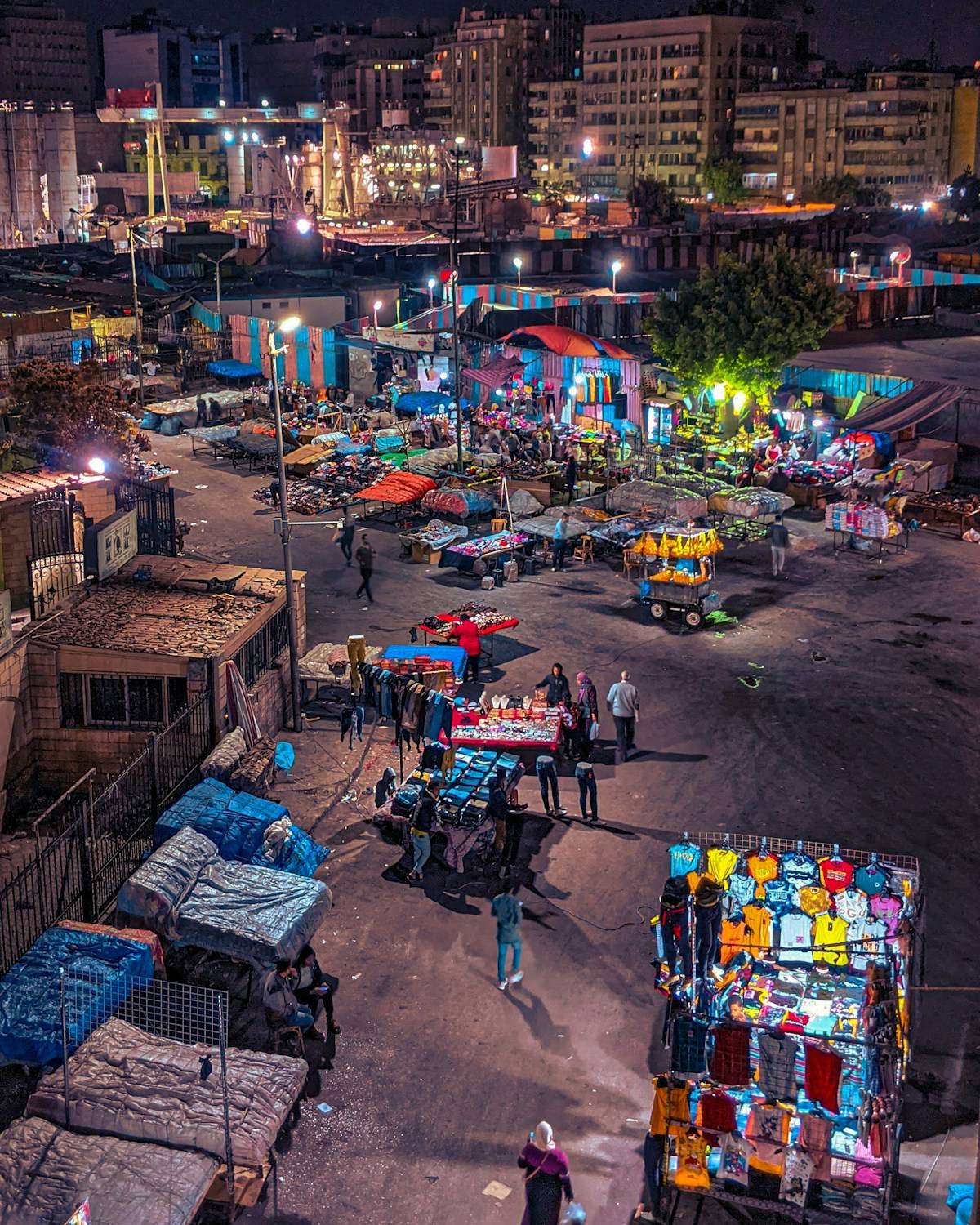
Cairo is one of the most densely layered food cities in the world. It is a city of 22 million people who eat constantly - at street corners, in basement koshary shops, on felucca boats, on rooftop terraces overlooking the Nile. The food is not always photogenic. It is, consistently, delicious.
This guide covers the three neighbourhoods that matter most for eating, the guided tour operators worth booking, and the specific dishes and restaurants to seek out.
Khan El Khalili and Islamic Cairo
Khan El Khalili is where tourists go to buy souvenirs and where Cairenes go to eat. The lanes around the main bazaar - Al-Muizz Street, Sharia El Azhar, the alleyways behind the Hussein mosque - are lined with tea houses, dessert vendors, and hole-in-the-wall restaurants that have been operating for decades.
What to eat here:
- Ta’meya (Egyptian falafel): made from fava beans rather than chickpeas, served in flatbread with tomato, tahini, and pickled vegetables. Approximately EGP 15–25 per sandwich from street vendors.
- Feteer meshaltet: flaky layered pastry, can be sweet (with honey or jam) or savoury (cheese or meat). Look for the enormous copper pans and the rapid folding technique. Budget EGP 30–60 per feteer.
- Konafa and Om Ali: the dessert strip near Hussein Square has stalls selling fresh konafa - shredded pastry soaked in sugar syrup with cream or cheese - from around EGP 50 for a generous portion.
Naguib Mahfouz Café (5 Al-Badestan Lane, Khan El Khalili) is a reliable sit-down option if you want a full meal in the bazaar area. Named after Egypt’s Nobel Prize-winning novelist, it does solid Egyptian mezze - baba ganoush, stuffed vine leaves, and molokhia - with mains from approximately EGP 200–400 per person as of 2026.
The best time to visit this neighbourhood for eating is early morning before 9am (when bakers and foul vendors are at their freshest) or after sunset, when the area comes alive with locals.
Downtown Cairo (Wust El Balad)
Downtown is where you eat koshary and not much else - and that is perfectly fine, because Egyptian koshary is one of the genuinely great street foods of the world.
Koshary El Tahrir (Midan Tahrir, Downtown Cairo) is the benchmark. The dish - lentils, rice, macaroni, chickpeas, fried onions, spiced tomato sauce, and garlic vinegar layered in a bowl - costs approximately EGP 35–75 depending on size as of 2026. Order a large. You will not need to eat again for several hours.
Kazaz (26 July Street, Downtown) is slightly more upscale and does a strong foul and ta’meya breakfast spread from around EGP 120 per person. Open from early morning.
Felfela (15 Hoda Shaarawi Street, Downtown Cairo) has been feeding travellers since 1959. A sprawling restaurant with kitschy décor and reliable Egyptian cooking - koshari, grilled meats, ful, and Egyptian salads. Main dishes run approximately EGP 150–300 per person as of 2026.
Downtown is also where you will find the city’s Egyptian-Italian fusion legacy - small cafés and pastry shops serving cream pastries and Turkish-style coffee, remnants of the cosmopolitan Cairo of the early 20th century.
Zamalek
Zamalek, the island suburb on the Nile, is Cairo’s most European-feeling neighbourhood: tree-lined streets, embassies, and a concentration of restaurants aimed at the city’s international community and upper-middle class.
Abu El Sid (157 26th July Street, Zamalek) is the most cited upscale Egyptian restaurant in the city. Ornate interiors, excellent molokhia with rabbit or chicken, slow-cooked ox-tail, and Egyptian street food elevated to sit-down format. Budget approximately EGP 500–900 per person for a full meal with drinks as of 2026. Reservations are recommended at weekends.
For something more casual, the Zamalek street-level cafés along Mohammed Mazhar Street serve strong shisha and tea alongside modest Egyptian snacks. Not a destination for serious eating, but a good place to sit after a heavier meal elsewhere.
Guided Food Tour Operators
If you want structure and context, a guided tour is worth the money. A good guide explains not just what you are eating but why - the Ottoman influences on Egyptian pastries, why foul was historically the food of the poor that everyone now eats, the social ritual of street tea.
Bellies En-Route is the best-known English-language food tour operator in Cairo. Their standard Cairo walking tour runs approximately USD 55–75 per person (2–4 hours) and covers Islamic Cairo, Downtown, and Khan El Khalili. Smaller group sizes and well-trained guides who speak to culinary history as well as food. Book in advance as spots fill quickly during peak season (October–March).
Cairo Food Tours offers a budget-oriented alternative at approximately USD 25–40 per person with a slightly broader itinerary. Less polished but covers more ground.
Both operators are bookable through GetYourGuide; look for tours listed specifically under “Cairo food tour” or “Khan El Khalili food walk.”
Ramadan Eating
Visiting during Ramadan is worth doing specifically for the food, not despite it. From Iftar (sunset) onward, Cairo transforms into a city of communal eating: long tables in public squares, pop-up stalls selling seasonal sweets only available in this month, and a festive atmosphere that extends well past midnight.
Qatayef - sweet pancakes stuffed with cream or nuts and pan-fried - appear only during Ramadan and are worth seeking out. Expect EGP 10–20 per piece from street vendors.
During daytime Ramadan hours, most street food stalls are closed. Hotels serving non-fasting guests can provide meals, but the experience is considerably flattened. If your trip overlaps with Ramadan, plan your food outings around Iftar.
When to Visit
October through March is the best window for a Cairo food tour. Temperatures are comfortable (18–28°C) for walking between neighbourhoods. Summer (June–August) is viable in the early morning and evening only - midday heat makes extended walking tours unpleasant.
Weekend mornings (Friday–Saturday) bring the busiest market atmosphere near Khan El Khalili but also the best selection of fresh pastries and foul.
Practical Notes
- Cash only at virtually all street food vendors and local koshary shops. ATMs are plentiful in Downtown and Zamalek.
- Language: Menu items are usually written in Arabic only at local spots. Pointing at what others are eating works perfectly well.
- Appetite strategy: Eat small portions across many stops rather than attempting full meals at each. A half-portion of koshary, two ta’meya sandwiches, and a shared konafa is a more rewarding morning than three sit-down meals.
- Internal links: See our Egyptian street food guide for a full breakdown of dishes and Egyptian cuisine overview for cultural context.
Plan Your Trip
- Food tours in Cairo — guided street food walks, market visits, and hands-on cooking classes
- Travel insurance for Egypt — covers medical emergencies and unexpected itinerary disruptions
- eSIM for Egypt — data from the moment you land, no physical SIM needed