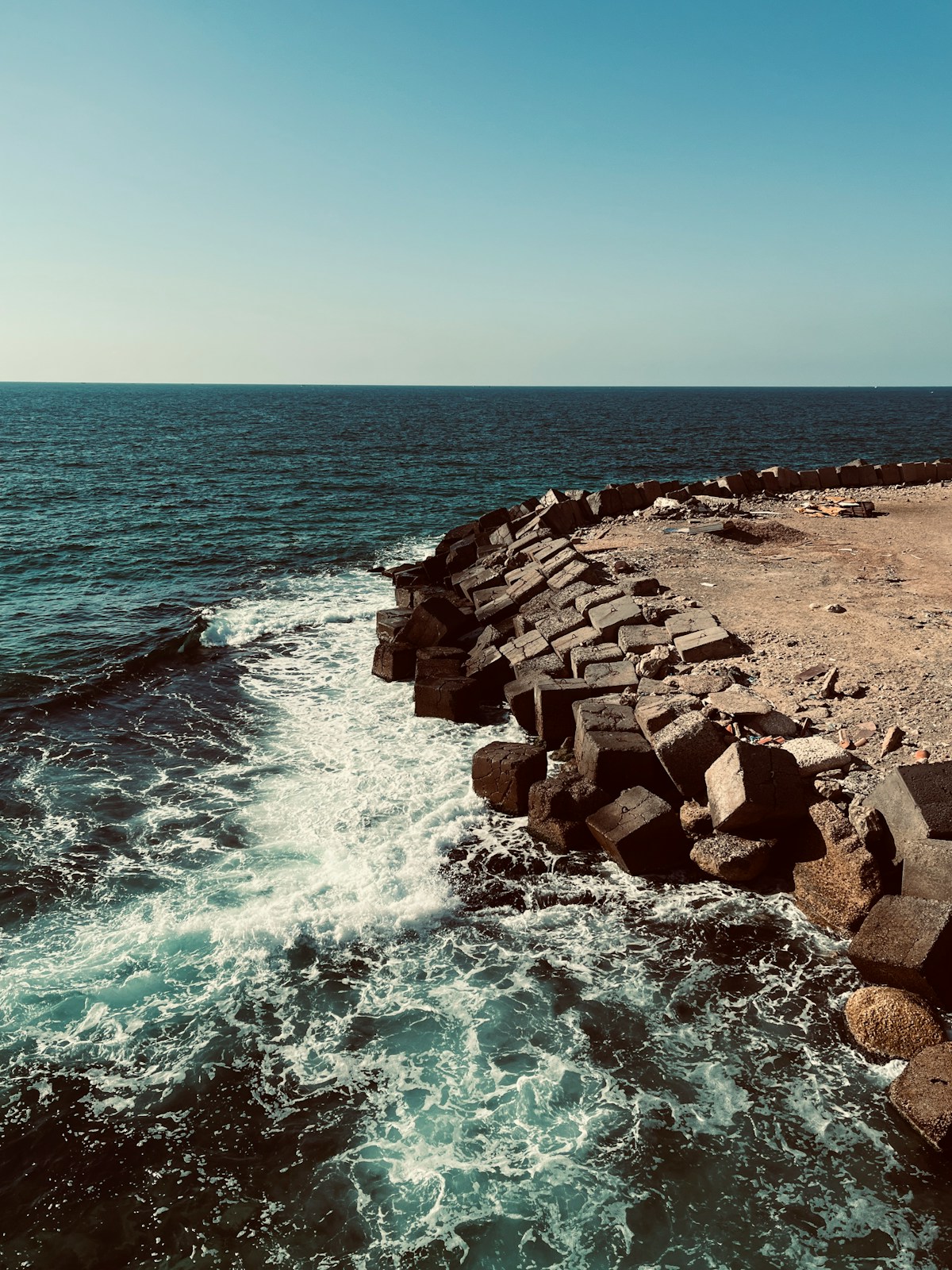
Alexandria is Egypt’s second city and its Mediterranean port - a place with a different tempo from Cairo, shaped by two millennia of Greek, Roman, Jewish, Arab, and European influence. The ancient Library of Alexandria is long gone, but its modern successor stands on the waterfront. The Lighthouse of Alexandria is gone too, but its replacement fortress still stands on the harbour. What remains is a city of layered history, excellent seafood, and a distinctly coastal character.
Bibliotheca Alexandrina
The modern Bibliotheca Alexandrina opened in 2002 as a deliberate successor to the ancient Library of Alexandria. The building is architecturally distinctive - a tilted disc clad in stone engraved with scripts from around the world, angled toward the sea. Inside are multiple museums: the Antiquities Museum (Egyptian and Greco-Roman artefacts), the Manuscripts Museum, the Sadat Museum, and a Planetarium. The reading rooms are open to the public. This is a functioning cultural institution, not a set piece - it rewards several hours.
Qaitbay Citadel
Built in the 1470s by the Mamluk Sultan Qaitbay, this fortress occupies the tip of the eastern harbour on land once occupied by the ancient Lighthouse of Alexandria - one of the Seven Wonders of the Ancient World. Some of the lighthouse’s stone was incorporated into the citadel’s foundations. The ramparts give good views across the Mediterranean. There is a small naval museum inside. The walk along the harbour wall to reach the citadel is pleasant in itself.
Catacombs of Kom el-Shoqafa
These multi-level Roman-era catacombs sit roughly 2km from the city centre and represent one of Alexandria’s most unusual sites. Constructed from the 2nd century AD and rediscovered in 1900, they contain burial chambers decorated with a striking fusion of Egyptian, Greek, and Roman iconography - the same figures depicted simultaneously in all three visual traditions. They are listed among the Seven Wonders of the Middle Ages. Despite this, they remain relatively uncrowded compared to more famous Egyptian sites.
Roman Amphitheatre at Kom el-Dikka
This is the only Roman theatre discovered in Egypt. It is modest in scale but well preserved, with tiered marble seating intact, and sits within a small archaeological park in central Alexandria. The surrounding excavations have also revealed Roman bath complexes and villa remains. It takes about an hour to visit properly.
Montaza Palace and Gardens
Located in the northeast of the city, Montaza was the summer residence of the Egyptian royal family. The palace itself is not fully open to visitors, but the surrounding gardens are a public park - well maintained and a pleasant contrast to the urban density elsewhere. The beach here is calmer than the central city beaches.
The Corniche and Stanley Bridge Area
Alexandria’s Corniche is a 20km coastal road running from the western harbour through the city and past the eastern beaches to Montaza. Walking or riding the antique tram along it gives a coherent sense of the city’s geography and its relationship with the sea. The Stanley Bridge area, in the eastern part of the city, is a good point for watching the Mediterranean in the late afternoon. The beach here gets crowded in summer (June–August) but is calm the rest of the year.
Seafood by the Harbour
Alexandria’s food identity is built on Mediterranean seafood - sea bream, sea bass, red mullet, calamari, and prawns, grilled and priced by weight. The cluster of restaurants near the eastern harbour is the place for a proper fish lunch. See our Alexandria seafood guide for specific dishes and where to eat.
Search hotels in Alexandria on Booking.com
For an overview of the city itself and practical logistics, see our Alexandria city guide. You can also browse Alexandria guided tours for walking tours, catacombs visits, and Qaitbay excursions with a local guide.