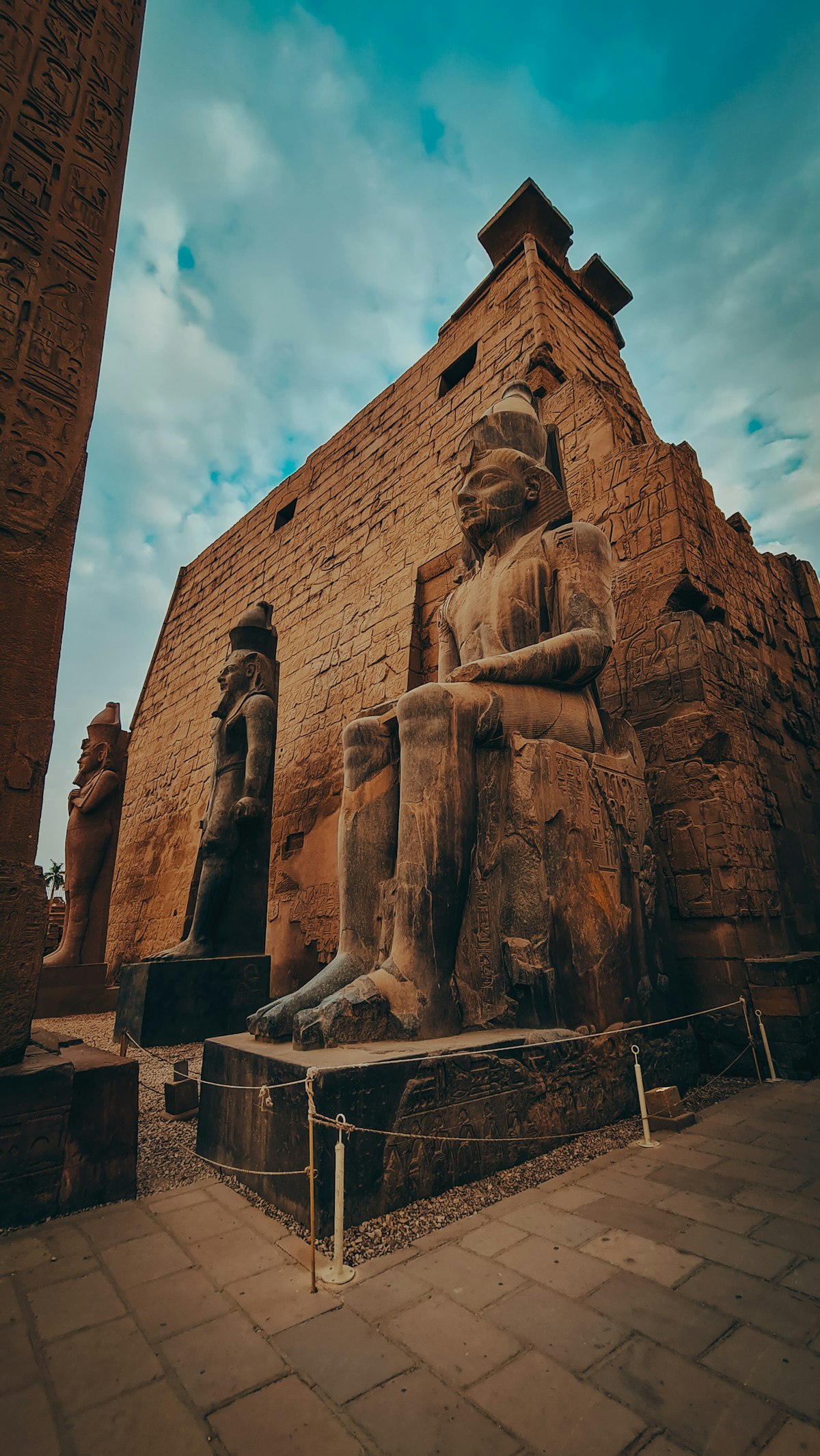
Karnak Temple is the largest religious complex ever built. During daylight hours, the scale and density of its columns, obelisks, and pylons can be overwhelming to process quickly. The Sound and Light Show offers a different way into the site: a guided evening walk through the illuminated temple, with narration tracing the history of each section’s construction, followed by a seated performance at the Sacred Lake where light projections animate the story of the pharaohs who built here.
The show has run in various forms since the 1960s and has been updated several times. The current version uses modern LED lighting, enhanced sound design, and a dramatised English narration voiced to give each pharaoh a distinct presence in the story. It is theatrical rather than academic, but for visitors with limited prior knowledge of Egyptian history, the format works well as an introduction.
The Route
The show begins at the main First Pylon — the massive entrance gate to the complex — and proceeds on foot along a choreographed path through the temple interior.
Avenue of Rams: The path from the entrance through a row of sphinx-headed ram statues (depicting the god Amun) to the First Pylon. Illuminated in warm amber light at the start of the show.
Great Hypostyle Hall: 134 columns, the largest of which stand 21 metres tall with capitals wide enough to hold 50 people. At night, with spotlights picking out the carved hieroglyphic reliefs on each column, the hall has a different quality than in daylight — the details emerge from shadow individually rather than all at once. This section of the walk is approximately 15-20 minutes.
Obelisks of Thutmose I and Hatshepsut: Two surviving obelisks illuminated mid-route. The Hatshepsut obelisk, the tallest standing obelisk in Egypt at 29 metres, was enclosed inside a stone shell by her successor Thutmose III — the show’s narration covers this political story.
Sacred Lake: The final section takes place at the Sacred Lake, a rectangular reservoir used by temple priests for ritual purification. Audience seating faces the lake on tiered rows. Light projections map images onto the far pylon and reflect off the water while the narration covers the New Kingdom pharaohs who expanded Karnak — Seti I, Ramesses II, and Ramesses III.
The seated section is approximately 30-35 minutes.
Tickets and Booking
Box Office
Karnak Temple box office (at the entrance to the complex) sells same-day tickets for approximately 150-200 EGP as of 2026. The price in EGP fluctuates with the exchange rate. Queue lengths before popular shows (English language, weekend evenings in high season) can be 20-30 minutes. Check current show availability and language schedules on GetYourGuide — booking online confirms your session and skips the box office queue entirely.
Pre-booking via Klook
Klook lists three Sound and Light Show options for Karnak:
Luxor Sound and Light Show at Karnak Temple (Klook Activity 139415): Ticket only, with meeting point at Karnak entrance. Best for visitors already in Luxor who want to organise their own transport. Price approximately $15-18 USD as of 2026.
Book the Karnak Sound and Light Show on Klook
Sound and Light Show with Pickup (Klook Activity 123122): Includes hotel pickup and drop-off in Luxor city. Adds approximately $5-8 USD to the base ticket price but removes the need to arrange a taxi from your hotel in the evening.
Sound and Light Show with Pickup (Klook Activity 149329): A variation with earlier pickup options, suited for cruise ship passengers with set disembarkation times.
Browse all Karnak Sound and Light Show options on Klook
Pre-booking guarantees entry at the specific language show time shown at booking. It also means you skip the box office queue.
Show Times
Shows are offered at multiple times per evening, each in a different language. Typical schedule as of 2026:
| Time | Language |
|---|---|
| 18:00 | Arabic |
| 19:30 | English or French |
| 21:00 | French, Italian, or German |
The 19:30 show (English language, most popular) fills earliest. Book at least 48-72 hours in advance in high season (October-April). The summer shows (June-September) are less crowded and same-day booking is usually available.
Practical Details
What to wear: Evenings in Luxor are cool from November through February (15-18°C), and the show involves sitting outdoors for 30+ minutes. Bring a light jacket or layer in winter months. In summer, the same evening temperature can still be 30-35°C.
Footwear: The route involves walking on uneven stone paving. Avoid sandals with no heel strap, and flat-soled shoes are more comfortable than heeled ones on cobblestone.
Photography: Photography is permitted throughout the show. Tripods are not allowed inside the temple complex. A smartphone on portrait mode handles the illuminated columns well; a camera with a 28-50mm lens and ISO capability to 3200 gives better results on the darker sections.
Access: Karnak Temple is 3 km north of central Luxor. Taxi from the Luxor Temple area costs approximately 40-60 EGP. The Nile-side Corniche road is flat and walkable in daylight but less comfortable after dark. Most show visitors arrive by taxi or with hotel pickup.
Combining with a Daytime Karnak Visit
For a day that covers both, GetYourGuide lists combined Karnak daytime and evening packages from local operators — some include transport from East Bank hotels for both visits, which simplifies logistics if you’re managing taxis at night.
The Sound and Light Show and the daytime visit to Karnak are separate ticket products. Daytime entry costs approximately $15 USD (payable in Egyptian pounds) and covers the full complex including the Open Air Museum. Combination visits — daytime, then return for the evening show — are popular with visitors who want to see the Hypostyle Hall in both natural and artificial light. Karnak by day is about scale and detail; by night it is about atmosphere.