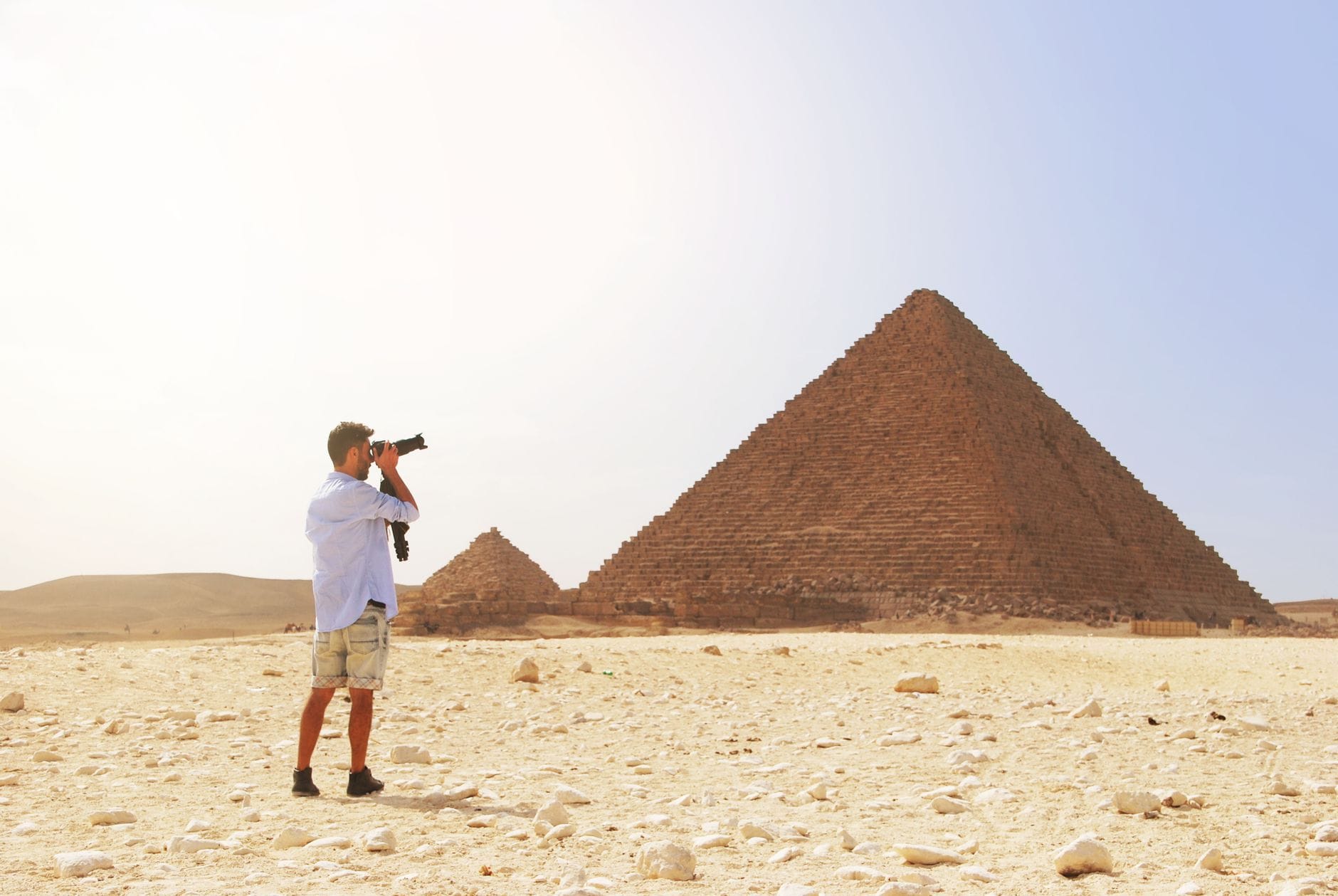
Egypt is one of the most photographed destinations on earth, and for good reason. The light here does something extraordinary — early morning fog over the Sahara, the blush of sunrise on ancient limestone, feluccas casting long shadows on the Nile. Whether you’re shooting on a mirrorless system or a smartphone, understanding when and where to position yourself makes the difference between a tourist snap and a frame you’ll want to print.
This guide covers the most rewarding photography locations across Egypt, the permits you’ll need, the best times of day, and practical gear advice for the conditions.
Photographing the Pyramids of Giza
The Great Pyramid, the Sphinx, and the Giza plateau are Egypt’s most iconic subjects — and also among the most challenging to photograph well, given the crowds and the flat midday light.
Best time: The first 90 minutes after sunrise and the hour before sunset. During summer (June–August), sunrise is around 5:30am; in winter it shifts to around 6:30am. Arrive before the gates open at 8am by purchasing tickets online at egypt.travel and being at the east edge of the plateau at dawn. The angle of early light rakes across the pyramid faces, pulling out texture in the limestone.
Key positions:
- The Sphinx viewpoint (near the Valley Temple) gives the classic view with the pyramids rising behind. Best at sunrise when the Sphinx faces east and is lit head-on.
- The eastern plateau ridge (accessible on foot from the main entrance) offers elevated angles across all three pyramids. Particularly powerful with long telephoto at 200–400mm to compress the camel silhouettes against the stones.
- Camel photography village on the south side: here you stand above the plateau looking north-east — this gives the three pyramids in a clean diagonal without any modern Cairo intrusion. Accessible via taxi or local guide.
- Desert panorama from the south (a 10-minute drive from the main entrance): remote, crowd-free, reveals the scale of the plateau against the city skyline. Best in the blue hour before sunrise.
Permits: Still photography with a personal camera is free at Giza. Professional tripods and video rigs require a commercial permit — inquire at the Supreme Council of Antiquities office at the main entrance. No photography allowed inside the Great Pyramid burial chamber. The Sphinx enclosure sometimes restricts tripods; check on arrival.
Drone note: Drones are strictly prohibited across all Egyptian archaeological sites without prior permission from the Civil Aviation Authority. Violations result in equipment confiscation and potential arrest.
Luxor: Temples and the West Bank
Luxor rewards slow, deliberate shooting. The concentration of ancient monuments per square kilometre is unmatched anywhere.
Karnak Temple Complex: One of the largest temple complexes in the world. The hypostyle hall — 134 columns, some 23 metres tall — is extraordinary under the angular light of early morning. Gates open at 6am. Get there at opening for 45 minutes of low-angle light before tour groups arrive. A wide-angle lens (16–24mm) is essential to convey the scale from within the hall; the columns are too dense for a standard zoom. The sacred lake beyond the main complex reflects the sky beautifully at blue hour.
Luxor Temple at dusk: Unlike most ancient sites, Luxor Temple is illuminated after dark and photography is possible until 9pm. The floodlit columns against the deep blue evening sky are one of Egypt’s most reproduced images. Bring a tripod and use exposures of 2–8 seconds at f/8–f/11 for depth of field. The Avenue of Sphinxes leading to the entrance makes a strong compositional frame.
Valley of the Kings: Photography of the tomb interiors is no longer permitted (as of 2019), and this policy is consistently enforced. External shots of the valley from the elevated road above the necropolis — particularly at sunrise with the Theban hills glowing amber — are exceptional.
West Bank hot-air balloon: Hot-air balloon flights launch from the west bank at dawn (approximately 5:30–6am depending on season) and give aerial views across the Nile floodplain, the Valley of the Kings, and the Colossi of Memnon. Operators charge approximately USD 80–120 per person. Book 48 hours in advance through your hotel or directly with operators at the Nile ferry crossing.
Best time to visit for photography: October–April. Summer temperatures above 42°C make early morning the only viable shooting window, and haze from the heat reduces distant clarity.
The Nile: Feluccas and River Light
Felucca sailing boats have barely changed their form in centuries. The wooden lateen-rigged vessels are particularly photogenic in the late afternoon when the Nile turns golden between Luxor and Aswan.
Aswan felucca hire: A private felucca for 2–4 hours from Aswan’s corniche costs approximately EGP 400–800 (as of 2026). Negotiate at the harbour — avoid touts and go to the licensed boatmen’s association further along the waterfront. The stretch around Elephantine Island and Kitchener’s Island has excellent light from about 3pm onwards, with the desert escarpment behind Aswan catching the late sun.
Dahabiya river shots: For multi-day Nile photography, the traditional dahabiya (houseboat) operates slow cruises between Luxor and Aswan over 5–7 nights. These attract serious photographers specifically because of the unstructured schedule and the access to smaller riverside communities. Prices range from USD 1,200–3,000 per person depending on vessel and season.
Nubian villages near Aswan: The brightly painted turquoise and ochre houses of the Nubian villages on the west bank of Aswan are among the most colour-saturated subjects in Egypt. The Gharb Soheil village is accessible by ferry and easily walkable. Best light: mid-morning when the walls are lit without direct overhead shadow. Ask permission before photographing local residents.
The Sahara Desert: Light and Landscape
White Desert (Farafra Oasis): The chalk formations of the White Desert take on an otherworldly quality at sunrise — mushroom-shaped rocks cast long blue shadows across white sand. The optimal shoot is in the 20 minutes around sunrise when the warm and cool light balance. Stay at one of the desert camps and hire a local guide (approximately EGP 800–1,200 per day for a 4WD and driver from Bahariya Oasis). Photographs at the full moon are especially dramatic.
Siwa Oasis: Remote, relatively untouched, and architecturally distinctive. The mud-brick ruins of the ancient Shali fortress above the modern town are best photographed at the blue hour before sunrise. The salt lakes beyond the oasis reflect sky colours around golden hour. A packed telephoto (70–200mm) lets you isolate architectural details and palm groves from a distance.
Great Sand Sea: Accessible from Siwa, the sand dunes here reach 100–140 metres in height. The interplay of light and shadow on the dune faces is most compelling in the hour immediately after sunrise and the 30 minutes before sunset. Protect your equipment meticulously — fine sand is the greatest hazard for cameras in the desert. Use a dry bag for transport between shots.
Abu Simbel: The Golden Light Phenomenon
Twice a year — around 22 February and 22 October — sunrise light penetrates the inner sanctuary of the Great Temple of Ramesses II and illuminates three of the four statues in the inner chamber. These are major events drawing significant crowds. Book accommodation in Abu Simbel 3–6 months in advance if you plan to attend.
For standard visits: Abu Simbel is 280 km from Aswan. Most visitors take the morning convoy departing Aswan around 3–4am, arriving at opening time. The temples face east and catch excellent morning light; by 10am the harsh overhead sun strips detail from the façade. A day trip from Aswan costs approximately USD 40–80 by bus; a flight (EgyptAir or Air Arabia) runs USD 70–130 per leg.
Gear Recommendations for Egypt
Sensor protection: Egypt’s combination of heat, dust, and humidity (particularly along the Nile) is hard on camera equipment. A sealed weather-resistant body (Sony A7 IV, Canon R5, Nikon Z6 III equivalent) significantly reduces the risk of sensor contamination. Carry a blower brush and sensor wipes.
Lens priorities:
- Wide-angle (16–24mm): inside temple hypostyle halls, desert panoramas
- Standard zoom (24–70mm): the majority of street and monument shots
- Telephoto (70–200mm or 100–400mm): compressing feluccas on the Nile, isolating architectural detail across large sites
Filters: A polarising filter reduces haze over the Nile and deepens the blue sky — essential for desert shots. A 3-stop ND filter helps control exposures during the bright midday hours if you want to maintain a wide aperture.
Memory and power: Shoot RAW if you’re serious about post-processing — the tonal range in Egyptian light (deep shadow to blazing stone) benefits from the latitude. Carry spare batteries; heat drains them faster than normal.
Practical Photography Tips
- Tipping culture: Local men will often offer to help you into a photogenic position with camels, horses, or props and expect payment. Agree on a price before you pick up the camera (EGP 50–200 per session is typical as of 2026).
- Respect at religious sites: At active mosques, remove shoes and ask before photographing worshippers. Avoid photographing women without explicit permission.
- Police escorts: At some remote sites, particularly in Upper Egypt, armed police may accompany tourist groups. They generally do not restrict photography but may become part of your frame. Build a rapport and you may get useful local knowledge about access.
- Golden hour windows in summer: In July and August, the window between acceptable shooting light and oppressive heat is very short — approximately 45 minutes at each end of the day. Plan your movements the night before.
Egypt’s photographic rewards are immense, but they belong to those willing to wake before the tour buses and stay patient through the light’s daily arc. The monuments were here long before modern tourism, and in those quiet early hours, they’ll still feel that way.