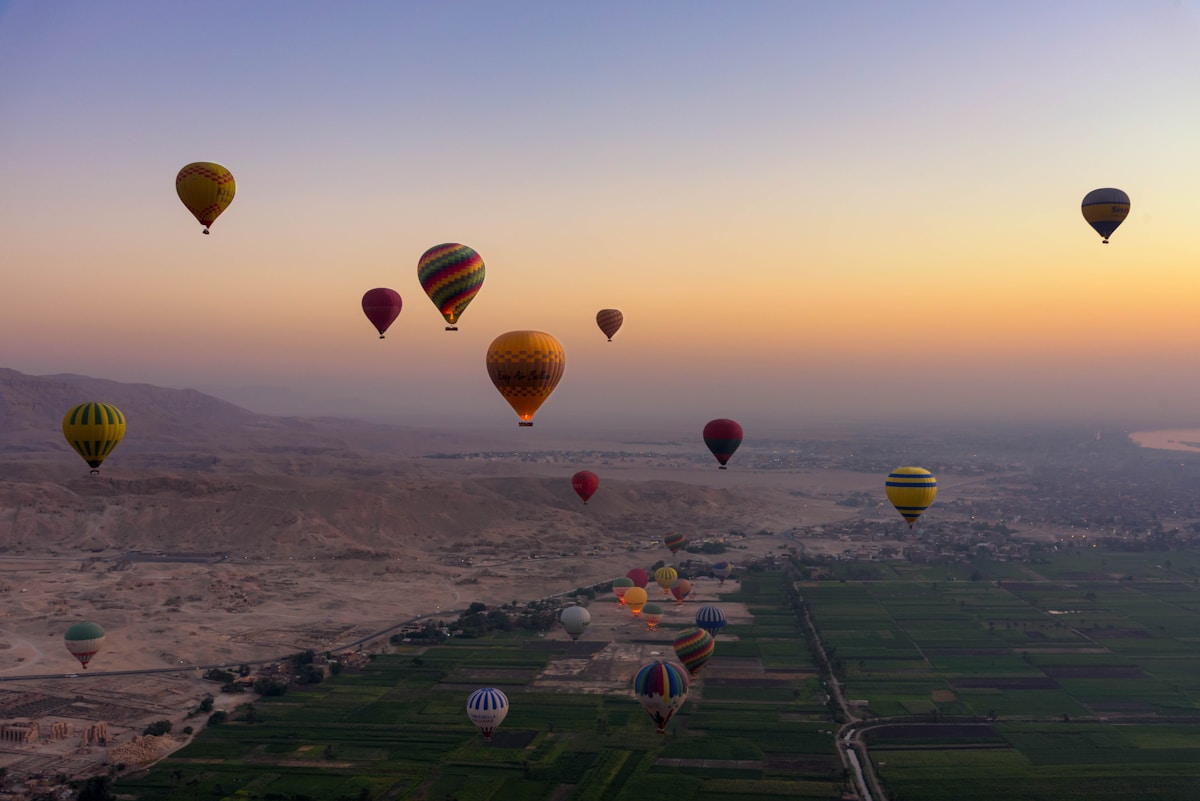
Luxor is where ancient Egypt is most concentrated and most accessible. The city sits on what was Thebes, the capital of the New Kingdom, and the density of monuments - temples, tombs, and processional avenues - on both banks of the Nile is unlike anywhere else. Below is a practical breakdown of how to approach it.
East Bank: Karnak and Luxor Temple
Karnak Temple is Egypt’s largest temple complex and the main draw on the East Bank. The site was built over roughly 2,000 years by successive pharaohs, and its scale reflects that accumulation. The Hypostyle Hall - 134 columns up to 23 metres high, still bearing pigment in places - is one of the more arresting spaces in any ancient building anywhere. Visit in the morning when the light is good and before tour groups from the Nile cruises arrive. Allow 2–3 hours.
Luxor Temple is best visited in the evening. It’s fully lit at night, the crowds are thinner, and the atmosphere is markedly different from the daytime tourist circuit. The temple was dedicated to Amun and built primarily by Amenhotep III and Ramesses II. The seated statues of Ramesses II flanking the entrance are still imposing at scale.
West Bank: Valley of the Kings and Beyond
The West Bank contains most of what draws serious visitors to Luxor. A standard entry ticket to the Valley of the Kings includes access to three tombs; Tutankhamun’s is an additional charge and smaller than the others, but the painted burial chamber is intact and the context of standing where Howard Carter stood in 1922 has its own weight. A guided West Bank tour is worthwhile here - an Egyptologist guide explains the tomb decorations, the Valley’s geology, and details you would walk past without context.
Hatshepsut’s mortuary temple at Deir el-Bahari is one of the most architecturally sophisticated buildings in Egypt - three colonnaded terraces set against a sheer cliff face. The painted reliefs recording her expedition to Punt are among the best-preserved in Luxor.
Medinet Habu (the mortuary temple of Ramesses III) is consistently undervisited relative to its quality. The painted reliefs here are exceptional - more colour survives than at most other sites. It’s quieter and the experience of moving through it without crowds is noticeably different from the Valley of the Kings.
The Colossi of Memnon sit at the roadside at the entrance to the West Bank - two seated statues of Amenhotep III, 18 metres high, free to view. Stop on any West Bank circuit.
Luxor Museum
The Luxor Museum is smaller than the Cairo museums but better curated. Individual pieces are displayed with space around them and labelling in English that actually explains what you’re looking at. The mummified remains of Ahmose I and Ramesses I are here, along with a collection of New Kingdom statuary of very high quality. For visitors who find the scale of the Cairo museums overwhelming, Luxor Museum is the more manageable and often more rewarding experience. Budget 1.5–2 hours.
Hot Air Balloon at Sunrise
Sunrise balloon flights over the West Bank are one of the signature Luxor experiences. The view of the temples and the Nile valley from altitude as the light comes up is consistently described by travellers as one of the best things they did in Egypt. Flights run approximately 45–60 minutes and cost $70–100 USD per person. Book through your hotel or directly with operators on the Corniche. The flight season runs year-round; avoid July–August when heat restricts altitude.
Search hotels in Luxor on Booking.com
Avenue of Sphinxes and the Nile
The Avenue of Sphinxes - a 2.7km processional road lined with ram-headed sphinxes linking Karnak to Luxor Temple - was excavated and opened to the public in 2021. It’s free to walk and best done in the early morning or late afternoon when temperatures are tolerable. The full walk from Karnak to Luxor Temple takes about 30 minutes at a moderate pace and gives you a sense of the scale of the ancient city.
For a low-cost Nile experience, negotiate directly with felucca captains on the Corniche for a sunset sail to Banana Island and back - EGP 100–150 for the boat, shared across passengers. Informal, slow, and a complete change of pace from the temple circuit.
Book a Luxor Tour
The West Bank is where a licensed guide makes the biggest difference in Egypt. The tomb iconography is dense and won’t be self-explanatory without background. Below are the most-booked options.
| Tour | Duration | From | What’s included |
|---|---|---|---|
| Full-day West Bank guided tour | 7–8 hrs | ~$35 | Valley of Kings, Hatshepsut Temple, Medinet Habu, Colossi of Memnon, Egyptologist guide |
| Hot air balloon over the West Bank | 45–60 min flight | ~$80 | Sunrise balloon flight, views over Valley of Kings and temples, hotel transfer |
| Karnak Temple sound & light show | 1 hr | ~$25 | Evening show at Karnak, reserved seating, narrated history of the Hypostyle Hall |
See Also
- Luxor Travel Guide - accommodation, getting around, and Nile cruise options
- Karnak Temple - the complete visitor guide to Egypt’s largest religious complex
- Valley of the Kings - which tombs to visit and how tickets work
- Hatshepsut Temple at Deir el-Bahari - the iconic colonnaded West Bank temple
- Medinet Habu: Temple of Ramesses III - the undervisited West Bank gem
- Luxor West Bank Tours - guided day tours of the West Bank circuit
- Hot Air Balloon Luxor - sunrise balloon flights over the West Bank
- Luxor Itinerary - a day-by-day plan for East and West Bank visits
- Dendera and Abydos Day Trip - day excursions from Luxor